2010 Lotus Eterne Concept
Explore the 2010 Lotus Eterne Concept: programme history, design, verified rarity scope, specifications and credited photography.
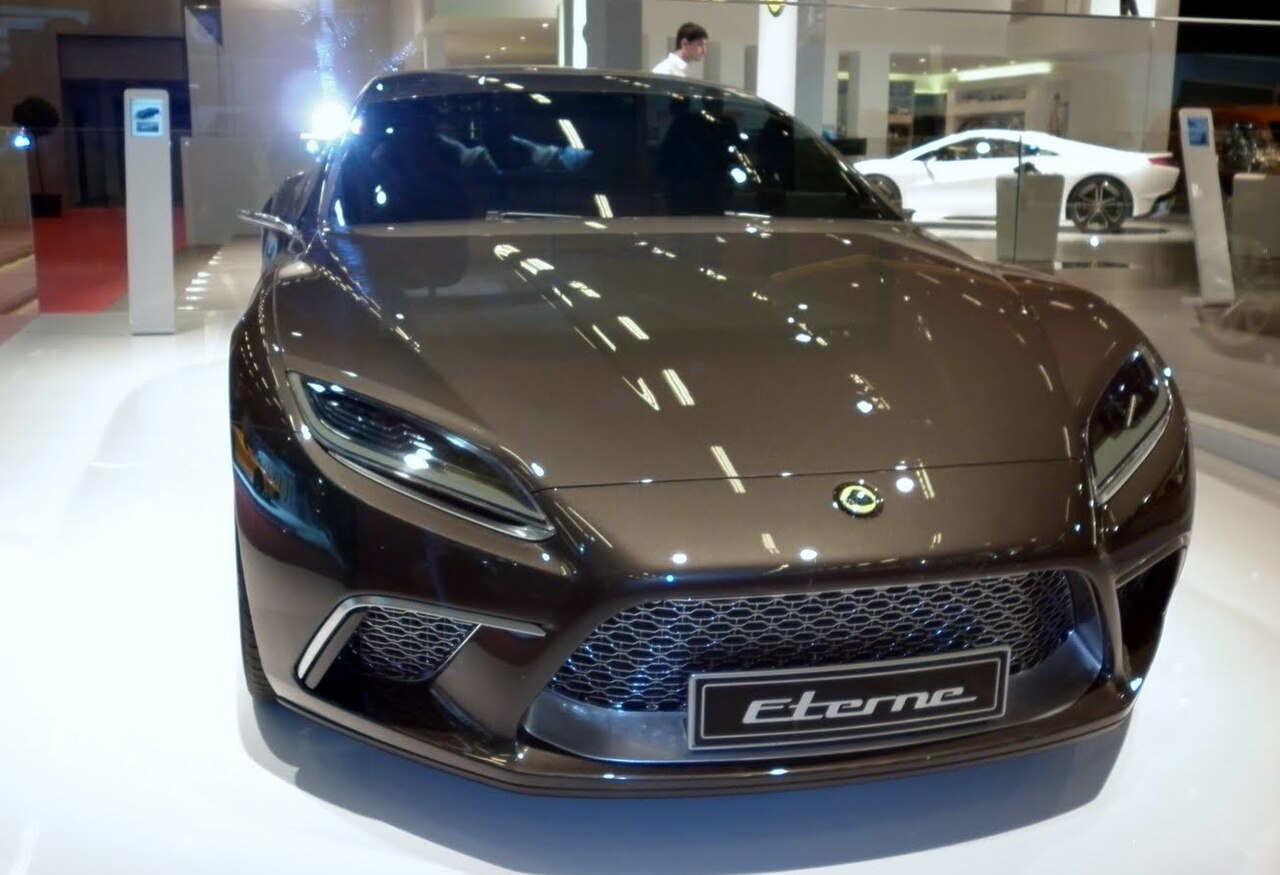
The Lotus Eterne concept introduces a four-door proposal within the 2010 design presentation. Its exact Paris stand photograph gives the archive a real physical subject, separate from proposed production and untested performance claims.
History and verified programme identity
Lotus Engineering’s contemporary magazine identifies Eterne as a front-engined super-saloon proposal in the wider 2010 concept programme. The creator’s photograph and source category identify the actual Eterne displayed in Paris. This establishes a physical exhibit and an intended product role, without certifying that every announced system operated in the show vehicle. No complete fabrication census or customer production total is assigned. The Eterne name remains a distinct concept identity rather than a production derivative of another Lotus merely because the vehicles appeared together or used related proposed technologies in the contemporary announcement.
Engineering and design
The manufacturer’s intended super-saloon role supplies the packaging context. In the photograph, a broad front body and enclosed cabin give the exhibit a different visual presence from the smaller sports-coupe concepts. The view is useful for describing visible surfaces but cannot inspect the proposed engine, transmission or hybrid equipment. A construction and test file would be needed before those systems could be described as proven hardware in this particular subject. The archive therefore retains proposal language and the exact physical image together, avoiding a specification assembled from other concepts or a claim that similar headlamp treatment establishes a common completed production platform.
The physical car in the supplied photograph
Xabi Rome-Hérault’s photograph shows the metallic-finished Lotus Eterne concept on the Paris stand in 2010. The front display view includes its nameplate and enclosed concept body. An exact day is not invented from the general event context, and the image is not substituted with an Elite or an unrelated production saloon.
A closer look at the design
The front stand image gives Eterne a clear individual identity through its physical shape and visible nameplate. That is useful in a presentation containing several concepts with related visual themes. A source title and category prevent a similar-looking Elite image from being used as an interchangeable illustration. The contemporary manufacturer account then supplies the intended saloon role without proving projected hardware. An individual construction history could establish how the exhibit was built and what changed later. Until that evidence is available, the profile preserves the real appearance, intended programme and licensed source distinctly. This makes the archive expandable while avoiding an invented manufacturing allocation or a performance claim derived solely from a polished display car.
Collecting and chassis evidence
A concept Eterne file should establish the physical exhibit’s construction and later custody before attaching operational or originality claims. Contemporary announcement material explains the intended programme, while dated photographs document actual appearances. Repeated displays do not automatically prove multiple separately fabricated cars. Retain engineering documents, component changes and event captions in a single chronological record. The supplied exact-subject image supports recognition and reuse through a clear creator and licence trail. It does not establish an audited worldwide one-off count, customer delivery, or the current operation of proposed powertrain systems. Those questions remain open to specific documentary evidence rather than being filled by assumption.
Related Lotus designs and meaningful comparisons
The Elite concept offers another enclosed-car proposal from the wider presentation, while the City Car illustrates a substantially different engineering and packaging study. Linking them makes the range of physical forms easier to understand without merging their intended roles or assigning one programme’s technical announcement to another.
Reading the sources
The programme sources and the photograph answer different questions. Manufacturer and custodial records establish the original model, Type, category and published production scope. The creator’s file establishes the pictured subject, setting and image permission. An individual chassis history can then add ownership, competition entries and dated repairs without changing the scope of the original programme. Build references are not survivor counts, and a later specification does not automatically become an additional newly manufactured vehicle. Where primary evidence does not establish a complete fabrication census, that field remains unassigned.
Specifications and rarity evidence
| Programme reference year | 2010 |
|---|---|
| Model / Type | Eterne Concept — 2010 Eterne concept programme |
| Body / competition role | Four-door super-saloon proposal |
| Concept reference year | 2010 |
| Manufacturer intended role | Front-engined super-saloon proposal |
| Body programme | Four-door concept |
| Photo context | Paris stand, 2010 |
| Fabrication tally | Complete global census unassigned |
| Published build / register reference | No complete tally assigned |
| Independently audited completed tally | Not assigned |
| Count scope | Verified physical concept or prototype with exact licensed exhibit photo. Proposed specifications and production dates remain proposals. No series-production total or independent worldwide one-off fabrication audit assigned. |
| Original inventory status | LOT-149 — Verified |
Frequently asked questions
Does the physical Eterne exhibit establish a completed production saloon?
No. The manufacturer describes a concept proposal, and the photograph establishes its exhibit appearance. Customer series production and the functionality of proposed systems are not certified from that evidence.
How is Eterne Concept classified?
This is a physical Lotus concept programme, separate from road production. Proposed equipment and production plans are distinguished from documented physical exhibits and verified operating hardware.
Which technical details are established for the programme?
The primary record supports concept reference year: 2010; manufacturer intended role: Front-engined super-saloon proposal; body programme: Four-door concept. These are programme or explicitly attributed photo references. A particular surviving car’s engine, chassis repairs and competition preparation require its own dated documentation.
Does the photographed appearance establish factory originality?
The caption records a real creator-identified Eterne Concept subject and its documented setting. It establishes the illustration’s scope, while original components, restoration work and individual race provenance require chassis-specific evidence. A competition number, current paint or museum display is not used as an originality certificate.
What rarity or archive scope is verified?
Verified physical concept or prototype with exact licensed exhibit photo. Proposed specifications and production dates remain proposals. No series-production total or independent worldwide one-off fabrication audit assigned.
Who photographed the supplied image?
Xabi Rome-Hérault via Wikimedia Commons, under CC BY 3.0. The original file and licence are linked with the image. Retain the creator, source and licence when uploading, exporting or reusing it; local retouching and synthetic enlargement have not been performed.
Related Lotus profiles
Sources and photo credits
Photograph: Xabi Rome-Hérault via Wikimedia Commons original source, CC BY 3.0. Source-provided thumbnail supplied without local cropping, retouching or synthetic enlargement.
Built in limited numbers
Verified physical concept or prototype with exact licensed exhibit photo. Proposed specifications and production dates remain proposals. No series-production total or independent worldwide one-off fabrication audit assigned.
Gallery
Specifications
Factory specifications may vary by model year, market and configuration.
Identity & production
- Official model
- Eterne Concept