2008 GMC Denali XT Concept
Explore the 2008 GMC Denali XT Concept: Holden construction in Australia, hybrid utility-truck design, verified sources and credited show photography.
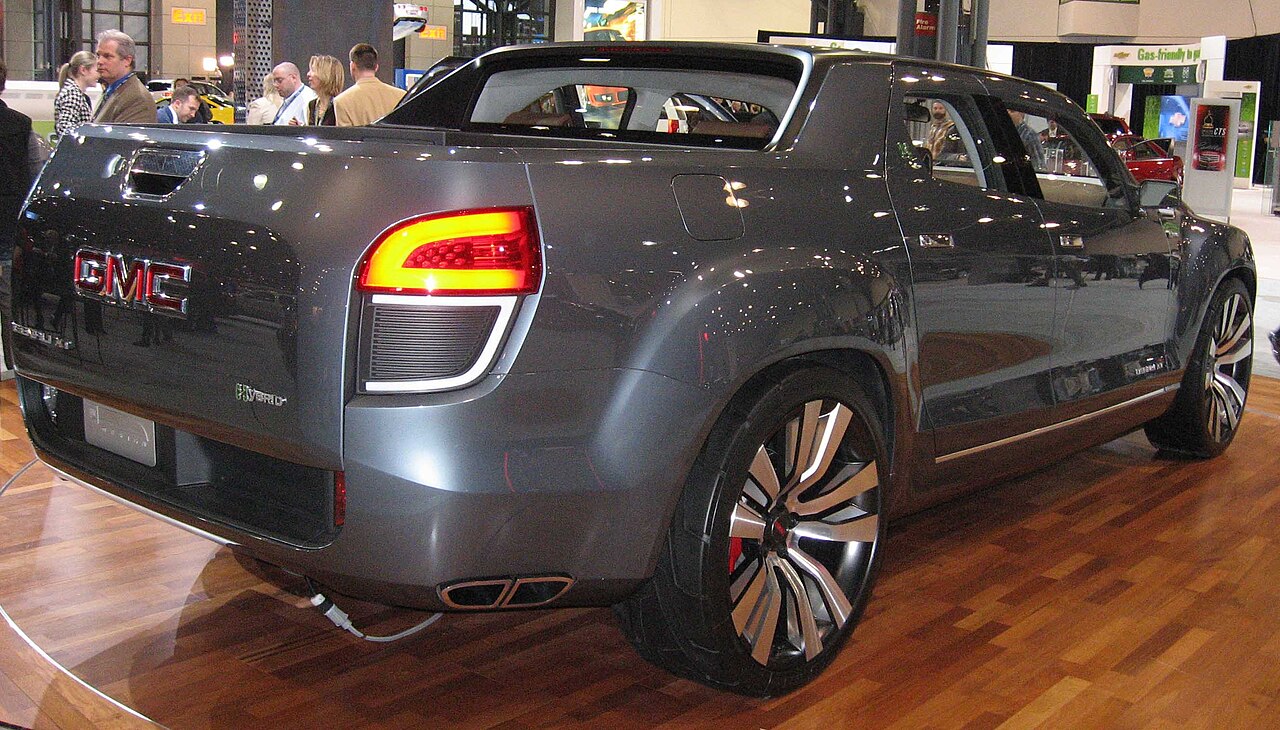
The GMC Denali XT brought an Australian design and construction contribution to the 2008 Chicago Auto Show.
History and purpose
The GMC Denali XT brought an Australian design and construction contribution to the 2008 Chicago Auto Show. The original GM Holden company release, preserved by Ultimatecarpage, identifies the Port Melbourne design centre as the place where the concept was created and built. That original constructor record is the basis for the Australian construction attribution in this profile. Denali XT is a physical sport-utility truck concept, with an open cargo area and a distinct programme name. It should not be confused with every GMC carrying a Denali badge. Its complete fabrication tally is unknown, so the profile records the design archive without inventing a one-car manufacturing total.
Design and engineering
The New York display photograph emphasizes the rear body and the low roof more strongly than the grille. The tall rear lamps frame a broad tailgate, and the raised sides of the cargo area give the vehicle a substantial shoulder line. Its large wheels and tightly composed cabin make it look visually closer to a performance-oriented utility than a conventional tall work pickup. That interpretation comes from the photographed shape. The constructor’s release separately describes a rear-drive unibody architecture and a 4.9-litre V8 combined with an E85-capable two-mode hybrid proposal. Those engineering statements remain attached to the concept announcement rather than a certified production specification.
Identifying the original configuration
Use the full Denali XT Concept name when matching records and photographs. The XT suffix is essential: an ordinary Denali pickup or SUV would be a different subject. The supplied photo documents a 2008 New York Auto Show appearance, while the introduction record belongs to Chicago. Both can be true without implying two different vehicles or production runs. The GMC marque and Holden’s construction role should remain visible together. A useful archive can later add transport, display and custodial records, but an event photograph cannot establish a particular construction number or prove that every proposed powertrain component was operating during that display.
Collector context and preservation
For collectors, Denali XT offers a strong photographic counterpoint to the Suburban Carrier. Both have an open cargo area, yet one presents rounded mid-century surfaces while the other has a low, wide, closely integrated body. Compare the cab-to-bed relationship and the way each vehicle uses its rear lamps to finish the shape. That makes their different design priorities understandable without relying on a speculative claim about resale value. Preserve a side view, rear view and cabin sequence when available, and attach any information about adjustable systems to dated inspection records. The result is a useful design history that respects both the GMC identity and the physical object’s Australian origins.
Reading the evidence for this profile
The original source links below identify the programme and the historical statements used in this article. The photograph has its own creator and licence record, separate from the manufacturer’s vehicle history. Keep both when transferring this profile into a collection catalogue. A manufacturing tally describes how many cars belong to a defined original programme; it does not measure how many survive, how many are publicly visible, or how many retain all their original components. Those individual questions require dated chassis and restoration evidence. The reference year likewise describes the programme’s introduction or named historic configuration, while the supplied caption states the photographed setting and any established individual identity. This lets future research expand the car’s history without blurring the scope of the record already assembled here.
Specifications and verified rarity
| Reference year | 2008 |
|---|---|
| Model / programme | Denali XT Concept |
| Body / role | Hybrid sport-utility truck concept |
| Documented engine | 4.9-litre V8 with an E85-capable two-mode hybrid proposal |
| Architecture / transmission | Rear-wheel-drive unibody sport-utility truck; concept specification |
| Exact manufacturing tally | Not established |
| Eligibility bound | Physical concept archive scope; tally unknown |
| Rarity scope | Physical GMC Denali XT concept unveiled at the 2008 Chicago Auto Show, designed and constructed by GM Holden in Port Melbourne, Australia. Complete fabrication tally unknown; proposed hybrid specifications are not a certified retail configuration. |
| Inventory reference | GMC-090 — Verified |
Frequently asked questions
What is the GMC Denali XT Concept?
A physical 2008 GMC hybrid sport-utility truck concept designed and built by GM Holden in Australia, introduced in Chicago and later photographed in New York.
What engineering defines this GMC?
4.9-litre V8 with an E85-capable two-mode hybrid proposal. Rear-wheel-drive unibody sport-utility truck; concept specification. These are the documented programme or preserved-concept specifications. Connect an individual vehicle’s installed components to its own dated records before assigning a factory configuration to that particular example.
Why is 2008 the reference year?
It identifies the introduction or original historical configuration described in this article. The photograph can show a later example or a later display of the original subject. The source inventory’s original heading remains an identity alias wherever the date or model name has been corrected.
How should an individual Denali XT Concept be documented?
Start with the chassis identity and connect it to dated construction, registration or custodial records. Keep exterior, interior, engine and underbody photographs together. Record changes to finish, equipment and mechanical specification as separate events, so the physical car’s history can grow without changing the definition of the original programme.
What rarity or archive scope is verified?
Physical GMC Denali XT concept unveiled at the 2008 Chicago Auto Show, designed and constructed by GM Holden in Port Melbourne, Australia. Complete fabrication tally unknown; proposed hybrid specifications are not a certified retail configuration.
Who took the supplied photograph?
IFCAR via Wikimedia Commons, under Public domain. The original file and licence links accompany the image. Retain that credit when the photograph is uploaded, exported or reused.
Related GMC profiles
Sources and photo credits
- Manufacturer, institutional or original custodial record
- Chicago Auto Show organizer: 2008 show report
Photograph: IFCAR via Wikimedia Commons original file, Public domain. Source-provided photograph supplied without local cropping, retouching or text removal. A source thumbnail is used where available. GMC Denali XT concept at the 2008 New York Auto Show. Introduction was in Chicago; original constructor documentation identifies GM Holden in Port Melbourne.
Built in limited numbers
Physical GMC Denali XT concept unveiled at the 2008 Chicago Auto Show, designed and constructed by GM Holden in Port Melbourne, Australia. Complete fabrication tally unknown; proposed hybrid specifications are not a certified retail configuration.
Gallery
Specifications
Factory specifications may vary by model year, market and configuration.
Identity & production
- Official model
- Denali XT Concept