2007 Hyundai i-Blue Concept
Hyundai i-Blue: 2007 concept history, hydrogen fuel-cell design, scoped system specifications and a licensed, credited Frankfurt show photograph.
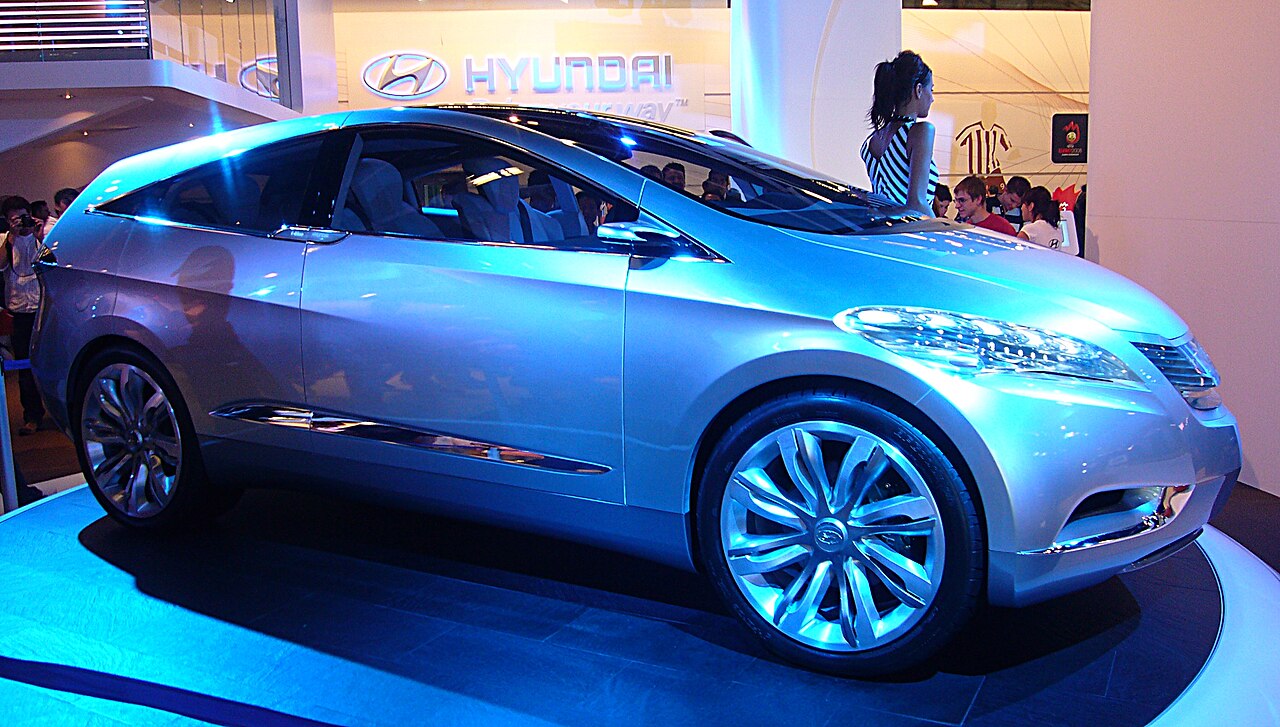
The 2007 Hyundai i-Blue Concept gives hydrogen propulsion a dedicated design expression. Its physical crossover body makes the programme useful for studying how an alternative powertrain can influence the visual and packaging brief of a passenger vehicle.
Origins and the correct historical identity
Hyundai’s archive identifies i-Blue as a 2007 fuel-cell concept. The manufacturer describes an underfloor fuel-cell arrangement, a 100 kW system and a hydrogen-storage proposal using 700-bar pressure. The programme’s quoted range and speed are concept claims, rather than independently established results for the pictured display object. This profile retains the verified hydrogen identity and system description without turning the programme into a retail model or assigning a manufacturing run.
Design: what makes i-Blue Concept distinctive
The front-quarter photograph shows a flowing, passenger-oriented body in which the roof and hood seem part of one continuous composition. The visual emphasis is less on displaying an engine compartment than on giving the entire vehicle a coherent surface. As an editorial reading, the car can be considered a proposal for how alternative propulsion might be made legible without an exaggerated industrial appearance. Its physical proportions help the viewer assess that idea beyond a technical schematic.
Engineering and the concept brief
Placing a fuel-cell system under the floor raises the relationship between powertrain volume and occupant space. Hydrogen storage, cooling and the electric drive each impose requirements, but the selected photograph cannot identify every hidden component. The manufacturer’s architecture gives the discussion a firm starting point. Exact installed traction output is kept separate from the system rating, and a claimed range would need its own operating conditions before being treated as a verified travel capability.
Why this Hyundai belongs in the design archive
i-Blue belongs in the archive as a design and propulsion proposition with a tangible show-car identity. Its interest is in the attempt to give hydrogen mobility a passenger-car form that can be judged visually. A collection can use the subject to explain how designers present a technically unfamiliar idea to visitors. The image and original programme record work together: one establishes the object’s visible character, while the other explains the technology brief that the body was intended to communicate.
Recognising and documenting the physical subject
The supplied photograph records i-Blue at the 2007 Frankfurt exhibition. The model name and body match the manufacturer’s archive imagery. A future documentation set would benefit from cabin views and any period powertrain display or specification board. Those records could deepen the account while preserving the distinction between show-car presentation and operating performance. The concept’s name should remain separate from later Hyundai production fuel-cell models, even when those vehicles provide a useful technology comparison.
Understanding the hydrogen proposal
A fuel-cell electric vehicle uses hydrogen as an energy carrier and electricity to drive its traction system. The fuel-cell stack, traction motor and energy buffer perform different jobs, so a quoted stack rating should not automatically become a wheel-output figure. Tank volume and pressure likewise differ from usable battery capacity. The specifications here describe only the figures and architecture supported for this named programme. A display photograph records the design object; it cannot establish the output, range or durability of its hidden systems.
The interesting engineering questions concern packaging and use. Where can the energy system sit without compromising the cabin? How do air, cooling and service access fit around a body shaped for visual impact? What infrastructure would the proposed vehicle require? Those questions explain why a hydrogen concept matters even when no retail version follows. They also keep its significance connected to the original design brief, rather than converting a manufacturer’s future-facing demonstration into a claim about a customer car or a completed racing season.
Collector significance and future research
The value of a concept archive lies in preserving the relationship between an idea, the people who developed it and the object that made it visible. A strong collection record keeps the original name, reference year, credited photographs and source links attached to that relationship. If new photographs or factory documents emerge, they can add a show appearance, a construction detail or a later change without replacing the original identity. This is particularly useful for a car whose published pictures may span several exhibitions and whose name may have acquired different spellings.
The complete fabrication tally remains unknown here. Exhibition appearances do not provide a count: the same object can travel, and a programme may also produce models or development articles that are not visible publicly. The concept belongs in this archive because its physical identity is supported, rather than because a single surviving photograph implies that only one was made. A future tally should identify which objects it covers and the document establishing that scope. Until then, this profile provides the historical and photographic foundation for further documentation.
Reading the evidence for this profile
The original source links below identify the programme and the historical statements used in this article. The photograph has its own creator and licence record, separate from the manufacturer’s vehicle history. Keep both when transferring this profile into a collection catalogue. A manufacturing tally describes how many cars belong to a defined original programme; it does not measure how many survive, how many are publicly visible, or how many retain all their original components. Those individual questions require dated chassis and restoration evidence. The reference year likewise describes the programme’s introduction or named historic configuration, while the supplied caption states the photographed setting and any established individual identity. This lets future research expand the car’s history without blurring the scope of the record already assembled here.
Specifications and verified rarity
| Reference year | 2007 |
|---|---|
| Model / programme | i-Blue Concept |
| Body / role | Hydrogen fuel-cell crossover concept |
| Propulsion proposal | Hydrogen fuel-cell electric |
| Published system rating | 100 kW; concept description |
| Published hydrogen pressure | 700 bar |
| Confirmed completed manufacturing tally | Not established |
| Exact manufacturing tally | Not established |
| Rarity evidence | Physical concept archive scope; tally unknown |
| Rarity scope | Verified physical Hyundai concept programme; complete fabrication tally unconfirmed. Included as Concept / Archive, without an invented one-car count or retail-production ceiling. |
| Inventory reference | HYU-076 — Verified |
Frequently asked questions
What type of propulsion did i-Blue propose?
Hydrogen fuel-cell electric propulsion.
What does the 100 kW description refer to?
The manufacturer’s concept system description, not an independently measured wheel-output result.
Is a quoted range treated as tested here?
No tested range is assigned to the photographed object.
Where does the supplied image place the car?
At the 2007 Frankfurt show.
What rarity or archive scope is verified?
Verified physical Hyundai concept programme; complete fabrication tally unconfirmed. Included as Concept / Archive, without an invented one-car count or retail-production ceiling.
Who took the supplied photograph?
Overlaet via Wikimedia Commons, under CC BY-SA 3.0. The original file and licence links accompany the image. Retain that credit when the photograph is uploaded, exported or reused.
Related Hyundai concept profiles
Sources and photo credits
Photograph: Overlaet via Wikimedia Commons original file, CC BY-SA 3.0. Source-provided photograph supplied without local cropping, retouching or text removal. A source thumbnail is used where available. Hyundai i-Blue fuel-cell concept at the 2007 Frankfurt motor show, photographed from the front quarter.
Built in limited numbers
Verified physical Hyundai concept programme; complete fabrication tally unconfirmed. Included as Concept / Archive, without an invented one-car count or retail-production ceiling.
Gallery
Specifications
Factory specifications may vary by model year, market and configuration.
Identity & production
- Official model
- i-Blue Concept