2006 Citroën C-Métisse Concept
Explore the 2006 Citroën C-Métisse Concept: sourced history, design, specifications and rarity evidence, with credited documentary photos.
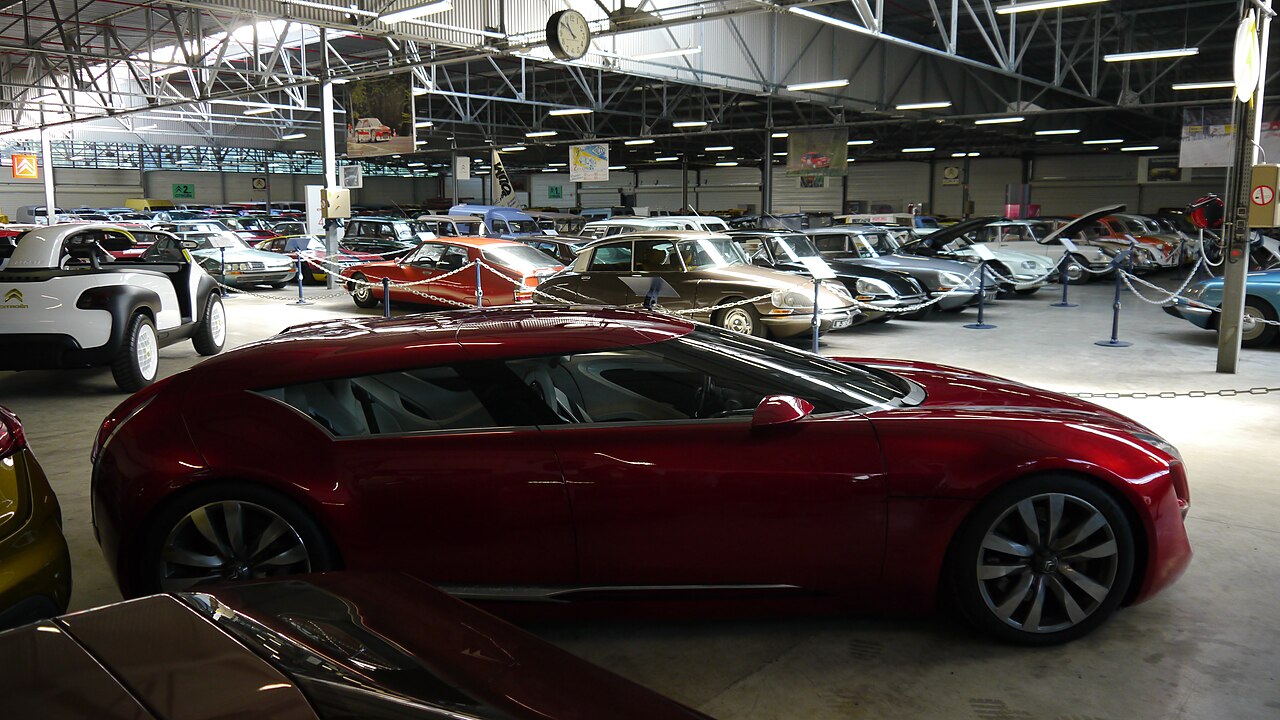
The 2006 Citroën C-Métisse presents hybrid experimentation through the form of a dramatic grand tourer. Its long red body and four-door cabin make it a concept in which passenger accommodation and performance imagery occupy the same low silhouette.
The original hybrid grand-touring proposal
Citroën’s September 2006 announcement describes a four-seat, four-door coupé for the Paris Motor Show. It identifies a diesel-hybrid architecture whose electric motors are installed in the rear wheels. The manufacturer’s later award announcement records the Louis Vuitton Classic Concept Award for the 2006 project. These are project-specific sources, rather than specifications borrowed from a production Citroën.
The location of the motors is an important part of the technical identity. It should not be flattened into a generic statement that every Citroën hybrid concept used the same arrangement. The exact architecture belongs to C-Métisse’s period description and gives the car a meaningful engineering story behind the body.
The long red silhouette in the collection image
The supplied photograph shows the concept in side-front perspective among other archive vehicles. The roof is low, the cabin extends along the body, and the front and rear wheels are widely separated in the composition. Red paint emphasizes the continuous surface, while bright wheels and glazing details add contrast.
The photograph communicates grand-touring imagery through proportion. The long body looks composed around the passenger compartment rather than around a tiny two-seat cockpit. That visual reading explains the four-place concept without turning the picture into a performance test. It also makes the museum setting part of the object’s later display history.
Hybrid architecture deserves precise language
“Hybrid” identifies a relationship between propulsion systems, but it does not fully explain how those systems are arranged. The source’s rear-wheel-motor description is therefore more useful than a vague claim of advanced technology. A diagram and component images would make the distinction clearer still.
Manufacturer performance or environmental targets, where cited, should remain identified as targets or claims. This profile does not turn an exhibition announcement into an independently measured result. Keeping the language precise leaves room to appreciate the engineering proposal without relying on unsupported acceleration, range or consumption figures.
A concept whose form and mechanism reward comparison
C-SportLounge is a useful companion through the grand-touring question, while Hypnos provides a later hybrid comparison. The three bodies express different ideas about how a technically ambitious passenger car should look. Their profiles preserve separate powertrain arrangements and reference years rather than making a single interchangeable “hybrid concept” category.
An archive record should follow the opening mechanisms, interior fittings and propulsion description alongside the exterior form. Those details explain how the complete object carries its proposal. Dated conservation images can then show what has survived from the display vehicle and what has required later maintenance, giving the body’s striking appearance a more substantial historical foundation.
Specifications and verified rarity
| Reference year | 2006 |
|---|---|
| Model / project | C-Métisse Concept |
| Body / role | Four-door, four-seat grand-touring concept |
| Debut | Paris Motor Show, 2006 |
| Accommodation | Four seats and four doors |
| Powertrain theme | Diesel hybrid with electric motors in the rear wheels |
| Design theme | Long, low grand-touring body |
| Rarity scope | Documented physical C-Métisse concept shown at Paris in 2006; exact fabrication tally unset. |
| Exact manufacturing tally | Not established |
| Inventory reference | CIT-125 — Verified |
Frequently asked questions
How many passengers was it designed to accommodate?
Four, in a four-door concept.
Was it purely battery-electric?
The launch source describes a diesel-hybrid architecture.
Where were the electric motors located?
Citroën’s announcement specifies the rear wheels.
Does the photo establish a performance result?
No. It documents the physical concept and its visible proportions.
What rarity or archive scope is verified?
Documented physical C-Métisse concept shown at Paris in 2006; exact fabrication tally unset.
Who took the supplied photograph?
Klaus Nahr from Germany via Wikimedia Commons, under CC BY-SA 2.0. Keep the photographer, original-file link and licence credit with the image.
Related Citroën profiles
Sources and photo credits
- Citroën: C-Métisse launch announcement, September 2006
- Citroën: C-Métisse receives the Louis Vuitton Classic Concept Award
Photograph: Klaus Nahr from Germany via Wikimedia Commons original file, CC BY-SA 2.0. Source photograph supplied without local cropping, retouching or text removal. A source-provided thumbnail is used where available. C-Métisse at the Citroën Conservatoire.
Built in limited numbers
Documented physical C-Métisse concept shown at Paris in 2006; exact fabrication tally unset.
Gallery
Specifications
Factory specifications may vary by model year, market and configuration.
Identity & production
- Official model
- C-Métisse Concept