2002 Renault R202 Formula One
Explore the Renault R202 Formula One: history, verified identity, specification references, rarity evidence and real credited photos.
The Renault R202 marked Renault’s return as a complete Formula One team in 2002. Behind its blue-and-yellow bodywork lay a distinctive wide-angle V10 programme and the beginnings of the organisation that would later win world championships. The R202’s own identity remains the rebuilding season, rather than those later victories.
Programme history and its place in Formula One
Renault’s factory history describes the purchase of Benetton and the staged return through engine supply before the 2002 works-team identity. The R202 chassis and RS22 engine formed that year’s Renault entry. This makes the car a useful point of continuity between team eras, but not a reason to relabel every preceding Benetton as an R202. Names, construction dates and individual chassis histories should remain attached to their actual programme.
Renault: thirty years of Formula One
Engineering in its regulatory setting
The manufacturer’s thirty-year retrospective identifies a three-litre V10 with a shallow bank angle. That unusual packaging was part of the engineering direction Renault had chosen for its return. The important collector question is not simply a quoted peak output: engine identity, installation, electronic support and the relationship between the surviving chassis and its period configuration all matter. A static exhibit can represent the design accurately without retaining an operational original engine.
Competition results need a season and a chassis
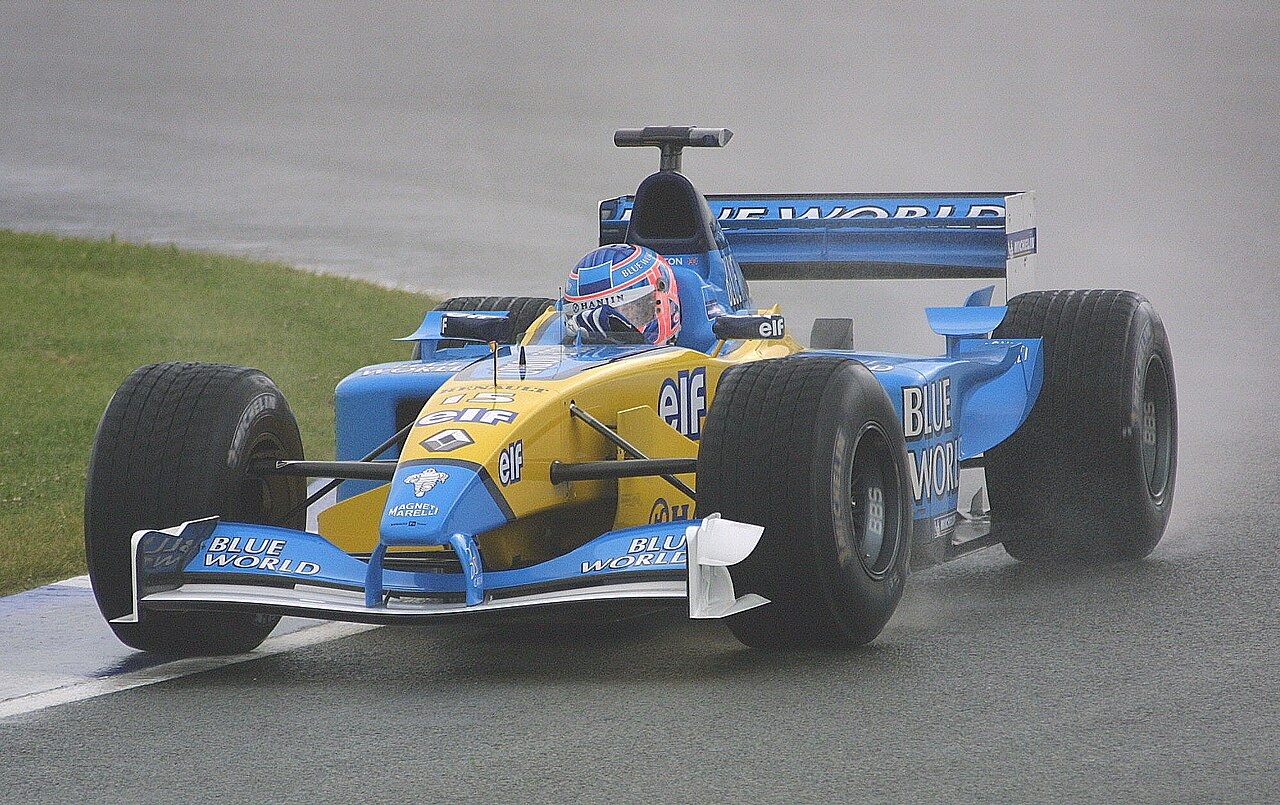
Jenson Button and Jarno Trulli drove the works cars, and Renault’s account records fourth place in the constructors’ championship. That was the team’s stated target for the return season. It should not be confused with the first victory of the later R23 or the titles won by the R25 and R26. The period British Grand Prix photograph gives a contemporary reference for Button’s R202 rather than an undated restored presentation.
Renault: thirty years of Formula One
What makes the programme collectible
The car’s historical appeal is the visible starting point of a successful works rebuilding effort. For a collector, an original race tub, a later demonstration configuration and a display object can each have a different relationship to that story. Their value as evidence depends on how clearly those relationships are documented. A complete history should explain later work as carefully as it describes the launch and the season’s championship position.
Renault forty-year history: 2002 return
Identification and provenance
Begin with the works chassis identifier, then establish driver allocations, event records and any replacement-tub history. Check the RS22 engine and gearbox records separately from the painted body panels. The photograph identifies period use, but does not prove that an unidentified museum car is the same physical object. Keep development parts and later demonstration alterations dated so that the 2002 reference does not become a blanket claim of original specification.
Specifications and identity reference
| Season | 2002 Renault works return |
|---|---|
| Engine reference | Renault RS22; three-litre wide-angle V10 |
| Works drivers | Jenson Button; Jarno Trulli |
| Factory championship reference | Fourth in the constructors’ standings |
Rarity and production scope
This Archive profile covers the R202 programme rather than a uniquely identified race-winning chassis. No complete build or survivor total is established by the linked factory histories, so no numerical production total is entered. Benetton predecessors, later Renault cars, spare engines and repeated demonstration appearances are outside the R202 chassis count.
This is an Archive record. Concepts, restored heritage vehicles, works cars and competition programmes are not added to customer road-production totals. A programme profile does not establish how many physical chassis were made, and repeated exhibition appearances do not create additional vehicles.
What the photograph represents
Jenson Button in a Renault R202 at the 2002 British Grand Prix. Period competition illustration, without a claim to identify the precise works chassis number or its later whereabouts.
Related Renault heritage profiles
Frequently asked questions
Was the R202 Renault’s 2005 championship car?
No. It was the 2002 return-season car. The 2005 and 2006 title-winning designs were the R25 and R26.
Does fourth in the championship establish a chassis total?
No. A sporting result describes the team’s season, not how many tubs or complete cars were manufactured.
What is the production-count boundary for this profile?
This Archive profile covers the R202 programme rather than a uniquely identified race-winning chassis. No complete build or survivor total is established by the linked factory histories, so no numerical production total is entered. Benetton predecessors, later Renault cars, spare engines and repeated demonstration appearances are outside the R202 chassis count.
Sources and further reading
Research checked 17 October 2026. Linked factory announcements and heritage records support the specifically attributed claims. Photographic descriptions identify the illustrated subject. Design analysis and suggested authentication steps are editorial interpretation.
Built in limited numbers
This Archive profile covers the R202 programme rather than a uniquely identified race-winning chassis. No complete build or survivor total is established by the linked factory histories, so no numerical production total is entered. Benetton predecessors, later Renault cars, spare engines and repeated demonstration appearances are outside the R202 chassis count.
Gallery
Specifications
Factory specifications may vary by model year, market and configuration.
Identity & production
- Official model
- Renault R202 Formula One
Sources and verification
Source citations are being prepared for this profile.