2002 Honda NSX-R (NA2)
Honda NSX-R (NA2): NA2 engineering, Honda’s 140-produced record and a credited exact-model photo.
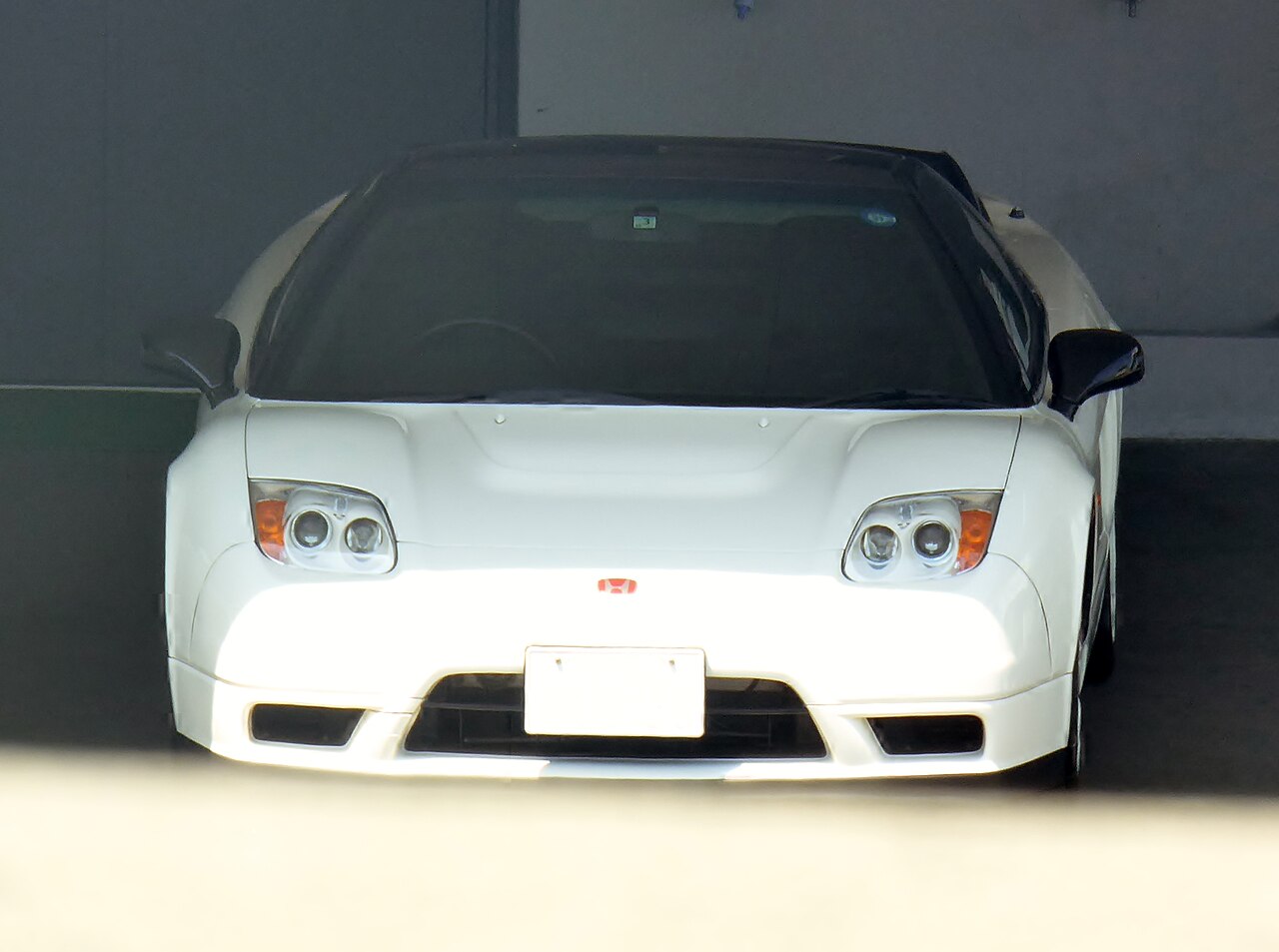
The 2002 Honda NSX-R revisited the Type R idea in the fixed-headlamp first-generation NSX body.
History and purpose
The 2002 Honda NSX-R revisited the Type R idea in the fixed-headlamp first-generation NSX body. Honda’s original May launch release establishes the named car and its engineering changes. The manufacturer’s later Type R timeline reports 140 produced, supporting a complete-programme tally rather than a country allocation. This is the NA2 NSX-R, distinct from the original retractable-headlamp Type R and the later NSX-R GT. Its historical appeal is the way an established sports-car architecture was refined through several coordinated changes. A clear profile needs all three identities separated, because their shared family name otherwise encourages mismatched specifications, photographs and counts.
Design and engineering
Honda’s launch account describes a 3.2-litre V6, six-speed manual transmission and carbon-fibre-reinforced-plastic bonnet and rear wing. The factory treatment links body airflow, weight and chassis response within the named specification. The supplied white car is photographed head-on, showing the fixed headlamps and the broad central bonnet opening. This view makes the later body immediately distinguishable from the early NA1 car. White is recognizable in this photograph, but it was not the only colour offered in the launch record. Likewise, air conditioning and other equipment could be selected; an authentication file should establish the individual car’s original options.
Identifying the original configuration
The photo source explicitly identifies an LA-NA2 NSX-R and dates the image to May 2019. Keep that later photograph separate from the model’s 2002 introduction. An original example should be documented through chassis information, factory equipment records and detailed views of the aerodynamic parts, seats and mechanical installation. Fixed headlamps alone identify a body generation, not an R specification. The same is true of an aftermarket bonnet or white wheels. The manufacturer’s original component descriptions provide a useful comparison, but the chain from those descriptions to a particular car depends on documentary evidence beyond a single exterior photograph.
Collector context and preservation
In a Honda collection, this NSX-R can anchor a discussion about refinement rather than a complete architectural change. Compare its photograph with the early Type R to explain the visible nose treatment, then use the source records to discuss the different factory programmes. Keep driving impressions attributed to the person and car involved instead of presenting them as universal measured results. Replacement composite parts and refinished wheels deserve dated entries, especially where restoration changes the appearance of a rare example. Retaining both the original launch source and the later 140-produced statement makes the profile useful for design history as well as scoped rarity research.
Reading the evidence for this profile
The original source links below identify the programme and the historical statements used in this article. The photograph has its own creator and licence record, separate from the manufacturer’s vehicle history. Keep both when transferring this profile into a collection catalogue. A manufacturing tally describes how many cars belong to a defined original programme; it does not measure how many survive, how many are publicly visible, or how many retain all their original components. Those individual questions require dated chassis and restoration evidence. The reference year likewise describes the programme’s introduction or named historic configuration, while the supplied caption states the photographed setting and any established individual identity. This lets future research expand the car’s history without blurring the scope of the record already assembled here.
Specifications and verified rarity
| Reference year | 2002 |
|---|---|
| Model / programme | NSX-R (NA2) |
| Body / role | Fixed-headlamp mid-engine two-seat coupe |
| Power unit / proposal | Naturally aspirated 3.2-litre DOHC VTEC V6 |
| Layout / transmission | Mid engine, rear drive; six-speed manual; factory aerodynamic and chassis revisions |
| Exact manufacturing tally | 140 |
| Rarity evidence | 140 for the documented complete programme |
| Rarity scope | Complete second-generation-in-family NA2 NSX-R programme introduced in 2002; Honda’s official Type R timeline reports 140 produced. Separate from the original NA1 NSX Type R and the NSX-R GT homologation programme. |
| Inventory reference | HON-056 — Verified |
Frequently asked questions
What is the Honda NSX-R (NA2)?
The 2002 NA2 NSX-R with fixed headlamps and a defined factory performance specification; Honda reports 140 produced.
What engineering defines this vehicle?
Naturally aspirated 3.2-litre DOHC VTEC V6. Mid engine, rear drive; six-speed manual; factory aerodynamic and chassis revisions. The specifications describe the original programme or published concept proposal. An individual example’s installed equipment and any later changes need their own dated evidence.
Why does this profile use 2002?
This is the documented introduction or original configuration year. Photograph dates and market model years can differ. Keeping those dates separate makes it possible to follow the car’s development without creating a second identity for the same programme.
How should an individual NSX-R (NA2) be authenticated?
Connect the chassis identifier to original delivery, edition or custodial records. Compare period exterior, cabin and mechanical photographs with the documented configuration. Record replacement parts, paint changes and restoration work as dated events. A badge or colour alone cannot establish that a car belongs to this original programme.
What rarity or archive scope is verified?
Complete second-generation-in-family NA2 NSX-R programme introduced in 2002; Honda’s official Type R timeline reports 140 produced. Separate from the original NA1 NSX Type R and the NSX-R GT homologation programme.
Who took the supplied photograph?
Tokumeigakarinoaoshima via Wikimedia Commons, under CC BY-SA 4.0. The original file and licence links accompany the image. Retain that credit when the photograph is uploaded, exported or reused.
Related Honda family profiles
Sources and photo credits
Photograph: Tokumeigakarinoaoshima via Wikimedia Commons original file, CC BY-SA 4.0. Source-provided photograph supplied without local cropping, retouching or text removal. A source thumbnail is used where available. Honda NSX-R, LA-NA2 generation, photographed on 25 May 2019. The frontal view shows the fixed-headlamp nose and distinctive bonnet opening.
Built in limited numbers
Complete second-generation-in-family NA2 NSX-R programme introduced in 2002; Honda’s official Type R timeline reports 140 produced. Separate from the original NA1 NSX Type R and the NSX-R GT homologation programme.
Gallery
Specifications
Factory specifications may vary by model year, market and configuration.
Identity & production
- Official model
- NSX-R (NA2)