1994 Lotus Esprit S4s
Explore the 1994 Lotus Esprit S4s: programme history, design, verified rarity scope, specifications and credited photography.
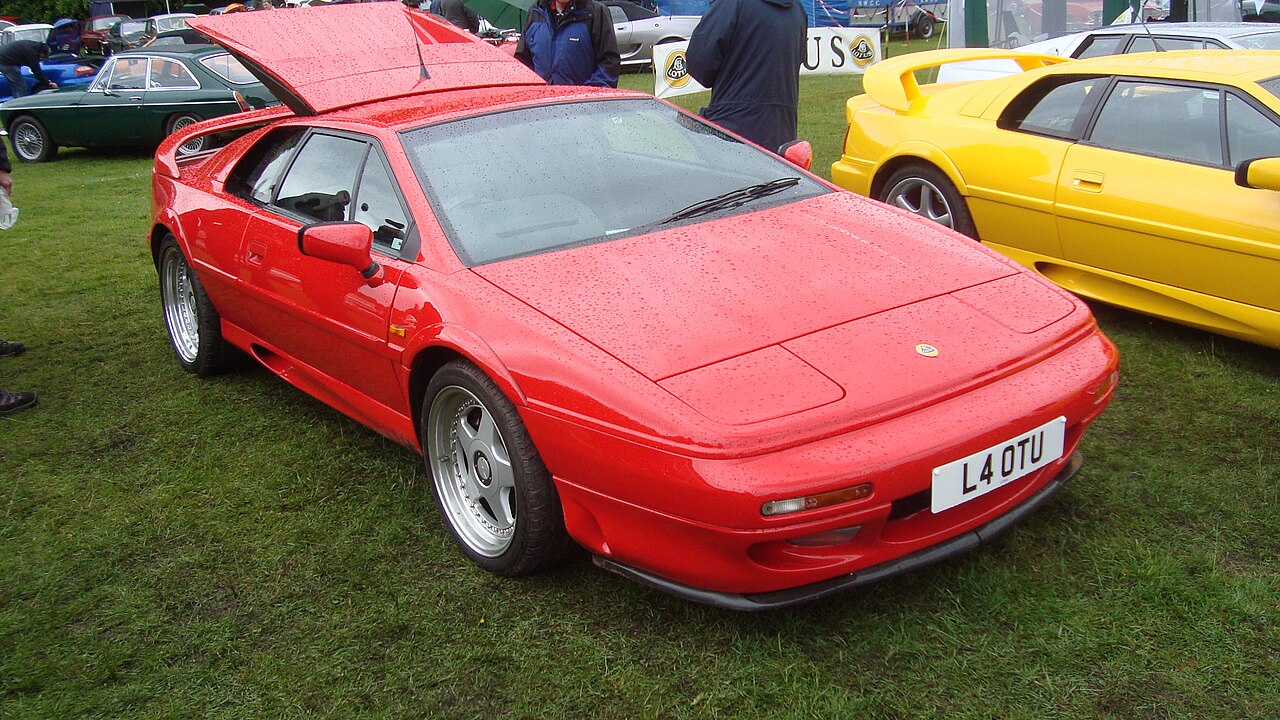
The Lotus Esprit S4s develops the four-cylinder road coupe into a named later performance programme. Its qualified production reference and exact-model photograph keep it separate from the base S4, Sport 300 and V8.
History and verified programme identity
The workbook and Lotus timeline use a 1994 introduction reference for the S4s, while the custodial model account describes its 1995 release. Both are stated without using the photograph’s example year as a new introduction date. The Esprit production chart reports 367 in the S4s column, retained as a published custodial reference. The pictured car is source-titled as a 1996 Esprit 2.2 S4S. That precise identification allows this profile to describe the later four-cylinder model without substituting a visually related V8 or a Sport 300.
Engineering and design
The custodial programme account places the S4s between the S4 and Sport 300 and describes changes to the existing 2.2-litre turbocharged four-cylinder. That establishes a defined mechanical development rather than a new cylinder-count programme. The photograph shows a substantial rear wing and low fixed-roof body, but visible aerodynamic equipment is not enough to prove the engine’s current internals. A later owner may have changed body or powertrain parts. The profile therefore uses model sources for the original role and the creator’s image for the physical illustration, leaving current output and configuration to the individual car’s records.
The physical car in the supplied photograph
Kieran White’s photograph shows a red 1996 Lotus Esprit 2.2 S4S at an outdoor gathering in May 2015. The low nose, fixed roof and large rear wing are visible among other cars. The creator’s exact model description and example year are retained, with no claim that the pictured car establishes the original introduction date.
A closer look at the design
The photograph’s front-quarter angle allows the rear wing and closed passenger enclosure to be read together. That combination makes the later Esprit shape recognizable while the source title supplies the S4s boundary that a generic caption would miss. The production chart supplies a different kind of evidence: its named column establishes the scope of the reported number, not the identity of this particular chassis. A detailed individual history would connect original build data with the visible body and later mechanical work. The profile keeps those tasks separate so a reader can understand the model’s position and its qualified rarity reference without treating the attractive display car as a certificate of untouched factory equipment.
Collecting and chassis evidence
A collecting file should identify the factory S4s chassis and specification before attaching the model’s performance reputation. The 367 reference belongs to the published S4s column and does not count surviving cars or every Esprit fitted later with a similar wing. Engine-control changes, turbo replacements and body repairs deserve dates. The different introduction and release references should also be kept visible in a catalogue. Preserving the workbook year alongside the later custodial account makes the record recognizable without erasing source nuance or inventing a separate 1996 edition from the photograph.
Related Lotus designs and meaningful comparisons
The Turbo SE supplies an earlier chargecooled coupe comparison, while the V8 introduces a different engine branch. These links explain the S4s as a distinct named four-cylinder programme rather than a generic X180 overview. Their figures are not combined into one completed manufacturing tally.
Reading the sources
The programme sources and the photograph answer different questions. Manufacturer and custodial records establish the original model, Type, category and published production scope. The creator’s file establishes the pictured subject, setting and image permission. An individual chassis history can then add ownership, competition entries and dated repairs without changing the scope of the original programme. Build references are not survivor counts, and a later specification does not automatically become an additional newly manufactured vehicle. Where primary evidence does not establish a complete fabrication census, that field remains unassigned.
Specifications and rarity evidence
| Programme reference year | 1994 |
|---|---|
| Model / Type | Esprit S4s — Esprit S4s / Type 85 inventory family |
| Body / competition role | Later four-cylinder performance coupe |
| Inventory/introduction reference | 1994 |
| Custodial release account | 1995 |
| Engine programme | 2.2-litre turbocharged four-cylinder |
| Body role | Two-seat performance coupe |
| Photo example | 1996 S4S, photographed May 2015 |
| Published build / register reference | 367 |
| Independently audited completed tally | Not assigned |
| Count scope | Custodial production chart reports 367 S4s. Workbook and Lotus timeline use a 1994 introduction reference; custodial release/specification account and photo describe 1995–1996 examples. S4, Sport 300 and V8 are separate scopes. Audited completed tally unassigned. |
| Original inventory status | LOT-111 — Verified |
Frequently asked questions
Does the S4s reference include the V8 or every S4?
No. The cited chart has a specific S4s column. The programme is kept separate from the base S4, Sport 300, earlier Turbo SE and later V8.
How is Esprit S4s classified?
This is a named original Lotus road-car programme. Its qualified source references fall below the 7,500 screening threshold. Completed production, announced allocations and survivor counts remain distinct, with any unresolved differences explained in the article.
Which technical details are established for the programme?
The primary record supports inventory/introduction reference: 1994; custodial release account: 1995; engine programme: 2.2-litre turbocharged four-cylinder. These are programme or explicitly attributed photo references. A particular surviving car’s engine, chassis repairs and competition preparation require its own dated documentation.
Does the photographed appearance establish factory originality?
The caption records a real creator-identified Esprit S4s subject and its documented setting. It establishes the illustration’s scope, while original components, restoration work and individual race provenance require chassis-specific evidence. A competition number, current paint or museum display is not used as an originality certificate.
What rarity or archive scope is verified?
Custodial production chart reports 367 S4s. Workbook and Lotus timeline use a 1994 introduction reference; custodial release/specification account and photo describe 1995–1996 examples. S4, Sport 300 and V8 are separate scopes. Audited completed tally unassigned.
Who photographed the supplied image?
Kieran White from Manchester, England via Wikimedia Commons, under CC BY 2.0. The original file and licence are linked with the image. Retain the creator, source and licence when uploading, exporting or reusing it; local retouching and synthetic enlargement have not been performed.
Related Lotus profiles
Sources and photo credits
Photograph: Kieran White from Manchester, England via Wikimedia Commons original source, CC BY 2.0. Source-provided thumbnail supplied without local cropping, retouching or synthetic enlargement.
Built in limited numbers
Custodial production chart reports 367 S4s. Workbook and Lotus timeline use a 1994 introduction reference; custodial release/specification account and photo describe 1995–1996 examples. S4, Sport 300 and V8 are separate scopes. Audited completed tally unassigned.
Gallery
Specifications
Factory specifications may vary by model year, market and configuration.
Identity & production
- Official model
- Esprit S4s