1983 Lotus Type 94T Formula One
Explore the 1983 Lotus Type 94T Formula One: programme history, design, verified rarity scope, specifications and credited photography.
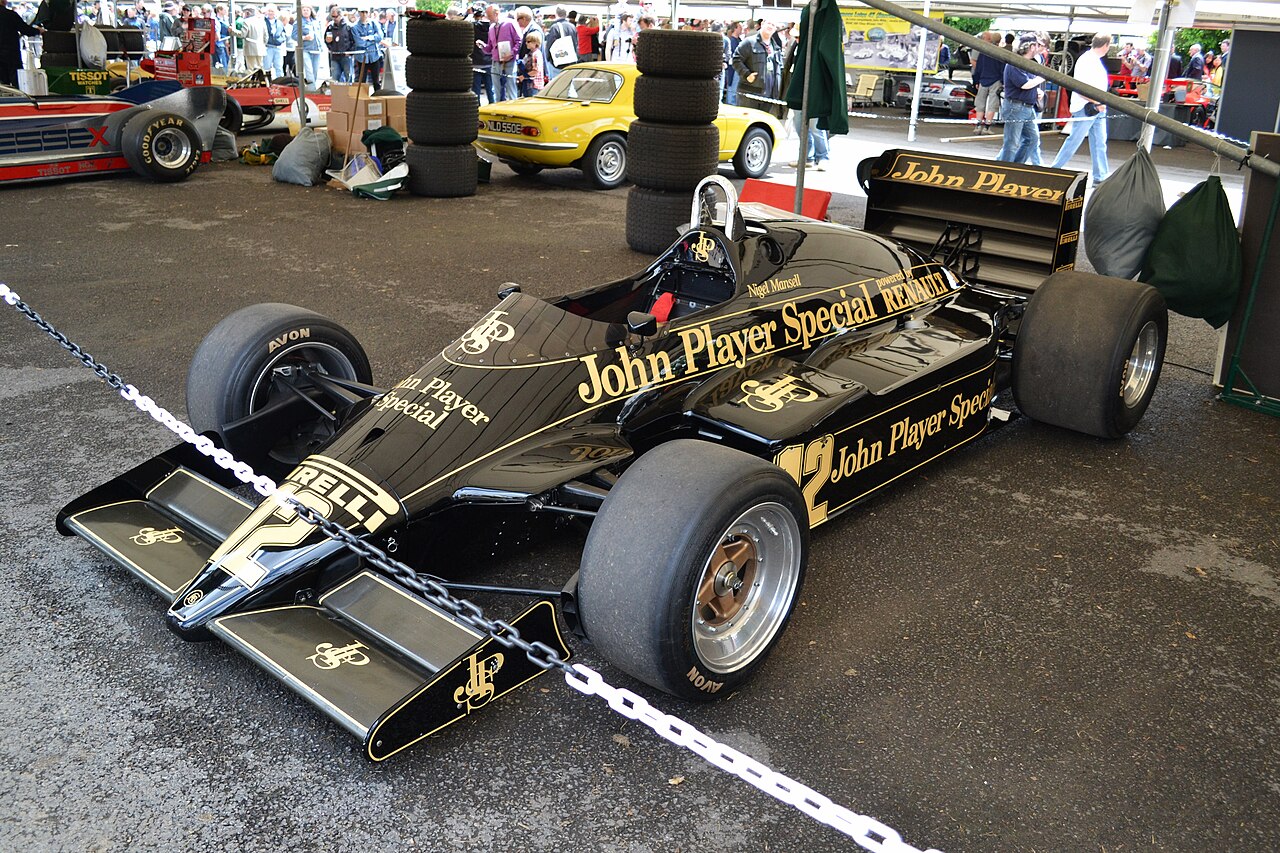
The Lotus Type 94T records an unusually rapid response during the 1983 Formula One season. Its custodial account describes two cars produced in five weeks for the British Grand Prix, a milestone kept distinct from the full register scope.
History and verified programme identity
Classic Team Lotus dates the Type 94T to 1983 and records the production of two cars in five weeks ahead of the British Grand Prix. The same account describes electrical trouble in practice and Nigel Mansell’s race recovery from eighteenth to fourth. Three entries appear in the public register. The two-car preparation milestone and the three-entry register answer different questions, so neither is silently used as an independently audited manufacturing total. The supplied photo is a creator-identified Mansell-associated Type 94T at the Goodwood Festival of Speed in 2012.
Engineering and design
The engineering story begins with development pace rather than an invented specification sheet. Building and preparing cars within a short window requires the programme to be read through drawings, assembly records and dated testing. The original source’s practice difficulty also shows why completion and competition readiness are different milestones. In the supplied display view, the front wing, narrow nose and broad rear body show the complete car’s arrangement. The image cannot identify the original electrical fault or establish what was changed afterward. It illustrates the Type while the custodian’s chronology supplies the period development evidence.
The physical car in the supplied photograph
jambox998’s photograph shows the Nigel Mansell-associated Type 94T at Goodwood Festival of Speed in June 2012. The black-and-gold car carries number 12 and is displayed with its low nose, wings and cockpit visible. The later event caption is retained rather than presenting the scene as the 1983 British Grand Prix.
A closer look at the design
The displayed Type 94T allows the reader to see a complete car while considering the unusually compressed development account. Its assembled appearance should not conceal the difference between manufacturing, troubleshooting and successful competition use. The primary source records all three aspects at the British Grand Prix: rapid preparation, electrical difficulty and a strong race recovery. That sequence is more informative than a single flattering result attached to every surviving chassis. The register then provides a separate identity framework for individual research. Preserving those different scopes helps a collector understand why the five-week milestone matters without confusing it with a definitive total or assuming that the exact modern display specification was present on the first day of practice.
Collecting and chassis evidence
An individual Type 94T history should follow the chassis through its rapid original preparation and the changes that followed initial running. Dated assembly and race documents are more useful than assuming one universal specification throughout the season. The register’s three entries remain a custodial reference, separate from the famous two-car five-week milestone. A later driver-associated display can guide research, but original components, repairs and exact race provenance need an individual documentary chain. The modern photograph supports the physical model illustration without certifying that chain by appearance alone.
Related Lotus designs and meaningful comparisons
The Type 93T explains the preceding Renault-turbo programme, while the Type 95T shows the next design’s different proportions and full-season role. Their separate records distinguish a mid-season response from the later planned development. A shared sponsor finish is context, not evidence that one is merely a renamed copy of another.
Reading the sources
The programme sources and the photograph answer different questions. Manufacturer and custodial records establish the original model, Type, category and published production scope. The creator’s file establishes the pictured subject, setting and image permission. An individual chassis history can then add ownership, competition entries and dated repairs without changing the scope of the original programme. Build references are not survivor counts, and a later specification does not automatically become an additional newly manufactured vehicle. Where primary evidence does not establish a complete fabrication census, that field remains unassigned.
Specifications and rarity evidence
| Programme reference year | 1983 |
|---|---|
| Model / Type | Type 94T Formula One — Type 94T |
| Body / competition role | Rapidly developed 1983 Formula One replacement |
| Programme year | 1983 |
| Development milestone | Two cars in five weeks for British Grand Prix |
| Custodial race example | Mansell eighteenth to fourth |
| Photo association | Nigel Mansell-associated Type 94T |
| Photo event | Goodwood Festival of Speed, June 2012 |
| Published build / register reference | 3 listed register entries |
| Independently audited completed tally | Not assigned |
| Count scope | Published reference: 3 listed register entries. The named programme scope is retained independently of audited completed output and current survivor counts. |
| Original inventory status | LOT-092 — Verified |
Frequently asked questions
Does the five-week account establish the complete Type 94T tally?
No. It describes two cars prepared for a particular milestone. The public register lists three entries, and neither reference is converted into an audited completed-manufacture census.
How is Type 94T Formula One classified?
This is a Team Lotus competition Type archive. It remains separate from Lotus road-car production. Customer cars, works entries and converted chassis need a reconciled scope before any complete fabrication tally is assigned.
Which technical details are established for the programme?
The primary record supports programme year: 1983; development milestone: Two cars in five weeks for British Grand Prix; custodial race example: Mansell eighteenth to fourth. These are programme or explicitly attributed photo references. A particular surviving car’s engine, chassis repairs and competition preparation require its own dated documentation.
Does the photographed appearance establish factory originality?
The caption records a real creator-identified Type 94T Formula One subject and its later setting. It establishes the illustration’s scope, while original components, restoration work and individual race provenance require chassis-specific evidence. A competition number, current paint or museum display is not used as an originality certificate.
What rarity or archive scope is verified?
Published reference: 3 listed register entries. The named programme scope is retained independently of audited completed output and current survivor counts.
Who photographed the supplied image?
jambox998 via Wikimedia Commons, under CC BY-SA 2.0. The original file and licence are linked with the image. Retain the creator, source and licence when uploading, exporting or reusing it; local retouching and synthetic enlargement have not been performed.
Related Lotus profiles
Sources and photo credits
Photograph: jambox998 via Wikimedia Commons original source, CC BY-SA 2.0. Source-provided thumbnail supplied without local cropping, retouching or synthetic enlargement.
Built in limited numbers
Published reference: 3 listed register entries. The named programme scope is retained independently of audited completed output and current survivor counts.
Gallery
Specifications
Factory specifications may vary by model year, market and configuration.
Identity & production
- Official model
- Type 94T Formula One