1976 Fiat 131 Abarth Rally Stradale
Explore the Fiat 131 Abarth Rally Stradale: road homologation purpose, 400-car programme, dedicated bodywork and credited documentary photography.
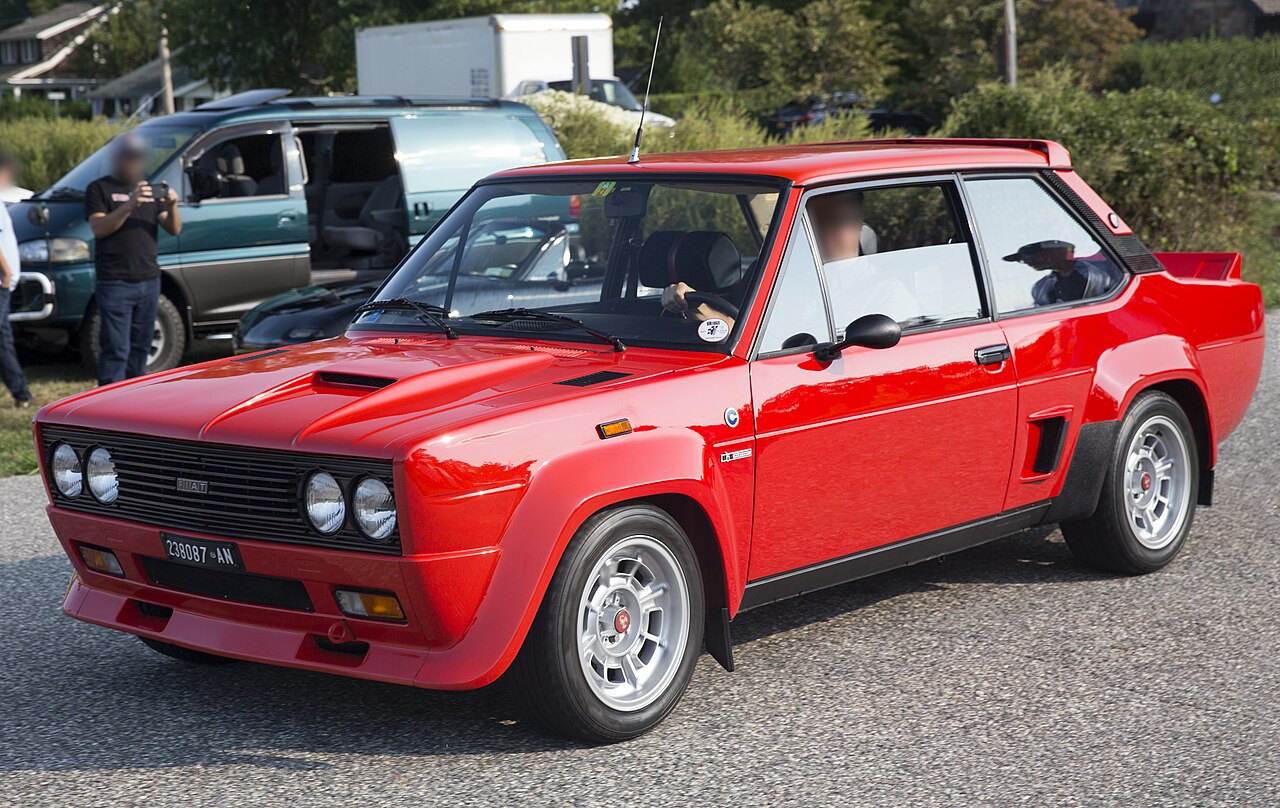
The Fiat 131 Abarth Rally Stradale connected a recognisable road-car outline with a serious homologation purpose.
History and purpose
The Fiat 131 Abarth Rally Stradale connected a recognisable road-car outline with a serious homologation purpose. Stellantis Heritage dates the original 400-car road programme to 1976–1978, correcting the inventory’s 1974 heading. The name Stradale matters because it separates these road cars from their Group 4 competition derivatives. The familiar basic silhouette remained, while the body and mechanical package were substantially adapted for the new brief. This profile therefore follows the original road programme as a complete scope. It does not transfer racing power figures to road examples or count later cars wearing Abarth-style body pieces as additional original manufacture.
Design and engineering
The credited orange-red car shows the homologation body in a road configuration. Wide arches, a deep lower front treatment and a compact two-door cabin alter the visual stance of the underlying saloon form. These features make the road special recognisable without requiring a rally livery. Manufacturer history links the programme with specialist body construction and revised running gear, providing substance behind the appearance. The engine entry uses the documented road specification, while higher-output competition development remains outside that field. The photograph is particularly useful for an upload package because its source explicitly names Rally Stradale and shows the corresponding road-car body.
Identifying the original configuration
An original Stradale identity requires more than the shape of the wheel arches or an Abarth badge. The chassis record, body history and original specification should agree. The supplied source photograph documents a named 1976 Rally Stradale at a later gathering; the date of that photograph is not its manufacturing year. A Group 4 competition car deserves its own individual provenance record, especially where conversions and later competition preparation changed the configuration. This batch holds the separate generic competition inventory row rather than using a racing image as a substitute. The 400 figure remains attached to the original homologation road programme.
Collector context and preservation
A collection file can explain this model most effectively by preserving both the ordinary-road outline and the special details. Repeated views of arches, front treatment and cabin proportions show how the homologation brief changed the visual character. Mechanical and body records then separate original construction from later preparation. Compare the Stradale with the 130 Coupé to see two very different Fiat road-car purposes, or with the 1100S to explore an earlier compact sporting tradition. The finite road programme supplies a firm numerical identity, but the combination of body, engineering and homologation intent gives the article its lasting substance for readers and future researchers.
Reading the evidence for this profile
The original source links below identify the programme and the historical statements used in this article. The photograph has its own creator and licence record, separate from the manufacturer’s vehicle history. Keep both when transferring this profile into a collection catalogue. A manufacturing tally describes how many cars belong to a defined original programme; it does not measure how many survive, how many are publicly visible, or how many retain all their original components. Those individual questions require dated chassis and restoration evidence. The reference year likewise describes the programme’s introduction or named historic configuration, while the supplied caption states the photographed setting and any established individual identity. This lets future research expand the car’s history without blurring the scope of the record already assembled here.
Specifications and verified rarity
| Reference year | 1976 |
|---|---|
| Model / programme | 131 Abarth Rally Stradale |
| Body / role | Two-door road homologation special |
| Documented engineering | Front-mounted 1,995 cc four-cylinder, 16 valves; road specification 140 hp |
| Architecture / transmission reference | Five-speed manual; rear-wheel drive |
| Exact manufacturing tally | 400 |
| Eligibility bound | 400 for the documented scope or parent programme |
| Rarity scope | Complete original 400-car road homologation programme, 1976–1978. Group 4 competition conversions, later replicas and rally liveries are not an additional 400-car road series. |
| Inventory reference | FIA-068 — Verified |
Frequently asked questions
What is the Fiat 131 Abarth Rally Stradale?
The original 400-car Fiat 131 Abarth road homologation special, introduced in 1976. It is separate from chassis-specific Group 4 competition records and later replicas.
What engineering details are documented?
Front-mounted 1,995 cc four-cylinder, 16 valves; road specification 140 hp. Five-speed manual; rear-wheel drive. The specification table identifies the documented model, concept package or explicitly named donor architecture. It does not certify an unseen engine number, individual component condition or a restoration specification from the exterior photograph.
Why is 1976 used in the profile title?
This is the reference year for the original configuration, introduction or public presentation explained in the history section. A photographed example can be younger. Where the supplied inventory used a different date, its original title remains an identity alias so that the same programme is not uploaded twice.
What belongs in an individual vehicle file?
Connect the chassis identity with original configuration records, dated photographs, custodial history and restoration paperwork. Record changes to paint, trim, mechanical components and bodywork as dated events. This profile establishes the named subject and its rarity or physical archive scope; the individual file supplies the history of the particular example.
What rarity or archive scope is verified?
Complete original 400-car road homologation programme, 1976–1978. Group 4 competition conversions, later replicas and rally liveries are not an additional 400-car road series.
Who took the supplied photograph?
Mr.choppers via Wikimedia Commons, under CC BY-SA 3.0. The original file and licence links accompany the image. Retain that credit when the photograph is uploaded, exported or reused.
Related Fiat profiles
Sources and photo credits
Photograph: Mr.choppers via Wikimedia Commons original file, CC BY-SA 3.0. Source-provided photograph supplied without local cropping, retouching or text removal. A source thumbnail is used where available. 1976 Fiat 131 Abarth Rally Stradale in Rosso Aranci at a 2022 Bridgehampton gathering; the source identifies the original road-model configuration.
Built in limited numbers
Complete original 400-car road homologation programme, 1976–1978. Group 4 competition conversions, later replicas and rally liveries are not an additional 400-car road series.
Gallery
Specifications
Factory specifications may vary by model year, market and configuration.
Identity & production
- Official model
- 131 Abarth Rally Stradale