1968 Rolls-Royce Phantom VI Limousine
Explore the Rolls-Royce Phantom VI Limousine: history, verified identity, specification references, rarity evidence and real credited photos.
The Rolls-Royce Phantom VI kept traditional body-on-chassis coachbuilding alive into an era otherwise dominated by unitary construction. Its long life, formal passenger compartment and exceptionally small output make it a different proposition from a large standard saloon with an extended rear cabin.
A long-lived successor to Phantom V
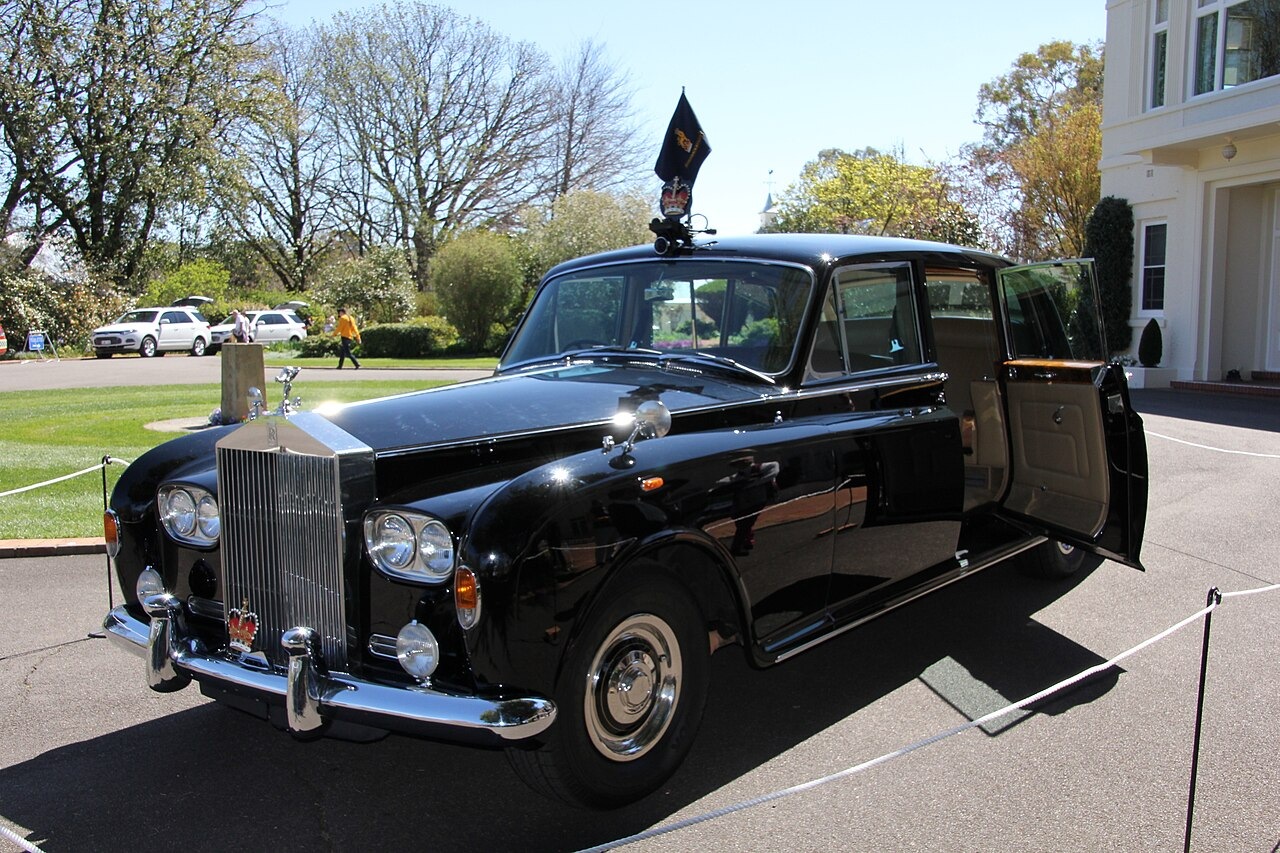
The manufacturer places Phantom VI production between 1968 and 1993. The workbook’s 1970 entry is therefore treated as a reference to the limousine type rather than the model’s introduction. The distinction also explains the photograph: the illustrated Australian ceremonial car is individually dated 1970, while the family began earlier. A profile should not turn one famous state vehicle into the entire production programme or assume every Phantom VI served the same official role.
Rolls-Royce: Phantom VI in the Phantom centenary history
The separate chassis was the defining choice
By this stage, ordinary Rolls-Royce saloons had moved towards unitary body construction, but Phantom VI retained a separate chassis for specialist coachwork. That architecture helps explain the very different scale and working priorities of the car. The formal body could accommodate chauffeur separation and official passenger requirements. It also means that condition assessment needs to consider both the chassis and the coachbuilder’s body structure, rather than applying a standard saloon inspection checklist without adaptation.
Coachbuilders shaped the finished experience
Rolls-Royce’s centenary history says most of the 374 cars were limousines, with coachwork associated with Mulliner Park Ward or James Young. It also identifies the final delivered car as a landaulette. The body descriptions should remain specific: a limousine and an opening ceremonial landaulette are not interchangeable photographic references. Their roof arrangements, fittings and conservation needs differ, even though both belong within the same extremely small Phantom VI family.
Rolls-Royce: Phantom VI in the Phantom centenary history
Comfort was a functional requirement
The factory history highlights separate air-conditioning arrangements for front and rear compartments. That detail reveals the vehicle’s working relationship: chauffeur and passengers occupied distinct environments, often in public or ceremonial use. For interpretation, Phantom VI expresses status through a carefully managed passenger space rather than sporting numbers. Quoting a single acceleration figure would add little without an individual body weight and specification; the relevant engineering story is sustained, dignified transport with specialised accommodation.
Rolls-Royce: coachbuilding and the final traditional Phantom
Preserve the commission as well as the vehicle
A useful collector file identifies the chassis, coachbuilder, body number, original customer, delivery date and later alterations. Ceremonial fittings deserve individual descriptions and photographs, particularly where they were installed or removed after initial delivery. Do not infer royal ownership from a formal roofline or pennant mounts. The photographed Governor-General’s limousine has its own documented context, while another Phantom VI can have a very different private, diplomatic or institutional history.
Specifications and identity reference
| Family production period | 1968–1993, manufacturer retrospective |
|---|---|
| Construction | Separate chassis with coachbuilt body |
| Manufacturer quantity reference | 374 across Phantom VI body types |
| Primary body scope | Limousine; not every special landaulette |
| Photograph | 1970 Australian ceremonial limousine |
Rarity and production scope
Rolls-Royce reports 374 Phantom VI examples across the family. That is not a separate Mulliner Park Ward limousine count, nor a number for 1970 alone. The workbook’s date is retained in the audit; 1968 is used for the programme introduction. The profile does not add a second production population for a particular government car, coachbuilder or later ceremonial conversion.
What the photograph represents
The 1970 Phantom VI ceremonial limousine associated with the Governor-General of Australia. It illustrates the coachbuilt limousine type; its official role is specific to this vehicle.
Related Rolls-Royce heritage profiles
Frequently asked questions
Why does the title use 1968 instead of 1970?
1968 is the manufacturer’s start of the Phantom VI programme; the illustrated individual limousine is dated 1970.
Were all 374 cars Mulliner Park Ward limousines?
No. The family reference includes other coachwork configurations, and the manufacturer describes most, rather than all, as limousines.
What is the production-count boundary for this profile?
Rolls-Royce reports 374 Phantom VI examples across the family. That is not a separate Mulliner Park Ward limousine count, nor a number for 1970 alone. The workbook’s date is retained in the audit; 1968 is used for the programme introduction. The profile does not add a second production population for a particular government car, coachbuilder or later ceremonial conversion.
Sources and further reading
- Rolls-Royce: Phantom VI in the Phantom centenary history
- Rolls-Royce: coachbuilding and the final traditional Phantom
Research checked 18 October 2026. Linked factory announcements, museum records and attributed specialist research support the specifically identified claims. Photographic descriptions identify the illustrated subject. Design analysis and suggested authentication steps are editorial interpretation.
Built in limited numbers
Rolls-Royce reports 374 Phantom VI examples across the family. That is not a separate Mulliner Park Ward limousine count, nor a number for 1970 alone. The workbook’s date is retained in the audit; 1968 is used for the programme introduction. The profile does not add a second production population for a particular government car, coachbuilder or later ceremonial conversion.
Gallery
Specifications
Factory specifications may vary by model year, market and configuration.
Identity & production
- Official model
- Rolls-Royce Phantom VI Limousine
Sources and verification
Source citations are being prepared for this profile.