1957 Lotus Type 12 Formula Two / Formula One
Explore the 1957 Lotus Type 12 Formula Two / Formula One: programme history, design, verified rarity scope, specifications and credited photography.
The Lotus Type 12 began as a Formula Two car and became the first Lotus to enter Formula One. Its programme starts in 1957; the inventory’s 1958 reference is retained as an alias for the later Grand Prix phase.
History and verified programme identity
Classic Team Lotus dates the Type 12 to 1957–1959 and calls it the first single-seat Lotus. It describes Formula Two with a 1.5-litre Coventry-Climax engine and later Formula One applications with 1.9- and 2.2-litre Climax units. The public register lists twelve numbered entries. The inventory labels this row as 1958 Formula Two, but the custodial chronology supports 1957 as the design programme’s starting year. Both the original reference and the corrected title are kept for duplicate protection. A later race date or registration year is not turned into a second Type 12 programme.
Engineering and design
The Type 12 is an instructive move from a two-seat sports-racing body to a single-seat Formula car. With one occupant and exposed wheels, the chassis, engine and body can be arranged around a narrow central volume. The custodial description emphasizes low frontal area, a Lotus sequential gearbox and the distinctive wobbly-web wheels. Those are features of the original design record; their survival on a particular restored car would need to be checked separately. The programme’s differing engine capacities also show why the label Formula One cannot simply replace Formula Two throughout its history. Each phase has its own technical and regulatory context.
The physical car in the supplied photograph
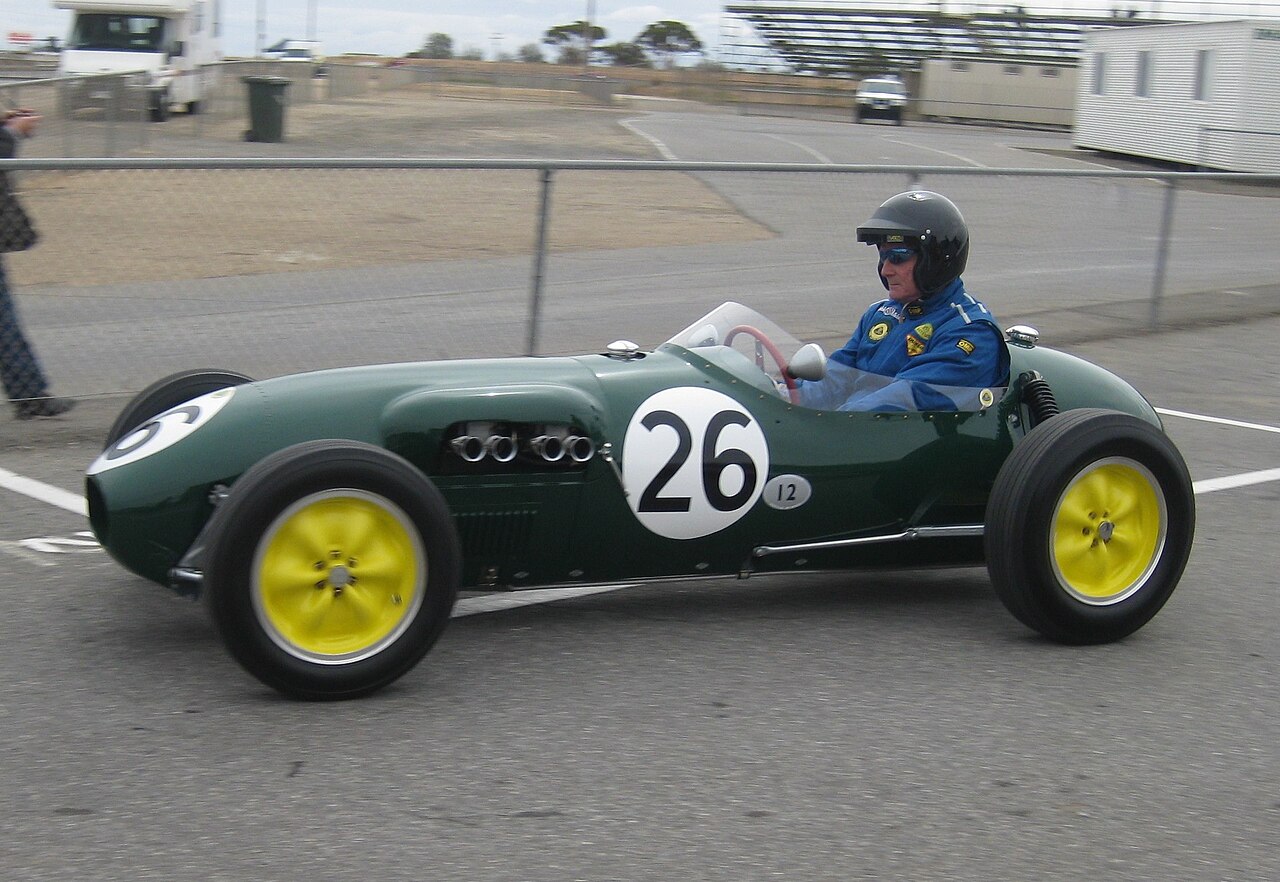
The supplied photograph shows Type 12 chassis 353 at Mallala Motor Sport Park on March 30, 2013, as identified by the creator. The green single-seater carries number 26 and yellow wheels, with its driver seated behind the long front body. The caption records a modern event appearance of that named chassis. It does not describe the image as the 1958 Monaco Grand Prix or certify the car’s present engine installation.
A first entry is a dated event, not a new Type
The Type 12 illustrates why a racing model’s debut, first Grand Prix entry and later restored appearance need separate dates. The programme existed in Formula Two before its Formula One use, and the photograph records a modern appearance of a named chassis. Each date can be accurate without creating another model. For a reader, the corrected 1957 title sets the programme’s beginning, while the retained 1958 alias makes the original inventory wording discoverable. The Mallala caption then locates the specific image. This three-part chronology is more useful than selecting one date and applying it to everything. It also keeps search and duplicate checks connected: a future record using the earlier workbook wording can be recognized as the same programme, while a genuinely separate Type still receives its own identity.
Collecting and chassis evidence
Chassis 353 is useful because the photo source provides an individual identity rather than only a model name. That identity can be connected to the custodial register, while a fuller history still needs the car’s dated competition and restoration documents. The source’s twelve entries are not a census of currently running cars, and a later rebuilt vehicle should not be counted as another original chassis without evidence. Preserving the 1958 inventory title as an alias also guards against a duplicate profile when a future import uses the older workbook wording rather than the corrected programme year.
Related Lotus designs and meaningful comparisons
The Type 16 develops the front-engined Formula-car approach, while the Type 18 places the engine behind the driver. Across the three, the Type 12 explains the first step into single-seater design and the overlap between Formula categories. The comparison makes engine position, driver placement and body shape easier to read. It also illustrates why a collection record needs a programme year alongside a particular car’s race season. Those dates can coexist without being mistaken for separate production models.
Reading the sources
The programme sources and the photograph answer different questions. Manufacturer and custodial records establish the original model, Type, category and published production scope. The creator’s file establishes the pictured subject, setting and image permission. An individual chassis history can then add ownership, competition entries and dated repairs without changing the scope of the original programme. Build references are not survivor counts, and a later specification does not automatically become an additional newly manufactured vehicle. Where primary evidence does not establish a complete fabrication census, that field remains unassigned.
Specifications and rarity evidence
| Programme reference year | 1957 |
|---|---|
| Model / Type | Type 12 Formula Two / Formula One — Type 12 |
| Body / competition role | First Lotus single-seater programme |
| Custodial programme period | 1957–1959 |
| Initial category | Formula Two |
| Later category | Formula One |
| Engine references | 1.5, 1.9 and 2.2-litre Coventry-Climax applications |
| Photo individual identity | Chassis 353, creator description |
| Published build / register reference | 12 listed register entries |
| Independently audited completed tally | Not assigned |
| Count scope | Published complete named programme reference: 12 listed register entries. This is a source-reported reference, not an independently audited completed tally or a surviving-car census. |
| Original inventory status | LOT-013 — Verified |
Frequently asked questions
Why is this profile titled 1957 when the inventory says 1958?
Classic Team Lotus dates the Type 12 programme to 1957–1959 and identifies its Formula Two origin. The inventory’s 1958 wording is preserved as an alias for the later phase, so it cannot create a duplicate.
How is Type 12 Formula Two / Formula One classified?
This is a Team Lotus competition Type archive. It remains separate from Lotus road-car production. Customer cars, works entries and converted chassis need a reconciled scope before any complete fabrication tally is assigned.
Which technical details are established for the programme?
The primary record supports custodial programme period: 1957–1959; initial category: Formula Two; later category: Formula One. These are programme or explicitly attributed photo references. A particular surviving car’s engine, chassis repairs and competition preparation require its own dated documentation.
Does the photographed appearance establish factory originality?
The caption records a real creator-identified Type 12 Formula Two / Formula One subject and its later setting. It establishes the illustration’s scope, while original components, restoration work and individual race provenance require chassis-specific evidence. A competition number, current paint or museum display is not used as an originality certificate.
What rarity or archive scope is verified?
Published complete named programme reference: 12 listed register entries. This is a source-reported reference, not an independently audited completed tally or a surviving-car census.
Who photographed the supplied image?
GTHO via Wikimedia Commons, under CC BY-SA 3.0. The original file and licence are linked with the image. Retain the creator, source and licence when uploading, exporting or reusing it; local retouching and synthetic enlargement have not been performed.
Related Lotus profiles
Sources and photo credits
Photograph: GTHO via Wikimedia Commons original source, CC BY-SA 3.0. Source-provided thumbnail supplied without local cropping, retouching or synthetic enlargement.
Built in limited numbers
Published complete named programme reference: 12 listed register entries. This is a source-reported reference, not an independently audited completed tally or a surviving-car census.
Gallery
Specifications
Factory specifications may vary by model year, market and configuration.
Identity & production
- Official model
- Type 12 Formula Two / Formula One