1936 Chevrolet Standard Cabriolet
1936 Chevrolet Standard Cabriolet: verified history, production scope, design, specifications and collector details, with an authentic photo and full credit.
The 1936 Chevrolet Standard Cabriolet combines a restrained prewar chassis identity with the appeal of an open body. The important words are Standard and Cabriolet: together they define the model scope, rather than treating every 1936 Chevrolet as equally scarce.
History and model identity
The historical production table and the cited original motoring-history research agree on 3,629 Standard Cabriolets. That body-specific figure makes the rarity claim useful. It belongs to the cabriolet in this reference year, not to all Chevrolet Standard models or to the company’s combined annual production. A collector should retain that distinction when transferring the number into a catalogue.
The engineering context is Chevrolet’s 206.8-cubic-inch six-cylinder engine. The reference sources are more useful for this detail than an incidental modern photograph caption: the photo uploader’s surrounding model commentary should not override the reference-year specification. A restored car may have later components, but that possibility does not change the historical engine identity used to describe the original model.
Design, photographs and collector context
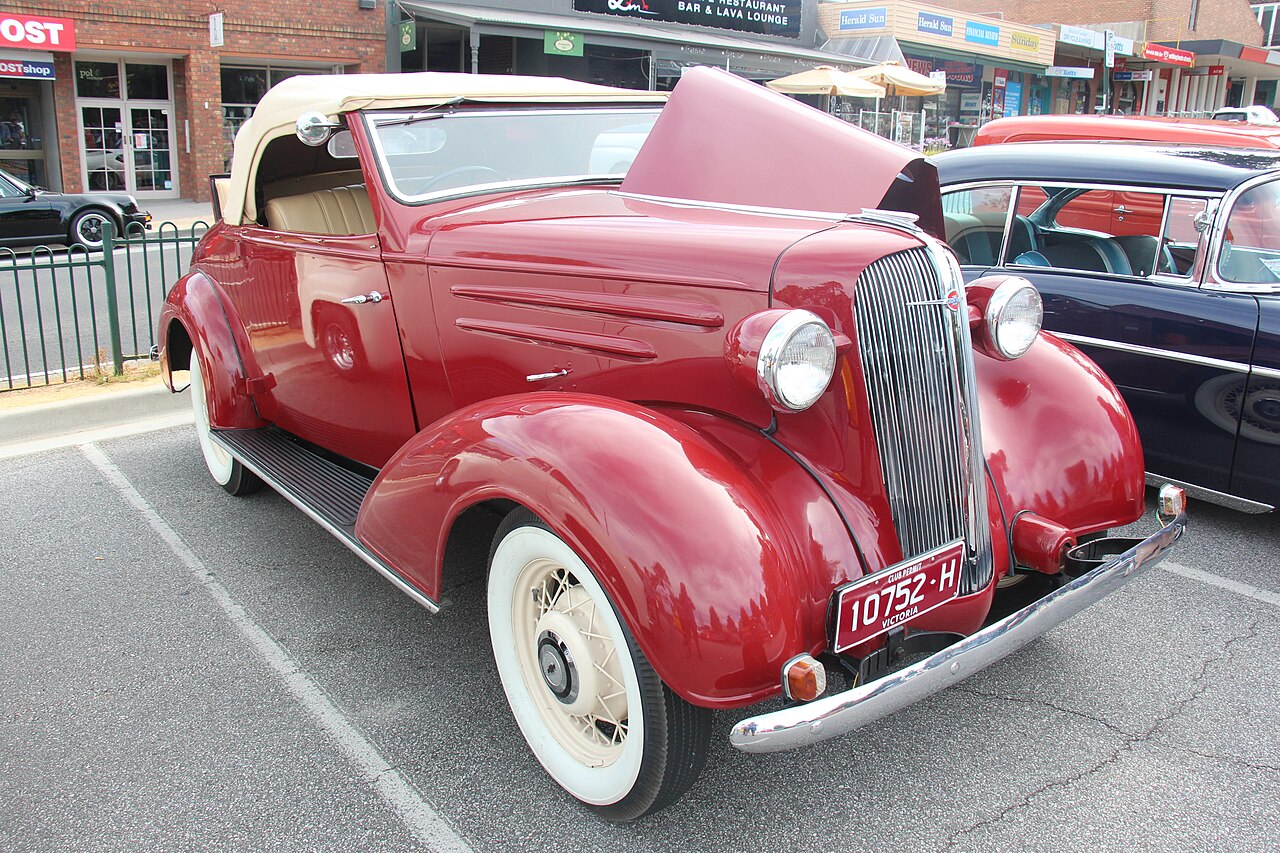
The documentary photograph shows a bright red open-body Chevrolet with contrasting wings and its fabric roof erected. The tall grille leads the eye into a separate bonnet, then into the passenger compartment. The visual sequence is easy to read because the body has not yet become a continuous low shell. The roof also makes the open-car nature tangible: weather protection remains visibly distinct from the main body.
The Standard Cabriolet rewards attention to body proportions and trim as much as to its production number. A three-quarter image reveals the relationship of front wing, door and rear body; a straight side image would add clarity about the cabin and tail. These observations provide a richer collector description than calling the car rare and stopping there. The cabriolet’s own body identity should remain the centre of its profile.
Reading the design in context
To understand the cabriolet photograph, look at the meeting of roof, windscreen and door. The fabric upper section has a visibly different texture and visual weight from the painted body, so it remains a distinct part of the silhouette. The separate front wing and long bonnet then lead the eye forward from that cabin boundary. These relationships help explain why a well-captioned open-body image can teach more than a badge close-up. For an individual owner’s reference file, retain views that make those meeting points clear instead of cropping every image tightly around the nose. Include a rear view that shows how the cabin and tail are joined, then a detail of the weather equipment. Such a sequence creates a practical body reference while leaving original specification questions with the documents that can answer them. The Standard Cabriolet’s appeal can be described through those visible forms without adding unsupported claims about speed, current value or the exact survival population.
Specifications and rarity
| Reference year / history | 1936 |
|---|---|
| Model / project | Standard Cabriolet |
| Engineering context | 206.8-cubic-inch Chevrolet six-cylinder engine |
| Design and collector theme | An open body within the 1936 Standard family |
| Production / archive scope | 3,629 for the complete named 1936 model/body or edition scope; other years, bodies and nameplate-wide production excluded. |
| Exact scoped manufacturing tally | 3629 |
| Inventory reference | CHV-012 — Verified |
Building the individual collector record
Record Standard-series and cabriolet evidence, engine identification and any component changes made during restoration. Keep trim and paint claims tied to the individual car’s records. A rear view, cabin view and clear roof-mechanism photograph will make an exterior image set substantially more useful.
Documentary photograph
1936 Chevrolet Standard Cabriolet photographed by Sicnag; later documentary view with its fabric roof raised.
Frequently asked questions
What is the scoped production tally?
The cited historical table and original motoring-history article support 3,629 Standard Cabriolets for 1936. This figure excludes other Standard bodies and the Master range.
Which six-cylinder engine defines the original model?
The supported reference-year context is Chevrolet’s 206.8-cubic-inch six-cylinder. A later engine description attached to an image should not silently replace that historical specification.
Is the pictured colour certified as factory original?
The photograph documents the present appearance of the illustrated car. An original finish claim needs individual paint, build or restoration evidence beyond the exterior view.
What makes the cabriolet distinct from a closed body?
Its open passenger body and separate weather equipment change both the silhouette and the way the car is documented. Roof-up and roof-down views reveal different aspects of the same body.
What production or archive scope applies to this Standard Cabriolet?
3,629 for the complete named 1936 model/body or edition scope; other years, bodies and nameplate-wide production excluded.
Who took the photograph, and what credit must remain?
The supplied photograph is credited to Sicnag via Wikimedia Commons under CC BY 2.0. Its original file page and individual licence are linked in the photo credit. Keep the photographer name, source and licence visible when using the image; this version has no local retouching or cropping.
Sources and photo provenance
- Original catalogue or historical research
- Original catalogue or historical research
- Manufacturer reference
- Photo: Sicnag — 1936 Chevrolet Standard Cabriolet (24446535796).jpg
Related Chevrolet profiles
Continue the chronology with 1934 Chevrolet Master Sports Roadster by Holden and 1918 Chevrolet Series D V8. Compare each page’s named production or project scope alongside its own documentary photograph.
Built in limited numbers
3,629 for the complete named 1936 model/body or edition scope; other years, bodies and nameplate-wide production excluded.
Gallery
Specifications
Factory specifications may vary by model year, market and configuration.
Identity & production
- Official model
- Standard Cabriolet