1918 Chevrolet Series D V8
1918 Chevrolet Series D V8: verified history, production scope, design, specifications and collector details, with an authentic photo and full credit.
The 1918 Chevrolet Series D V8 is an early Chevrolet surprise: an open passenger car with a V8 identity decades before the marque’s famous postwar performance story. Its significance comes from its own brief historical setting, not from borrowing the reputation of a later engine.
History and model identity
GM’s archived vehicle information provides a useful corrective to loosely repeated Series D production figures. Its factory history records 1,315 at Flint, 3,324 at Tarrytown and 194 in Canada. Adding those entries produces 4,833 for the stated 1918 scope. This profile retains that derived factory-history tally and identifies the arithmetic openly. It does not substitute the frequently repeated 3,999 figure for the manufacturer record.
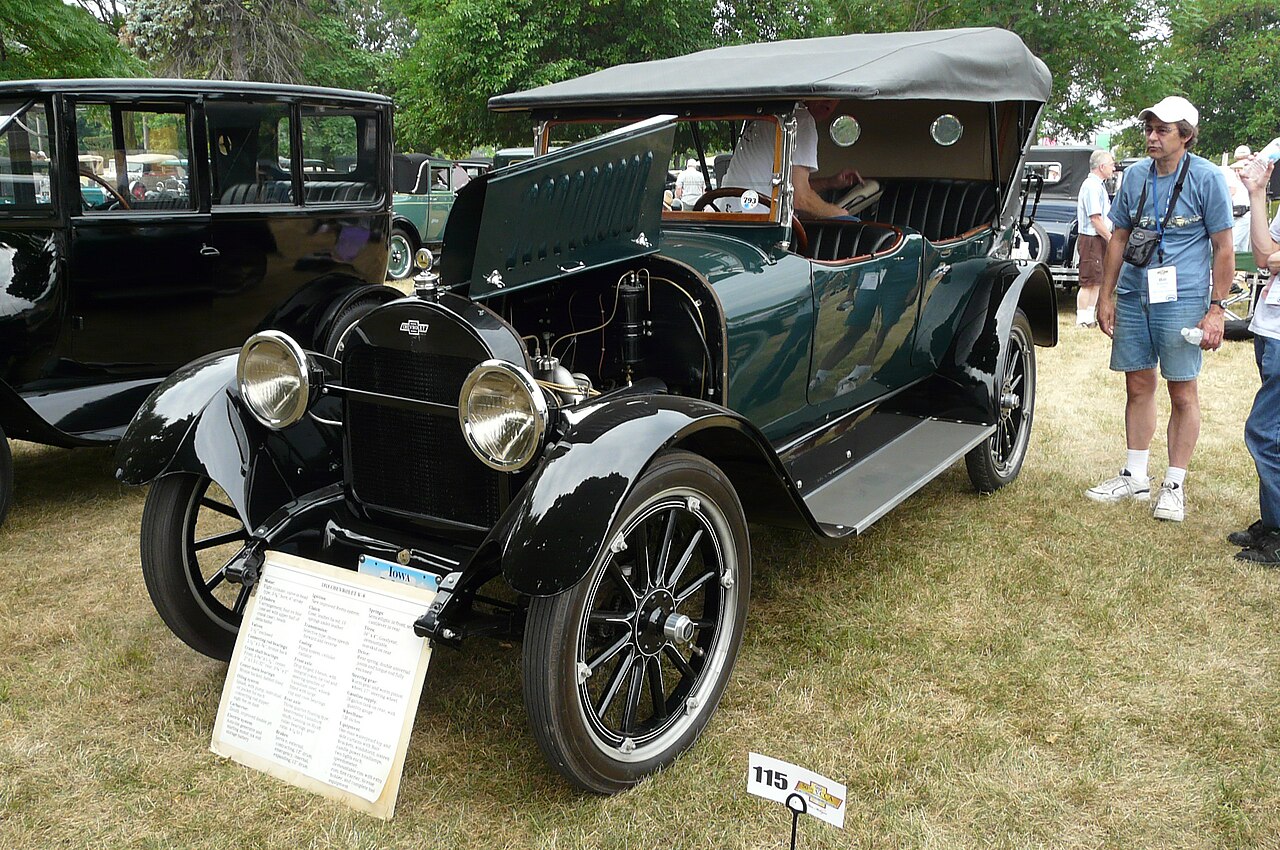
The museum evidence also helps establish the subject independently of its production number. Reynolds Museum lists a Chevrolet D-series example dated circa 1918 in its transportation collection. That institutional reference supports the existence and historical placement of the model. It is not evidence that the separately photographed car is the Reynolds vehicle; the supplied image instead records a car identified as a 1918 Series D at a later enthusiast gathering.
Design, photographs and collector context
In the photograph, the tall touring body gives the engine story a very different visual setting from a later Corvette. The dark upper body, lighter side panels, exposed lamps and slim-looking wheels form an upright composition. There is little suggestion of the low, continuous sports-car silhouette associated with Chevrolet V8s in a later period. The contrast is useful because it prevents a modern engine label from flattening the earlier car’s character.
The Series D deserves an individual place in an early Chevrolet chronology. Its name should remain attached to this particular passenger-car programme. A caption simply saying Chevrolet V8 would conceal the year and model distinction that make it interesting. Showing the car beside the Classic Six creates a conversation about early product identity, body form and alternative engine arrangements without treating either vehicle as a miniature version of a later Chevrolet.
Reading the design in context
The V8 label is an invitation to examine the engine history, but the touring body should receive equal attention. In the supplied view, the upright cabin and separate wheels establish the car’s proportions before any mechanical specification is read. Those proportions prevent the eye from mistaking the Series D for a sports-car ancestor in miniature. A collection display can instead ask a simpler question: how did Chevrolet present passenger space around this early engine programme? The answer begins in the photograph, where the windscreen, body sides and weather equipment organise the occupants visibly. A complementary engine view would then add the mechanical subject without displacing the body story. This is a useful editorial order for the individual car’s archive as well: establish what physical vehicle is being shown, identify the supporting engine evidence, then explain how the two relate. Keep the original photo date attached so a modern gathering does not become an imaginary period scene.
Specifications and rarity
| Reference year / history | 1918 |
|---|---|
| Model / project | Series D V8 |
| Engineering context | V8 engine; early Chevrolet passenger-car programme |
| Design and collector theme | An early V8 chapter before Chevrolet’s later small-block era |
| Production / archive scope | 4,833 for the 1918 Series D factory-history scope: Flint 1,315 + Tarrytown 3,324 + Canada 194. Derived sum, not a surviving-car estimate. |
| Exact scoped manufacturing tally | 4833 |
| Inventory reference | CHV-004 — Verified |
Building the individual collector record
Retain a readable model identification, any engine or chassis markings and the documentation used to date the car. Record the touring body and restoration history separately from the engine family. When publishing the production figure, preserve the Flint, Tarrytown and Canadian components so a future researcher can reproduce the sum.
Documentary photograph
1918 Chevrolet Series D V8 at a later Chevrolet gathering in Flint; documentary touring-car view by Trainguy1.
Frequently asked questions
What is the production figure used for the 1918 Series D?
The scoped tally is 4,833, derived from the archived manufacturer entries for Flint, Tarrytown and Canada. The components are 1,315, 3,324 and 194 respectively.
Is this the same V8 as the later Chevrolet small-block?
No. Series D identifies an early passenger-car programme. The later small-block story belongs to another engineering generation and should have its own chronology.
Does the photograph show the Reynolds Museum car?
The supplied photograph is a separate documentary event view. Reynolds Museum provides an institutional model reference; its collection entry does not establish the pictured car’s ownership or chassis identity.
Why retain the Series D designation?
It keeps the early V8 car searchable and distinct from Chevrolet’s much later V8-equipped ranges. The year, series and body context are all more informative together than the engine layout alone.
What production or archive scope applies to this Series D V8?
4,833 for the 1918 Series D factory-history scope: Flint 1,315 + Tarrytown 3,324 + Canada 194. Derived sum, not a surviving-car estimate.
Who took the photograph, and what credit must remain?
The supplied photograph is credited to Trainguy1 via Wikimedia Commons under CC BY-SA 3.0. Its original file page and individual licence are linked in the photo credit. Keep the photographer name, source and licence visible when using the image; this version has no local retouching or cropping.
Sources and photo provenance
- Manufacturer reference
- Museum collection / original institutional account
- Photo: Trainguy1 — 1918 Chevrolet Series D V-8.jpg
Related Chevrolet profiles
Continue the chronology with 1912 Chevrolet Series C Classic Six and 1934 Chevrolet Master Sports Roadster by Holden. Compare each page’s named production or project scope alongside its own documentary photograph.
Built in limited numbers
4,833 for the 1918 Series D factory-history scope: Flint 1,315 + Tarrytown 3,324 + Canada 194. Derived sum, not a surviving-car estimate.
Gallery
Specifications
Factory specifications may vary by model year, market and configuration.
Identity & production
- Official model
- Series D V8