1934 Chevrolet Master Sports Roadster by Holden
1934 Chevrolet Master Sports Roadster by Holden: verified history, production scope, design, specifications and collector details, with an authentic photo.
The 1934 Chevrolet Master Sports Roadster by Holden brings an Australian coachwork story into the Chevrolet archive. Its rarity belongs to the named Holden roadster body, while its Chevrolet chassis gives it a clear place in the wider Master family.
History and model identity
The original inventory names a 1934 Master roadster broadly. This profile refines that entry to the documented Holden Sports Roadster so the production scope and photograph describe the same body. RM Sotheby’s catalogue, citing Holden historical research, gives 390 Sports Roadsters within 3,269 Holden-bodied Masters. The smaller figure is the body total used here. It should not be applied to every 1934 Chevrolet roadster built in other countries.
This distinction matters because a coachbuilder is part of the vehicle’s identity. A Chevrolet badge can identify the marque while the body tells a regional story of its own. Treating Holden as an incidental trim word would lose that relationship. The subject is best described with the chassis family and coachwork together: Chevrolet Master, Sports Roadster, by Holden.
Design, photographs and collector context
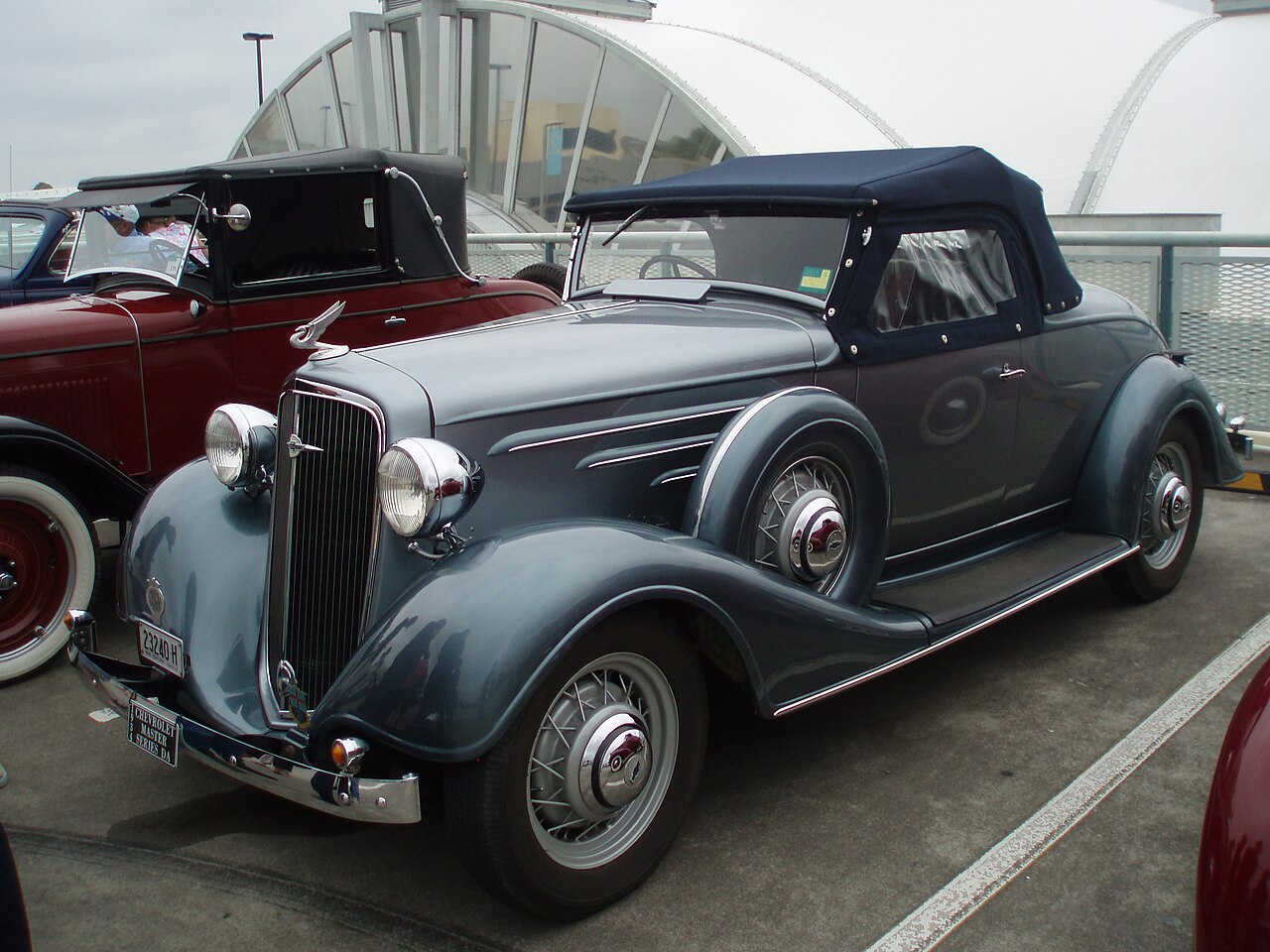
The supplied photograph shows a grey and black roadster with its hood raised. The separate front wings, tall grille and compact open-car passenger compartment give it a balanced, formal appearance. The folded or erected weather equipment changes the silhouette dramatically, so a collector’s photo set should show both configurations when possible. This is visual interpretation of the photographed example, rather than a certification of its original colour combination.
A Holden-bodied Chevrolet can broaden a collection’s geographical range without becoming a generic export-car footnote. Its value as a research subject lies in the relationship between an American chassis marque and Australian body manufacture. A good display caption names both. That makes it easier for readers to understand why this roadster has its own production figure and why a photograph of another country’s Master body would be a poor substitute.
Reading the design in context
A coachwork-focused description should follow the roadster from the front chassis presentation into the cabin and rear body. The front grille identifies the Chevrolet setting, but the shape behind it carries the body subject that earns Holden a place in the title. The raised hood in the documentary image gives the passenger space a relatively compact outline. A roof-down view would change that reading, opening the cabin and revealing more of its relationship to the rear deck. Neither view would replace body identification records, but together they would make those records easier to understand. For a collection containing other Australian-bodied cars, this is a useful comparison point: list the coachbuilder alongside the chassis marque and let the photographs explain the physical result. That presentation avoids reducing the vehicle to either a generic Chevrolet or a generic Australian roadster. Its interest lies in the combination, and the complete title gives readers the vocabulary needed to follow it.
Specifications and rarity
| Reference year / history | 1934 |
|---|---|
| Model / project | Master Sports Roadster by Holden |
| Engineering context | Chevrolet six-cylinder chassis with Holden roadster coachwork |
| Design and collector theme | Australian coachwork on a Chevrolet Master chassis |
| Production / archive scope | 390 for the complete named 1934 model/body or edition scope; other years, bodies and nameplate-wide production excluded. |
| Exact scoped manufacturing tally | 390 |
| Inventory reference | CHV-010 — Verified |
Building the individual collector record
Keep Holden body identification, chassis records and any historical registration evidence together. Photograph the doors, rear body, hood mechanism and dashboard as well as the grille. A coachwork claim should be supported by body evidence, not inferred solely from where a modern owner happens to live.
Documentary photograph
Holden-bodied 1934 Chevrolet Master Sports Roadster, photographed in Australia; the production tally is scoped to this coachwork.
Frequently asked questions
How many Holden Master Sports Roadsters were built?
The cited original auction catalogue records 390 for this Holden body, within 3,269 Holden-bodied Masters. The roadster body tally is the figure assigned to this profile.
Does 390 include every 1934 Chevrolet roadster?
No. The figure is specifically for Holden Sports Roadster coachwork. Other national body programmes should retain their own counts and should not be merged into this edition.
Why was the inventory title refined?
The matching documentary image identifies Holden coachwork. Refining the title makes the body, regional history and published production scope agree rather than combining a broad name with a narrow count.
What should appear in a concise display label?
Include 1934, Chevrolet Master, Sports Roadster and Holden. Together these identify the reference year, chassis family, body type and coachbuilder without relying on a generic roadster label.
What production or archive scope applies to this Master Sports Roadster by Holden?
390 for the complete named 1934 model/body or edition scope; other years, bodies and nameplate-wide production excluded.
Who took the photograph, and what credit must remain?
The supplied photograph is credited to sv1ambo via Wikimedia Commons under CC BY 2.0. Its original file page and individual licence are linked in the photo credit. Keep the photographer name, source and licence visible when using the image; this version has no local retouching or cropping.
Sources and photo provenance
- Original catalogue or historical research
- Photo: sv1ambo — 1934 Chevrolet Master Series DA roadster (5409322531).jpg
Related Chevrolet profiles
Continue the chronology with 1936 Chevrolet Standard Cabriolet and 1918 Chevrolet Series D V8. Compare each page’s named production or project scope alongside its own documentary photograph.
Built in limited numbers
390 for the complete named 1934 model/body or edition scope; other years, bodies and nameplate-wide production excluded.
Gallery
Specifications
Factory specifications may vary by model year, market and configuration.
Identity & production
- Official model
- Master Sports Roadster by Holden