1912 Chevrolet Series C Classic Six
1912 Chevrolet Series C Classic Six: verified history, production scope, design, specifications and collector details, with an authentic photo and full credit.
The 1912 Chevrolet Series C Classic Six gives the Chevrolet story a surprisingly grand opening. Its upright touring body, generous passenger space and six-cylinder identity invite a closer look at the company before its familiar later image took shape.
History and model identity
The Classic Six belongs at the beginning of a Chevrolet collection because it makes that beginning visible. Chevrolet’s own historical introduction in its Cavalier owner literature describes the first Classic Six appearing in 1912 and records 2,999 Chevrolet vehicles for that year. That annual figure provides a conservative ceiling for the reference-year subject here; it is not presented as a separately established Series C body tally or as the lifetime total of the Classic Six.
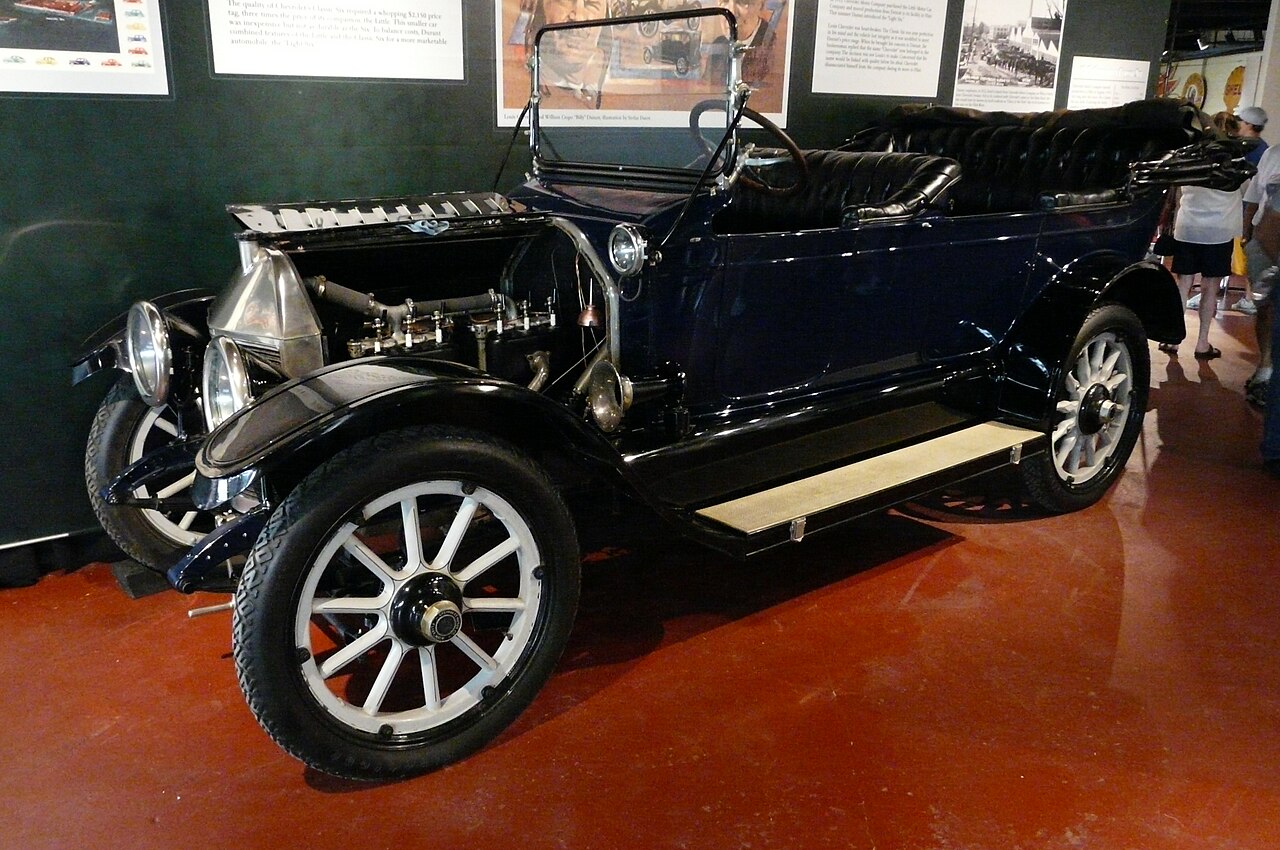
The photograph shows the large open touring form rather than a small two-seat sports body. A tall radiator, separate lamps and visibly distinct wings arrange the front end as a collection of individual objects. The passenger compartment sits behind that mechanical frontage, with a folded roof and an open relationship to the surrounding air. These are observations from the supplied museum photograph, not a claim that the pictured finish or every accessory has remained untouched since manufacture.
Design, photographs and collector context
For a reader accustomed to later Chevrolet styling, the greatest surprise may be the body’s upright proportions. The car does not try to hide its wheelbase behind a continuous sculpted shell. Wheels, steps, wings and seats each have a legible place. Looking at the car this way turns the Classic Six into a useful design reference: it explains how much the visual language of an automobile changed before Chevrolet’s later closed bodies, streamlining and sports-car projects.
A chronological display can give this car room to introduce the whole marque. Place its six-cylinder touring identity beside the later Series D V8 and the contrast becomes meaningful without a horsepower contest. Each represents a different early proposition. The Classic Six profile should retain its precise Series C name so it remains distinguishable from later Chevrolet six-cylinder models that share only a broad engine description.
Reading the design in context
Begin a close visual reading with the passenger area rather than the badge. The museum view presents a tall, open space for occupants, framed by a relatively small windscreen and surrounded by bodywork that leaves the wheels visually independent. That arrangement helps explain why an early touring car feels so different from a later saloon even when both serve a broad passenger role. The roof equipment is another useful point of comparison: its visible structure belongs to the body’s everyday presentation, rather than disappearing into a smooth fixed enclosure. For an illustrated collection record, a sequence of front, side and cabin images would let a reader follow those relationships without requiring familiarity with early Chevrolet terminology. Give each view a short, specific caption explaining what it shows. The result is a more durable reference than a single glamorous image: the Classic Six can introduce early body architecture, seating and appearance as well as a name and a date.
Specifications and rarity
| Reference year / history | 1912 |
|---|---|
| Model / project | Series C Classic Six |
| Engineering context | Front-mounted six-cylinder engine |
| Design and collector theme | The large touring car at the beginning of Chevrolet |
| Production / archive scope | Conservative ceiling: 2,999 Chevrolet vehicles in 1912, as reported in manufacturer historical literature. Exact Series C body output and complete multi-year Classic Six production are not established here. |
| Exact scoped manufacturing tally | Unset; see scope description |
| Inventory reference | CHV-001 — Verified |
Building the individual collector record
Photograph the radiator emblem, body seating arrangement, controls and engine identification separately. Keep any dated museum or restoration documentation with the images; a clear front view is especially helpful when comparing the radiator, lamps and wings with period illustrations. Catalogue the reference year and any individually documented build date in separate fields.
Documentary photograph
Series C Classic Six at the Alfred P. Sloan Museum. The uploader captions it as 1912; Commons categorisation uses 1913. Exact pictured-car build year is not independently certified; used as a documentary Series C model illustration.
Frequently asked questions
What does Classic Six mean in this profile?
It identifies the early Chevrolet Series C six-cylinder touring subject. The name belongs to the model’s identity, rather than being a general label for every old Chevrolet with a six-cylinder engine.
Is 2,999 the verified Series C production total?
No. It is the manufacturer’s stated Chevrolet annual total for 1912, used as a conservative parent ceiling. The exact Series C body tally and its full multi-year output remain unset.
What can be seen in the supplied photograph?
The documentary museum view shows an open touring body with separate wings, tall radiator and period-style lighting. These visible features explain the body form; they do not independently authenticate all restoration materials.
How should this car be placed in a Chevrolet collection?
Use it as an early touring-car reference and compare its exposed body architecture with the Series D and later streamlined models. Its strongest story is the marque’s starting point, rather than an invented racing connection.
What production or archive scope applies to this Series C Classic Six?
Conservative ceiling: 2,999 Chevrolet vehicles in 1912, as reported in manufacturer historical literature. Exact Series C body output and complete multi-year Classic Six production are not established here.
Who took the photograph, and what credit must remain?
The supplied photograph is credited to Trainguy1 via Wikimedia Commons under CC BY-SA 3.0. Its original file page and individual licence are linked in the photo credit. Keep the photographer name, source and licence visible when using the image; this version has no local retouching or cropping.
Sources and photo provenance
Related Chevrolet profiles
Continue the chronology with 1918 Chevrolet Series D V8 and 1934 Chevrolet Master Sports Roadster by Holden. Compare each page’s named production or project scope alongside its own documentary photograph.
Built in limited numbers
Conservative ceiling: 2,999 Chevrolet vehicles in 1912, as reported in manufacturer historical literature. Exact Series C body output and complete multi-year Classic Six production are not established here.
Gallery
Specifications
Factory specifications may vary by model year, market and configuration.
Identity & production
- Official model
- Series C Classic Six