1904 Rolls-Royce 10 H.P.
Explore the Rolls-Royce 10 H.P.: history, verified identity, specification references, rarity evidence and real credited photos.
The Rolls-Royce 10 H.P. is the small twin-cylinder car at the beginning of a very large story. Its importance comes from the engineering partnership it established in 1904, when Henry Royce’s practical improvements met Charles Rolls’ ambition to sell a first-class British motor car.
The first Rolls-Royce needs a precise name
There are two closely connected beginnings. Henry Royce’s own 10 H.P. first ran in April 1904; the Rolls-Royce-branded model followed later that year after the partners met in Manchester. Treating every early Royce as the same model erases the development between them. The distinction also matters when reading a museum label: an early production Rolls-Royce is not automatically the first car Royce drove, and neither description should be inferred merely from its age.
Rolls-Royce: the Royce and Rolls-Royce 10 H.P.
Refinement began with small mechanical decisions
The manufacturer’s retrospective describes Royce developing his own twin-cylinder engine and improving the ideas he found in existing cars. This gives the 10 H.P. a more useful engineering identity than a retrospective luxury slogan. Its fascination lies in the attention paid to operation, noise and reliability in a small vehicle. A specification should distinguish the model designation from a modern measured power output; the historical name is not a contemporary dyno certificate.
A compact car with an outsized influence
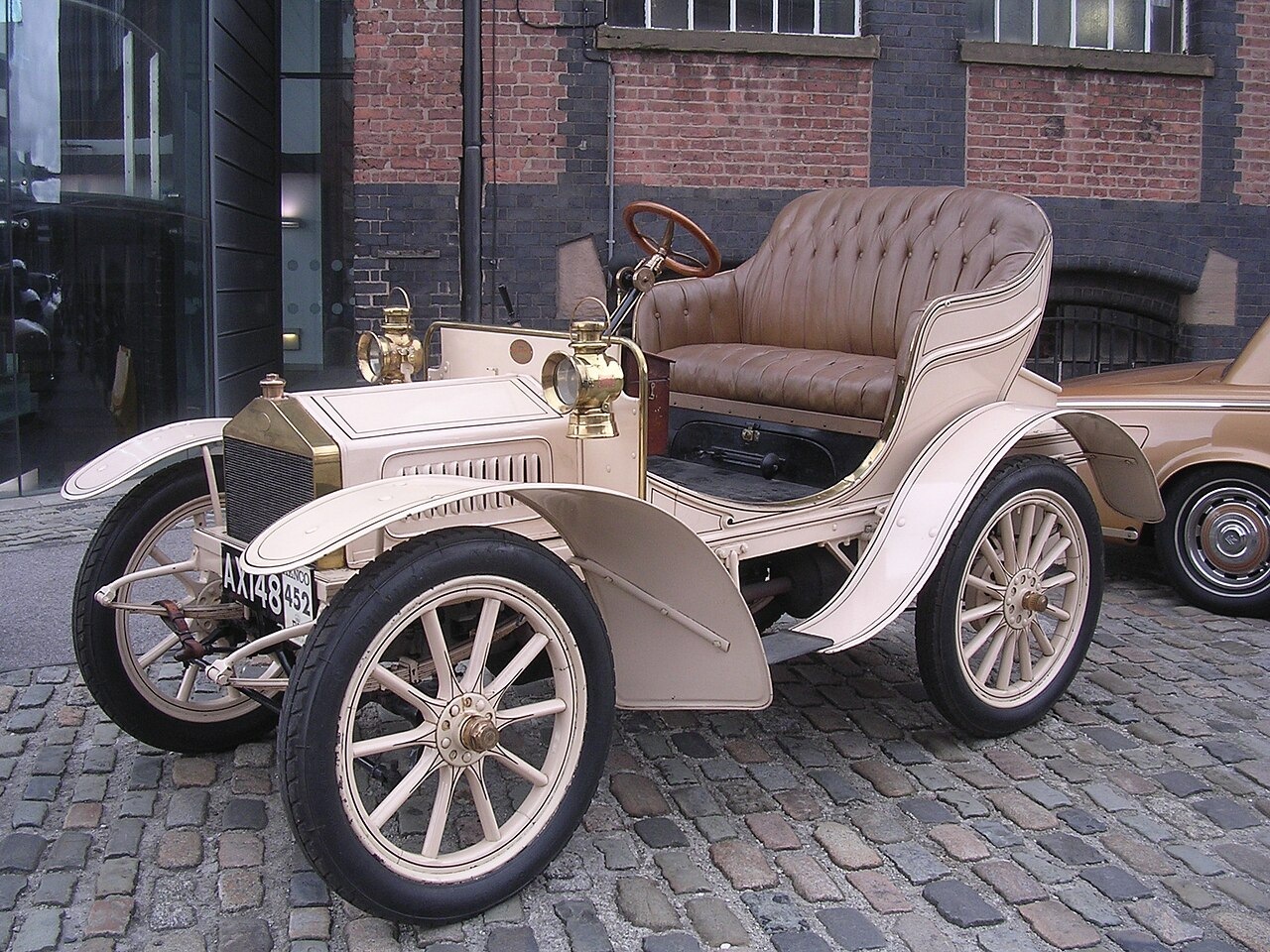
The photographed surviving car makes that early scale immediately visible. The exposed seating, narrow wheels and upright body belong to the pioneering motor-car period, rather than the formal limousine image later associated with the marque. As a design interpretation, this makes the 10 H.P. particularly revealing: the reputation was being established through mechanical quality before the company’s familiar visual language and great coachbuilt bodies had become settled conventions.
Rolls-Royce: the Royce and Rolls-Royce 10 H.P.
The Manchester connection
The 1904 meeting brought together a manufacturer looking to improve the motor car and a dealer looking for a British product worthy of his clients. That commercial relationship is central to the car’s historical appeal. It explains why the combined badge matters and why a vehicle file should preserve the exact manufacturer and model recorded in contemporary documents. Later association with the aerospace business should not be allowed to obscure the independent history of the motor-car marque.
Rolls-Royce heritage chronology
Reading a surviving example
A credible identity file starts with chassis markings, engine details, early registration history and the institution’s own accession record. Bodywork, upholstery and paint should then be described according to their documented dates. A century of preservation can involve substantial sympathetic work without invalidating the chassis identity. Conversely, an early-looking body is not evidence of a 1904 build. For comparison, record the photographed vehicle’s 1905 date separately from the model’s 1904 introduction.
Specifications and identity reference
| Introduction | 1904 Rolls-Royce-branded 10 H.P. |
|---|---|
| Engine architecture | Twin-cylinder petrol engine |
| Historical predecessor | Royce 10 H.P., first driven April 1904 |
| Photographed example | 1905 car, AX148, Manchester museum display |
| Profile boundary | Model family; not the individual Royce prototype |
Rarity and production scope
This is the early Rolls-Royce 10 H.P. model family. The workbook’s commonly cited 17-car figure is not treated as an independently audited factory census here. The identity and exceptionally early, small-series historical scope are verified; surviving cars and individual coachwork require their own records. The pictured 1905 example illustrates the family rather than changing the introduction year.
What the photograph represents
A surviving 1905 Rolls-Royce 10 H.P., registration AX148, displayed in Manchester. Model illustration; the photograph does not depict the separate Royce prototype of April 1904.
Related Rolls-Royce heritage profiles
Frequently asked questions
Is the Royce 10 H.P. the same record?
It is the precursor. This profile covers the Rolls-Royce-branded model that followed the founders’ 1904 meeting.
Why is a 1905 car pictured in a 1904 profile?
1904 is the model introduction; the surviving museum example is individually described as a 1905 car.
What is the production-count boundary for this profile?
This is the early Rolls-Royce 10 H.P. model family. The workbook’s commonly cited 17-car figure is not treated as an independently audited factory census here. The identity and exceptionally early, small-series historical scope are verified; surviving cars and individual coachwork require their own records. The pictured 1905 example illustrates the family rather than changing the introduction year.
Sources and further reading
Research checked 18 October 2026. Linked factory announcements, museum records and attributed specialist research support the specifically identified claims. Photographic descriptions identify the illustrated subject. Design analysis and suggested authentication steps are editorial interpretation.
Built in limited numbers
This is the early Rolls-Royce 10 H.P. model family. The workbook’s commonly cited 17-car figure is not treated as an independently audited factory census here. The identity and exceptionally early, small-series historical scope are verified; surviving cars and individual coachwork require their own records. The pictured 1905 example illustrates the family rather than changing the introduction year.
Gallery
Specifications
Factory specifications may vary by model year, market and configuration.
Identity & production
- Official model
- Rolls-Royce 10 H.P.
Sources and verification
Source citations are being prepared for this profile.