Bespoke Rolls-Royces: five collections that turn a story into a car
A bespoke car can tell its story in the places an owner sees every day: a clock, a piece of dashboard artwork, a stitch pattern or the arrangement of light above the seats.
Rolls-Royce’s small collections make that approach unusually explicit. A subject is chosen, then developed across materials and techniques. Some references are immediately visible; others ask the owner to look again or understand a particular historical connection.
These five programmes range from fifty-car collections to a six-car group of individually commissioned artworks. Their subjects differ, but each provides a documented example of an idea becoming a physical specification. Follow the story from the first reference to the finished detail, and the small production number becomes one part of a much larger design exercise.
01 / A car with a cipher — Wraith Kryptos Collection
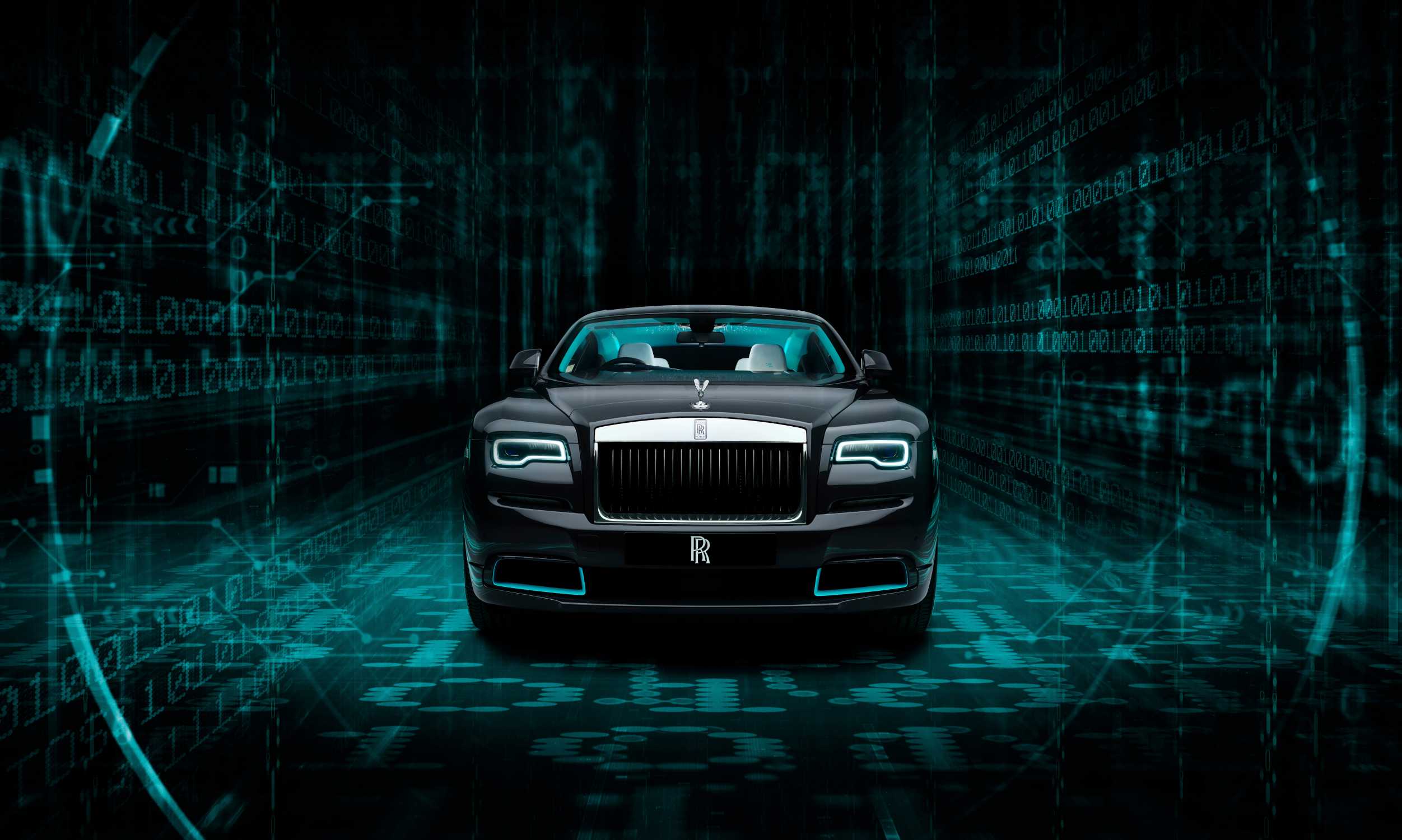
Rolls-Royce describes Wraith Kryptos as a 50-car collection built around cryptology. Its account identifies a coded message and four ciphers developed at Goodwood, with references distributed across the car. The owner is invited to investigate the design as well as inhabit it. [1]
That changes the role of decoration. A repeated symbol or pattern can carry information, so looking closely becomes part of the intended experience. The design is not exhausted by the first glance at a paint colour or trim choice.
The collection format is important too. Fifty cars share the cryptological theme, giving the programme a common language while the message supplies another layer of engagement. In a personal collection of interesting vehicles, Kryptos stands out for making curiosity itself part of the brief. Its details are designed to be revisited, which is a different ambition from simply announcing rarity on a plaque.
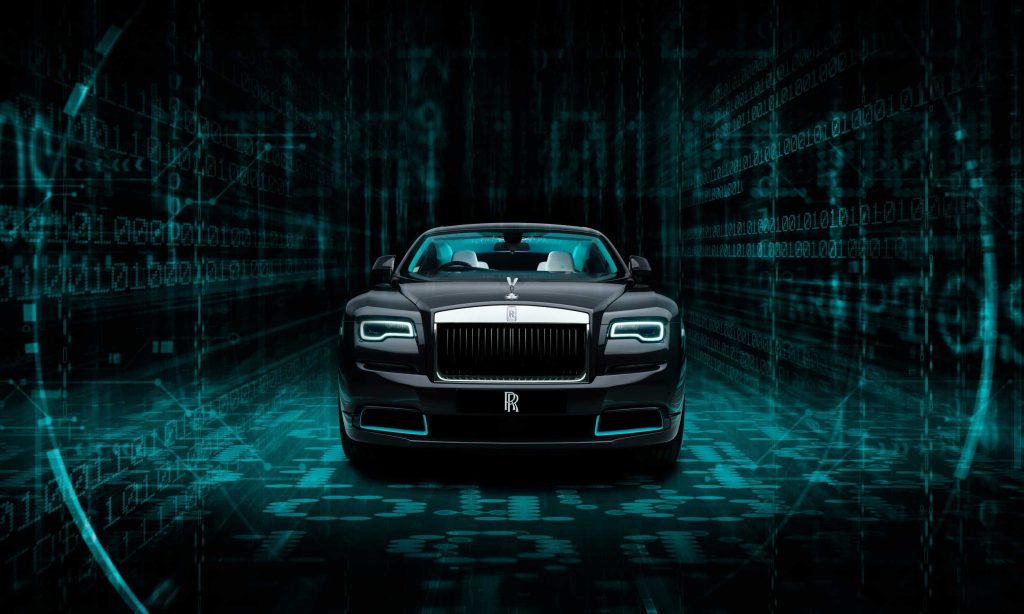
2020 Rolls-Royce Wraith Kryptos Collection
The Wraith Kryptos Collection turned the motor car into an extended cryptographic design. Its 50-car programme hid a coordinated cipher within the body and cabin, inviting owners to read the vehicle as…
Explore the full profile02 / Time becomes an artwork — Phantom Tempus Collection
The 20-car Phantom Tempus Collection drew on time, astronomy and pulsars. Rolls-Royce’s release describes a Gallery artwork formed from a single billet of aluminium into 100 individually contoured columns, accompanied by a specially developed Pulsar Headliner. The conventional dashboard clock was omitted as part of the theme. [2]
The subject is expressed through both an object and an absence. The sculpted metal turns the idea of time into a tactile visual form, while the headliner extends the reference above the occupants. Different parts of the cabin are being used to develop one concept.
The astronomical references belong to the manufacturer’s design narrative. Their purpose here is to explain why the columns and lighting were made, and how the chosen subject connects those features. The result rewards attention to the whole interior rather than treating each bespoke element as an unrelated option.
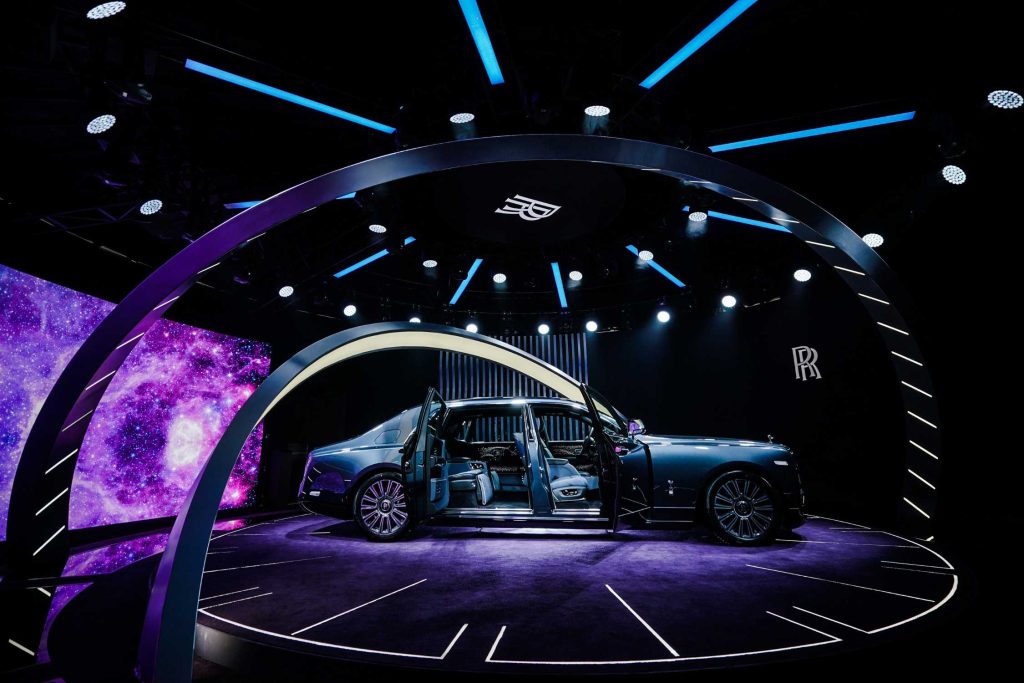
2021 Rolls-Royce Phantom Tempus Collection
Phantom Tempus explored time through its deliberate absence: the collection omitted the dashboard clock while filling the cabin with celestial references. The manufacturer’s 2021 announcement identifies a 20-car worldwide programme, distinct from…
Explore the full profile03 / A flight remembered through craft — Wraith Eagle VIII Collection
Rolls-Royce announced 50 Wraith Eagle VIII cars to commemorate Alcock and Brown’s first non-stop transatlantic flight in 1919, powered by Rolls-Royce Eagle engines. Its design account connects the clock, dashboard treatment and Starlight Headliner to aspects of the journey. [3]
The collection translates a historical event into the scale of a cabin. An instrument can become a reference to the difficulty of navigating the flight, while the headliner provides another way to connect the occupants with the sky above the original route. The car becomes a setting in which those details can be read together.
That is more specific than a general aviation-inspired finish. The names, route and period provide a particular story for the materials to carry. Understanding that story gives the owner a way back into the design long after its colours have become familiar.
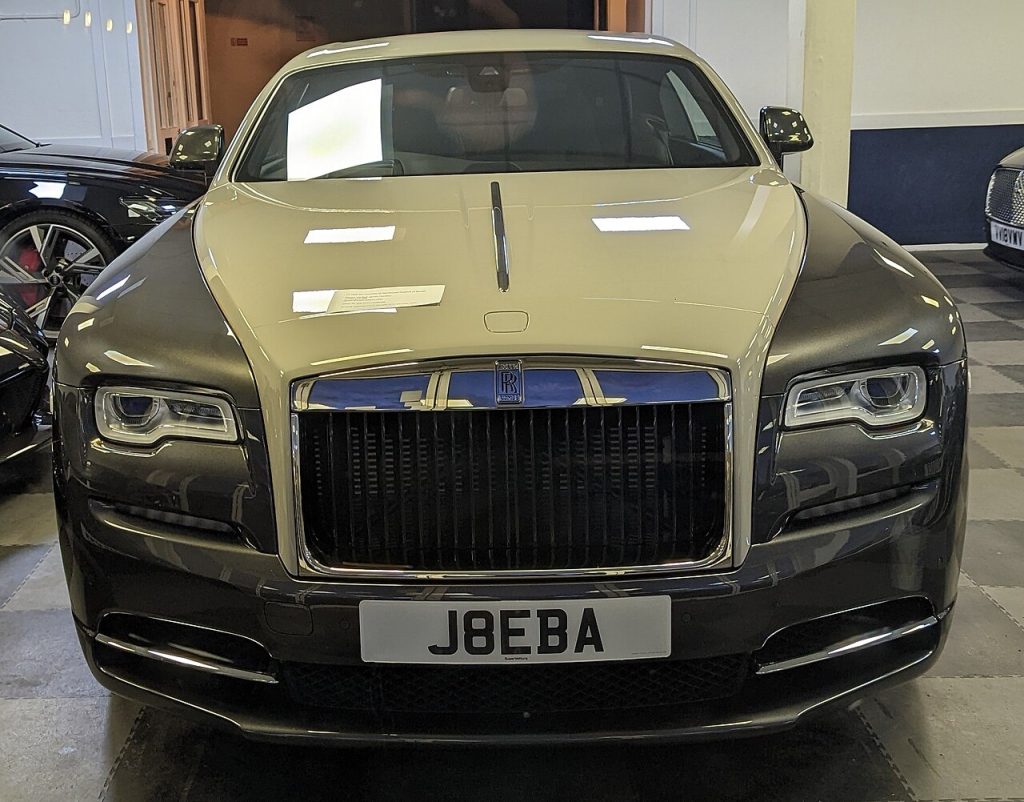
2019 Rolls-Royce Wraith Eagle VIII Collection
The Wraith Eagle VIII Collection commemorated Alcock and Brown’s pioneering non-stop Atlantic crossing through an unusually detailed design narrative. Announced as 50 cars in 2019, it translated the flight’s route, night-time landscape…
Explore the full profile04 / Six cars, six individual works — Phantom The Six Elements
The Six Elements brought artist Sacha Jafri together with six Phantom Series II cars, each carrying a hand-painted Gallery artwork. Rolls-Royce’s account names Earth, Water, Fire, Wind and Air, with Humanity as the sixth subject. The programme is a six-car collection containing distinct individual works. [4]
The Gallery gives those works a defined place within the vehicle. The artwork is part of the cabin’s designed environment, while the common collection provides a relationship between the six cars. Series identity and individual authorship are both relevant.
For the reader, the interesting question is how a car accommodates an artwork without losing the meaning of either object. The artist’s subject and execution remain central, while the commission gives the piece a particular location and audience. These Phantoms show how bespoke vehicle design can include a direct collaboration with an identifiable contemporary artist.
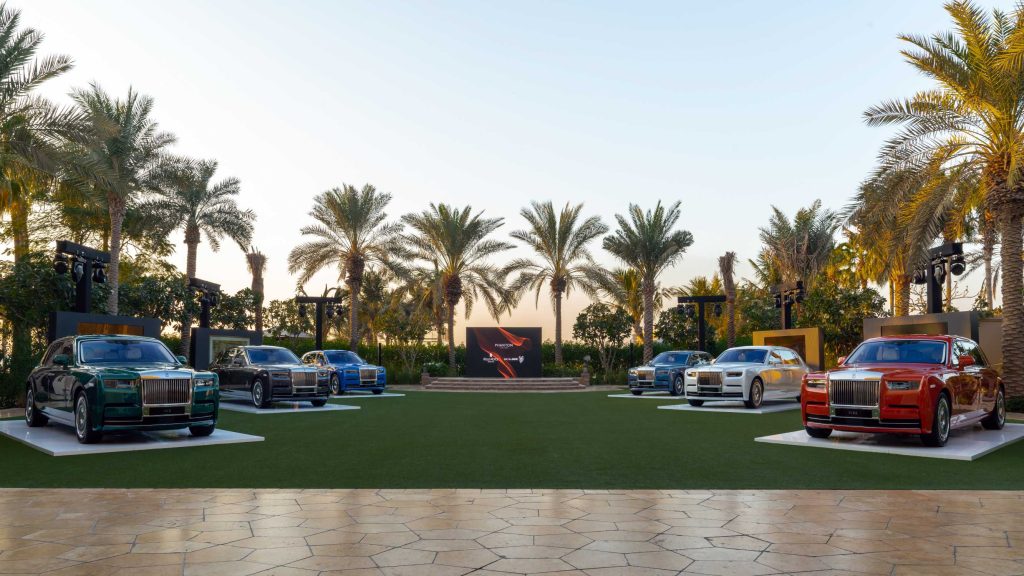
2022 Rolls-Royce Phantom The Six Elements
The Six Elements brought Sacha Jafri’s painting into six individually commissioned Phantom Extended Series II cars. The 2022 programme is best understood as one coordinated series of six distinct artworks and vehicles,…
Explore the full profile05 / The mascot becomes the subject — Phantom Scintilla
Rolls-Royce’s 2024 Phantom Scintilla Private Collection comprised ten examples and took the Spirit of Ecstasy as its subject. The design included a ceramic finish for the figurine and a Gallery work, Celestial Pulse, made from seven individually milled aluminium ribbons with a related finish. [5]
The reference moves from the bonnet into the cabin. A familiar emblem supplies the starting point, then its movement and sculptural associations are developed through another set of materials and forms. The relationship is recognisable without requiring every component to reproduce the mascot literally.
That brings this collection of five programmes to a useful final question: how far can one idea travel through a car? In Scintilla, it links exterior sculpture, interior artwork and other crafted details. The small series is a framework for exploring that continuity, with the manufacturer’s design account preserving the intended connection.
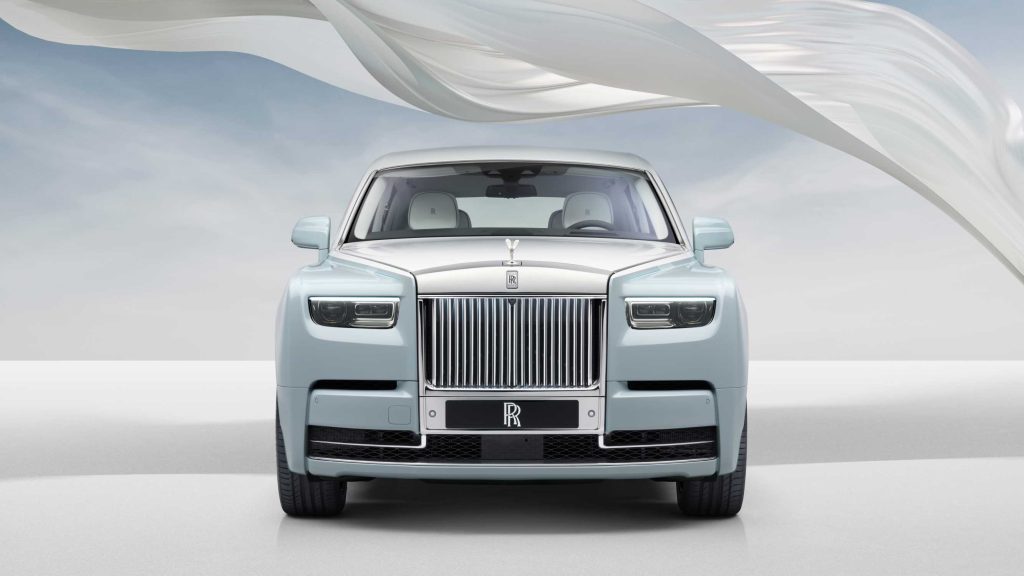
2024 Rolls-Royce Phantom Scintilla Private Collection
Phantom Scintilla translates the Spirit of Ecstasy into a ten-car interior and exterior composition. The 2024 Private Collection takes inspiration from the sculpture’s relationship with classical art, using a ceramic figure, layered…
Explore the full profileLook for the thread that joins the details
A bespoke collection becomes easier to understand when its references are followed across the whole vehicle. Begin with the subject, then identify where it appears: in a material, a crafted object, a lighting arrangement or an intentionally missing feature.
Kryptos asks the owner to investigate. Tempus makes an abstract idea visible. Eagle VIII carries a historical journey into the cabin. The Six Elements creates a setting for individual paintings, while Scintilla develops the meaning of a familiar sculpture.
Those are five different ways to give a small-series car depth beyond its specification sheet. Keep the collection names and the stories together, and each return to a detail can reveal why it was chosen.
Sources & further reading
- Rolls-Royce: Wraith Kryptos — Manufacturer account of the fifty-car cryptology collection.
- Rolls-Royce: Phantom Tempus launch — Twenty-car scope, aluminium Gallery, omitted clock and Pulsar Headliner.
- Rolls-Royce: Wraith Eagle VIII introduction — Fifty-car series and the flight references behind its design.
- Rolls-Royce: The Six Elements unveiled — Six individual artist commissions within the Phantom collection.
- Rolls-Royce: Phantom Scintilla — Ten-car Private Collection and the Spirit of Ecstasy design narrative.
Continue exploring
For another perspective on specialist manufacturing and individual bodies, read Modern coachbuilding and bespoke bodies, or explore all editions.