Hybrid hypercars explained: five different uses for electric power
Hybrid describes a combination, not a single engineering solution. Where the electric machines sit, how energy is stored and what the system is intended to do can change the whole character of the programme.
In a performance car, electrical assistance may contribute traction at another axle, support the combustion engine or form part of a wider strategy for energy recovery and deployment. Two cars can both be hybrids while arranging those functions very differently.
This edition follows five documented programmes. The aim is to build a vocabulary for reading their architectures, rather than using combined output as a substitute for explanation. Battery capacity, motor placement and a production reference each answer different questions.
01 / Two axles, three sources of propulsion — Porsche 918 Spyder
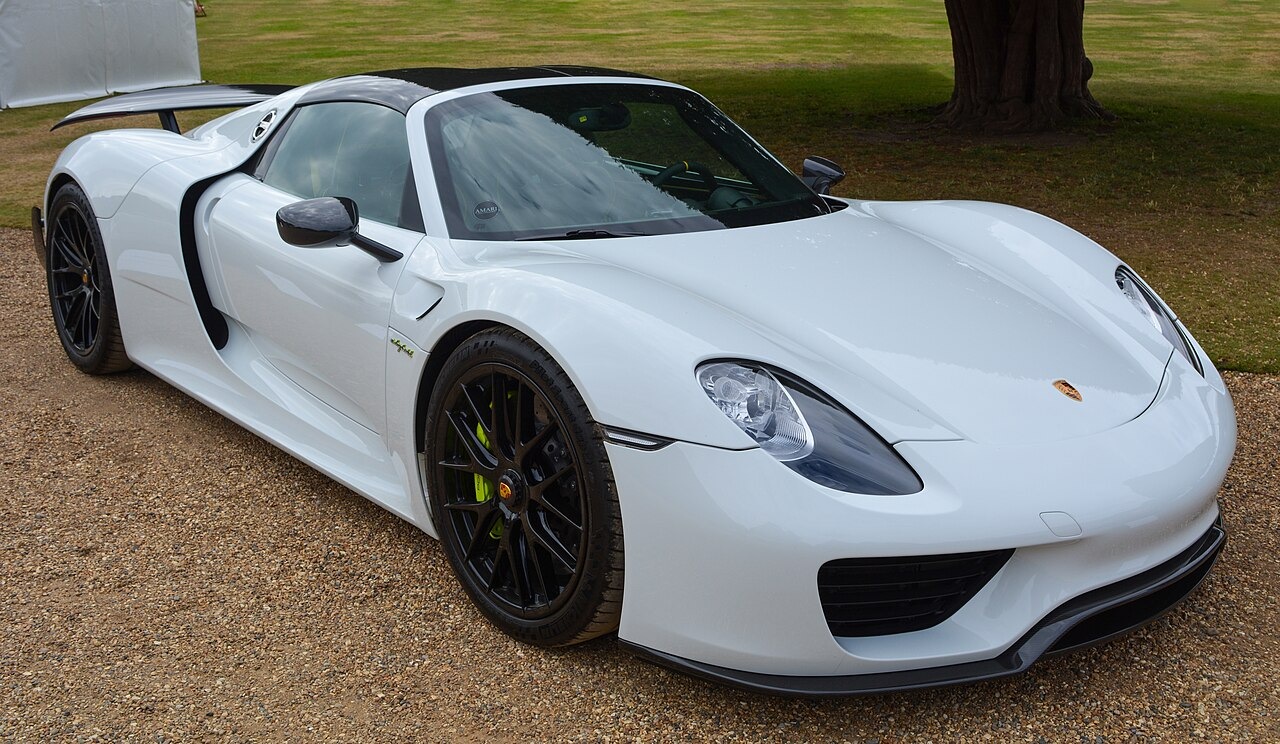
Porsche’s production 918 Spyder combined a combustion engine and an electric motor at the rear with another electric motor at the front axle. The manufacturer identifies it as a plug-in hybrid and documented the completion of the 918-car programme in 2015. [1]
The axle layout is the useful starting point. It shows that the electric part of a hybrid can contribute to how propulsion is distributed around the car, not merely increase the output quoted beside the engine. The location of the components helps explain the purpose of the architecture.
The word production is also worth retaining when following the model through the archive. The 918’s concept stage is part of its development history, but the customer car has its own specification and completion record. The two belong to a connected story without becoming interchangeable evidence.
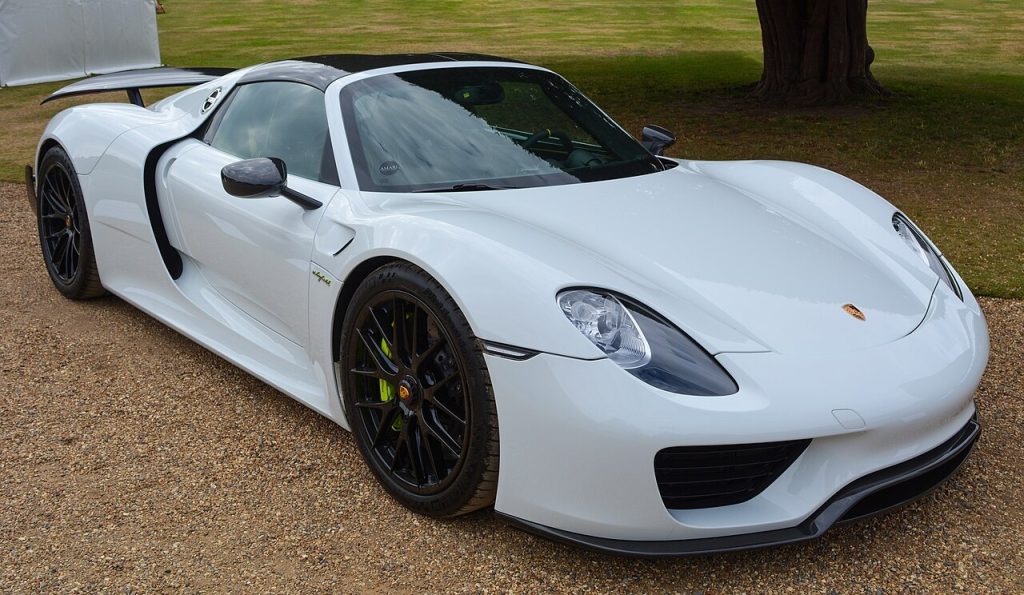
2013 Porsche 918 Spyder — Production Hybrid Supercar
The production Porsche 918 Spyder made its public debut in 2013, combining a 4.6-litre V8 with two electric motors and an all-wheel-drive layout. Its 652 kW or 887 PS system output described…
Explore the full profile02 / Electric assistance around a V12 — Ferrari LaFerrari
Ferrari’s account of LaFerrari describes its HY-KERS system as an integration of the V12, electric equipment and battery. The company’s original programme was planned around 499 cars. That original reference should not be silently converted into a claim about every later related car or special additional build. [2]
The important point is the integration. An electric system is not an independent accessory bolted onto a complete driving concept. The way it exchanges information and energy with the combustion powertrain helps define the resulting machine.
For a reader, separating the components on paper is a useful first step: engine, electric machines, storage and control strategy. Putting those components back into their documented relationship is the second. This produces a more informative description than assuming that all V12 hybrids use the same arrangement or can be understood from a single combined-power figure.
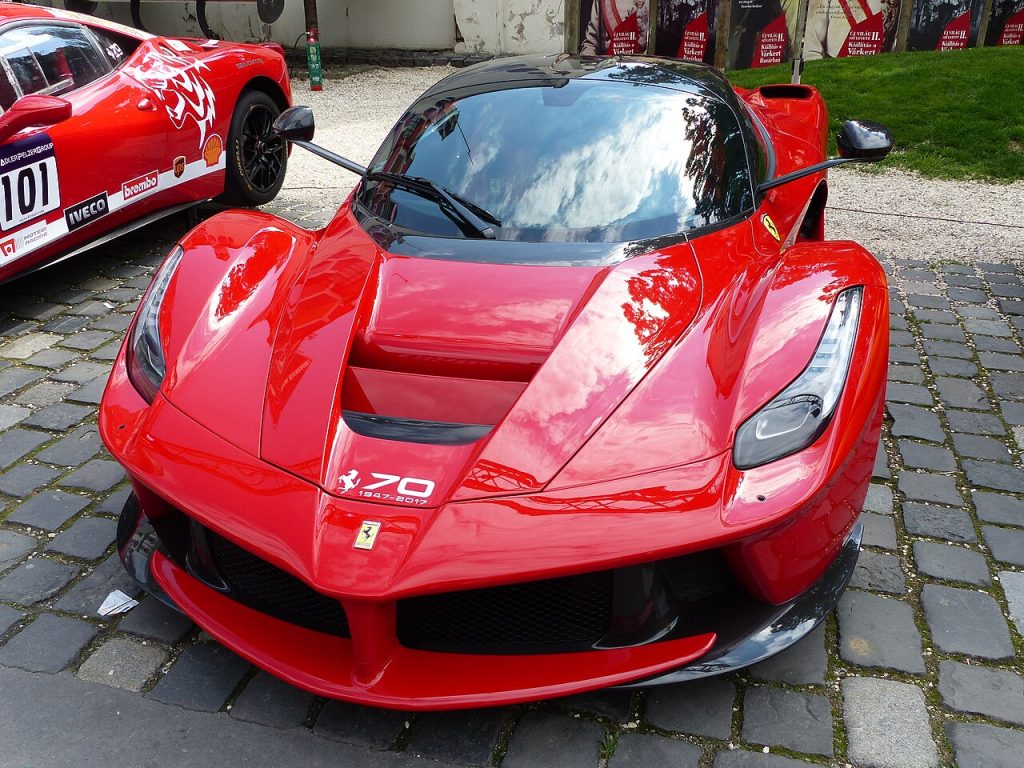
2013 Ferrari LaFerrari
The Ferrari LaFerrari introduced a hybrid system to the marque’s flagship road-supercar story in 2013.
Explore the full profile03 / A different storage idea — Lamborghini Sián FKP 37
Lamborghini described the Sián FKP 37 as a V12 hybrid using a supercapacitor-based system. Its customer coupé programme was a limited series of 63. The separate Sián Roadster programme should remain separately named when discussing numbers and body styles. [3]
The supercapacitor is the distinction to follow. Calling the car a hybrid does not mean its energy storage is equivalent to the plug-in battery arrangement of the Porsche. The storage technology is part of the engineering identity, so a description that omits it loses an important piece of the story.
This also demonstrates why a useful collection can cross conventional manufacturer boundaries. Cars with very different appearances may become interesting neighbours when organised by an engineering question. Here the question is what kind of electrical storage the manufacturer chose and how that choice fits the documented application.
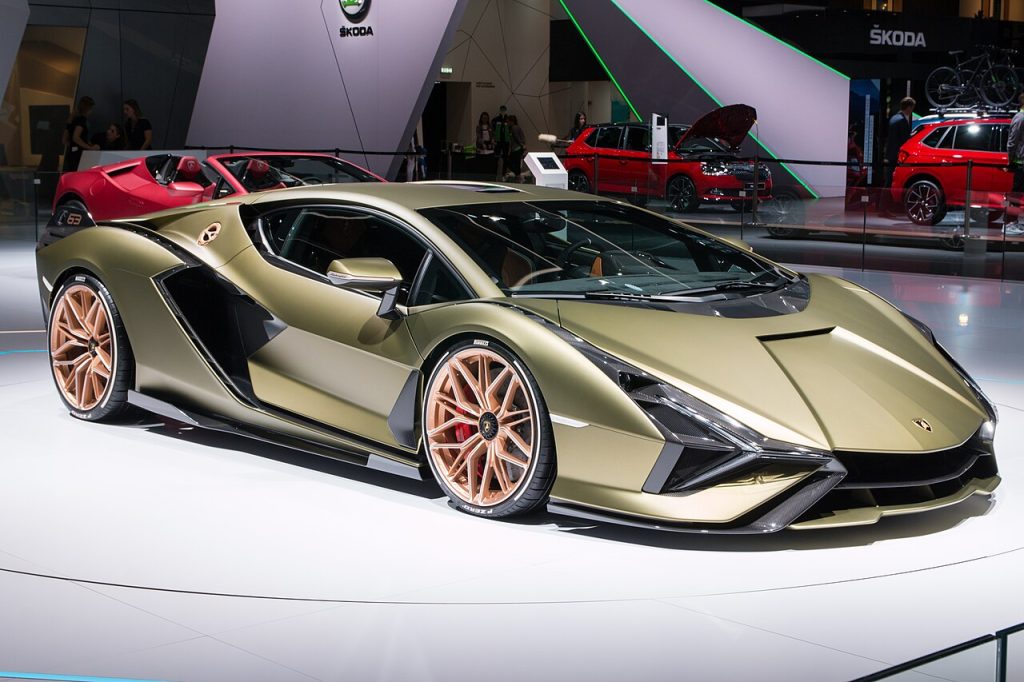
2019 Lamborghini Sián FKP 37
The Lamborghini Sián FKP 37 adds supercapacitor-assisted electrification to the V12 few-off lineage. Its sixty-three-customer programme and distinctive physical body provide a precise record separate from the open Sián Roadster.
Explore the full profile04 / A road-going XX programme — Ferrari SF90 XX Stradale
Ferrari announced the SF90 XX Stradale and SF90 XX Spider in 2023 as road-going V8 plug-in hybrids. The stated limits were 799 Stradales and 599 Spiders. This chapter selects the Stradale, so its figure remains attached to that version rather than the combined family. [4]
The XX name carries another layer of context. A familiar programme identity can be adapted to a different kind of vehicle, and the manufacturer’s precise description of the road-going application matters more than an assumption based on the badge alone.
The same discipline applies to the electrical architecture. Establish that the vehicle is a plug-in hybrid, then follow the specification of the particular derivative. A shared model family can provide context, but it should not replace the technical account of the exact car under discussion.
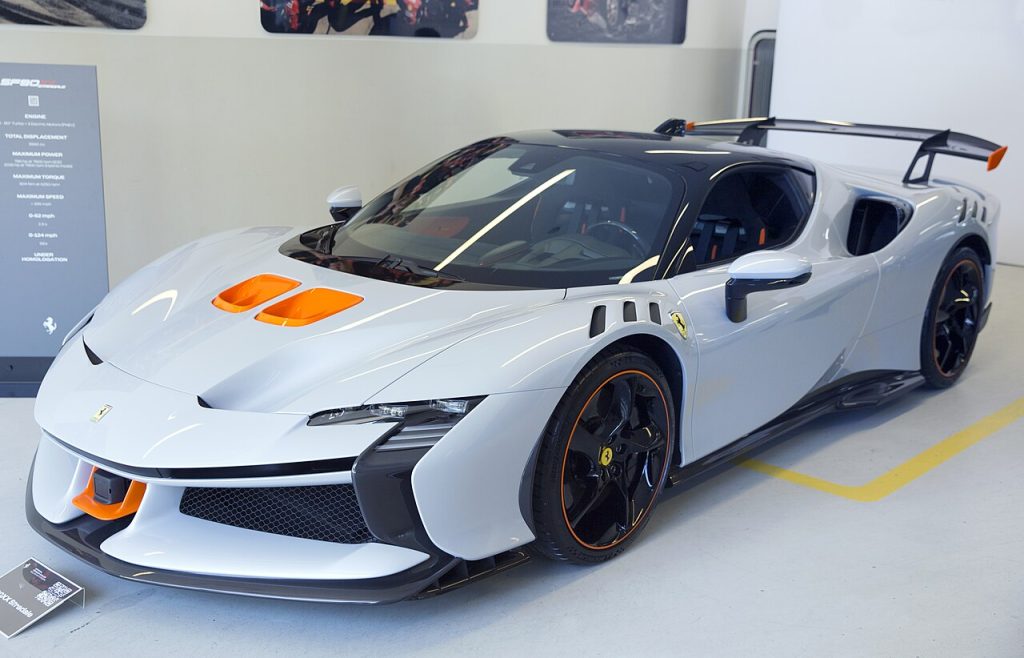
2023 Ferrari SF90 XX Stradale
The Ferrari SF90 XX Stradale introduced a road-going XX special-series interpretation of the SF90 architecture in June 2023.
Explore the full profile05 / A V6 in the flagship role — Ferrari F80
Ferrari introduced the F80 in October 2024 with a V6 hybrid powertrain and an announced series of 799. Its launch documentation describes a maximum combined output of 1,200 cv. That is a launch specification and programme limit, not a statement that the whole series has already been completed. [5]
The F80 makes cylinder count an especially useful subject to examine rather than a shortcut to ranking. A flagship’s technical identity depends on the complete system: combustion engine, electric equipment, energy management and the car they are designed to serve.
Placed after LaFerrari in a reading list, it provides a way to investigate a manufacturer’s changing choices over time. The comparison begins with documented architecture and purpose, rather than assuming that a later car is simply the earlier formula with more power. That is where an archive becomes a tool for understanding development.
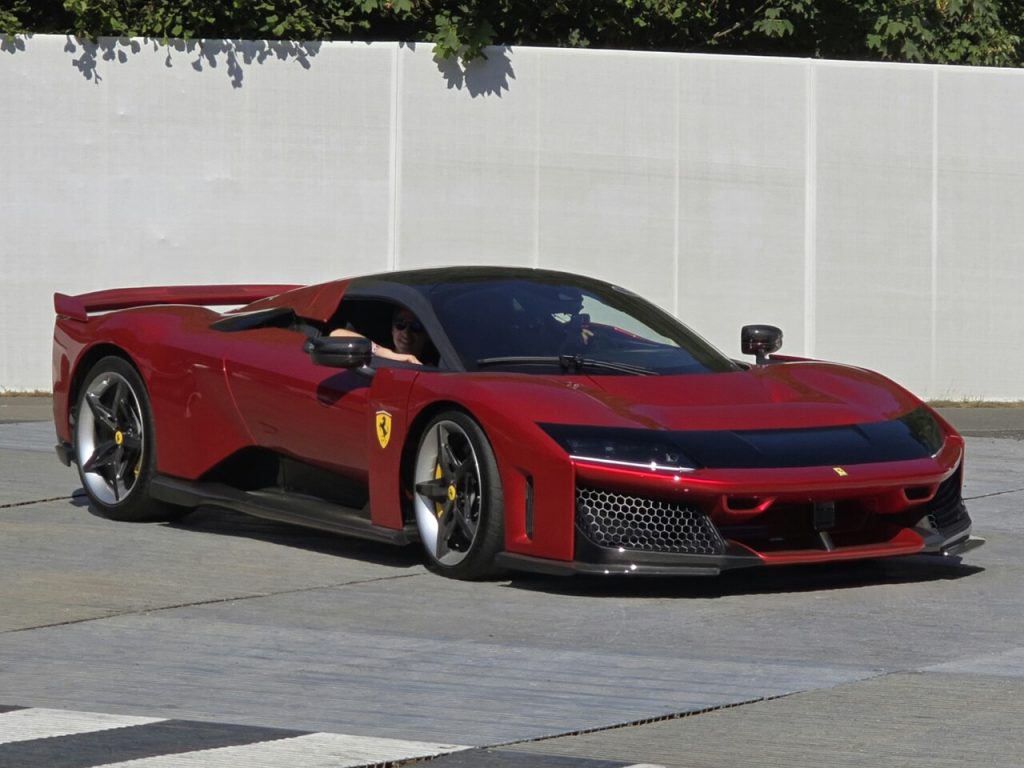
2024 Ferrari F80
Ferrari introduced the F80 on 17 October 2024 as a new flagship supercar with a published global programme of 799 examples.
Explore the full profileBuild a better hybrid description
Begin with five questions: what is the combustion engine, where are the electric machines, what stores the energy, can the system be charged externally, and what role does the manufacturer describe for the electrical equipment? A clear answer to those questions is often more useful than a long list of superlatives.
Keep measurement units and production scope equally precise. Engine output and combined-system output are not interchangeable labels. A coupé limit is not a family total. An announced programme is not the same kind of evidence as a factory completion statement.
Save these profiles as an engineering collection. Following their differences can make future hybrid introductions easier to read: the headline may be new, but you will already know which questions reveal the underlying idea.
Sources & further reading
- Porsche: Number 918 leaves the factory — Completed programme and hybrid powertrain.
- Ferrari: 2015 annual report — Original LaFerrari programme and HY-KERS account.
- Lamborghini: First Sián customer deliveries — Supercapacitor hybrid and 63 coupés.
- Ferrari: SF90 XX launch material — PHEV identity and separate body-style limits.
- Ferrari: F80 launch — V6 hybrid specification and announced 799-car programme.