Rare open-top cars: five different approaches to the roadster
Removing the roof is only one way to create an open car. The windscreen, the cabin boundary and the treatment of the rear body can change the concept just as much. These five programmes begin with very different answers.
The words speedster, spider, roadster and barchetta carry history, but the badge alone does not tell us how a car is configured. A useful description starts with what is physically present: a roof mechanism, a windscreen, seats and the structure surrounding them.
This edition follows those choices through five documented limited-production models. Some preserve the ability to close the cabin; others make openness central to the whole design. Their interest lies in the different briefs, not in treating every roofless car as the same kind of machine.
01 / History with a roof of its own — Porsche 911 Speedster, 991
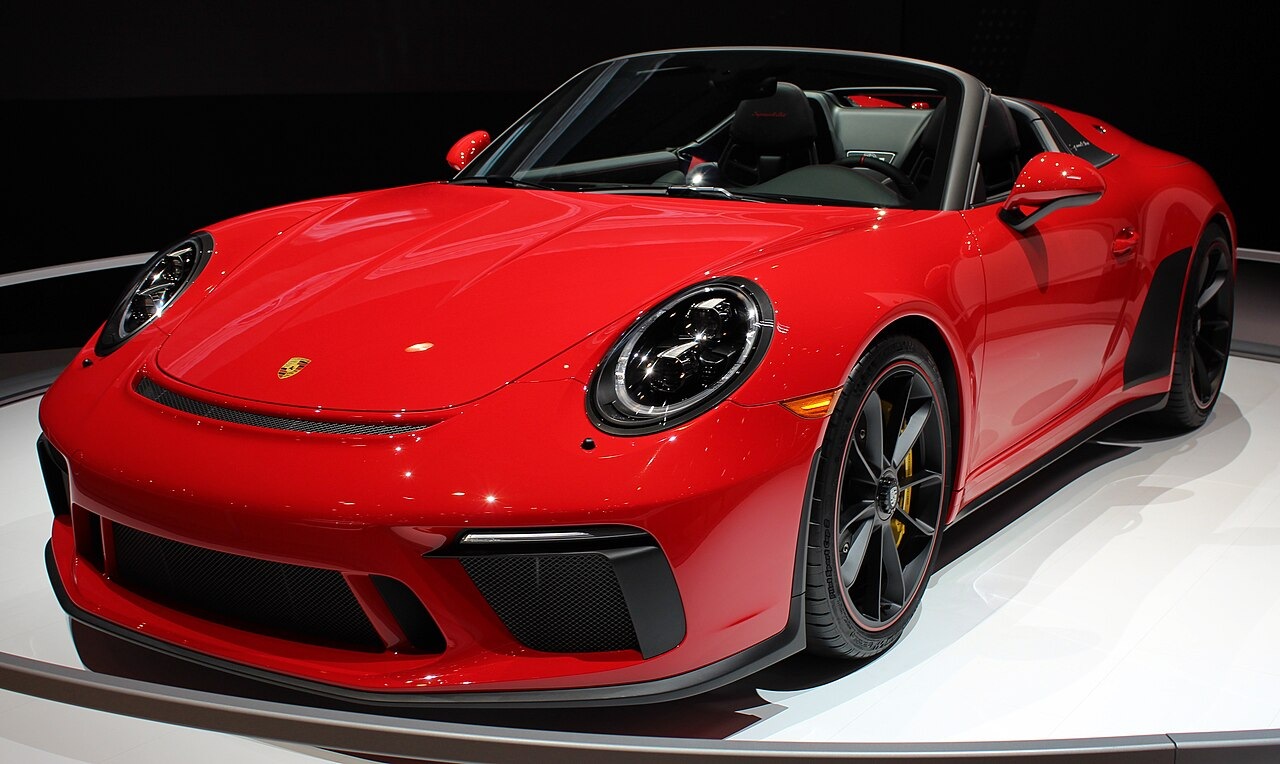
Porsche announced the production 911 Speedster in 2019 with a run of 1,948 cars, a reference to the year of the 356 No. 1 Roadster. Its production account describes a manually operated fabric roof and a six-speed manual transmission. This is the production 991-era model, distinct from the preceding concept studies. [1]
The roof is part of the design brief, rather than an inconvenient detail to ignore. It gives this interpretation of the Speedster a way to change its relationship with the weather while retaining the proportions and rear-body treatment that identify the programme.
The distinction between study and production car matters here. A concept establishes an idea; a customer model has a documented specification and production scope. Following both can be rewarding, provided the cars are not merged into one undifferentiated count or described using equipment from the wrong stage of development.
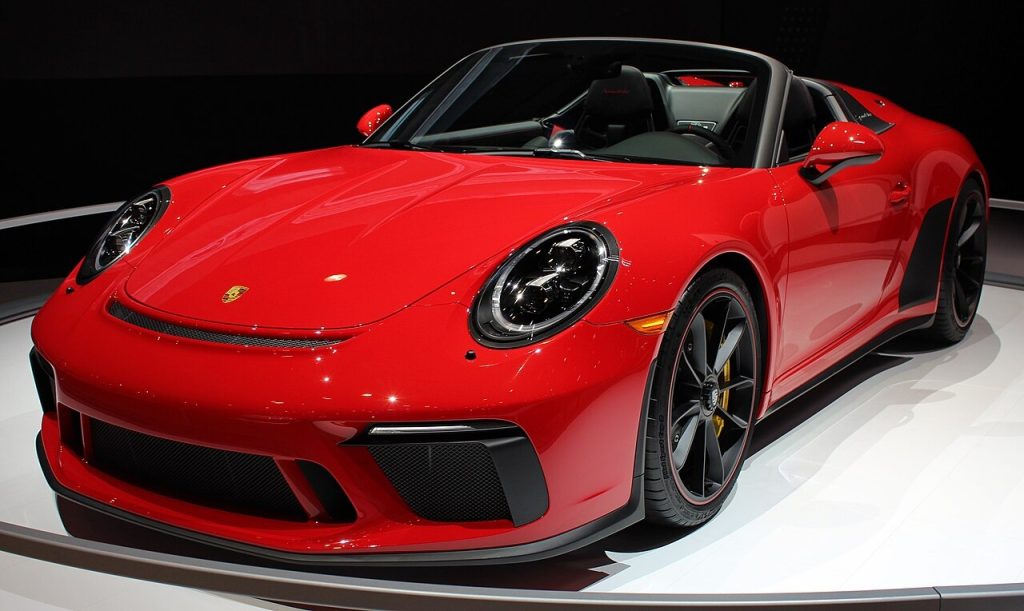
2019 Porsche 911 Speedster — 991 Production Model
The production 991-generation Porsche 911 Speedster belongs to 2019, following the concept presentations of 2018. Porsche specified a four-litre naturally aspirated flat-six, six-speed manual gearbox and a limit of 1,948 cars. The…
Explore the full profile02 / The windscreen disappears — Aston Martin V12 Speedster
Aston Martin introduced the V12 Speedster as an 88-car programme from Q by Aston Martin. Its launch account explicitly identifies the removal of the windscreen as central to the open experience and describes a front-mid-mounted, twin-turbocharged 5.2-litre V12 with an eight-speed automatic transmission. [2]
Without a conventional windscreen, the relationship between the occupants and the body changes visibly. The edge of the cabin becomes a major part of the object’s identity, and the surfaces around the seats become as important to its appearance as a conventional roofline would be.
This is a useful contrast with the Porsche. Both use the Speedster name, but the name does not establish equivalent equipment or the same intended form of openness. Record the actual configuration, then explore the history that each manufacturer chose to attach to it.

Aston Martin V12 Speedster
The V12 Speedster makes openness the central feature of a Q-created sports car: two exposed seats, a V12 and no roof or windscreen. Its 2020 reveal and later optional DBR1 specification form…
Explore the full profile03 / A tribute expressed through absence — SLR McLaren Stirling Moss
Mercedes-Benz describes the 2009 SLR McLaren Stirling Moss as a series of 75, distinguished by having neither a roof nor a windscreen. The company connects it to the racing history of Stirling Moss and the Mercedes-Benz 300 SLR. [3]
That reference is important, but so is the distance between a tribute and its inspiration. The modern car belongs to the SLR McLaren story; the historic racing car belongs to another period and technical programme. The connection explains the theme without making the two vehicles the same object.
In design terms, absence becomes a very conspicuous feature. Removing the familiar outline of the glasshouse changes the way the front and rear of the body relate to one another. An open car can therefore be distinguished as much by what it leaves out as by the components it adds.
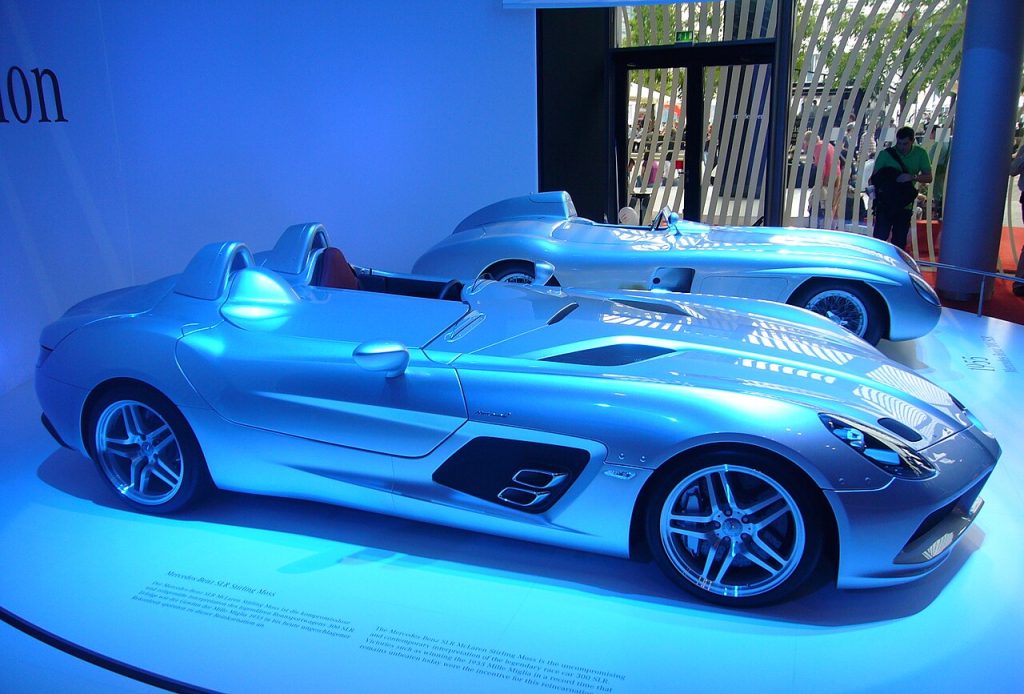
2009 Mercedes-Benz SLR McLaren Stirling Moss
The Mercedes-Benz SLR McLaren Stirling Moss is an exceptionally open interpretation of the modern SLR. Its speedster form dispenses with a conventional roof and full-height windscreen, giving the historical tribute a physical…
Explore the full profile04 / A special-series spider that can close — Ferrari 458 Speciale A
Ferrari identifies the 458 Speciale A as a 499-car limited series. The model combines the special-series 458 identity with a retractable hardtop. It belongs to Ferrari’s lineage of open versions of its special-series mid-engined cars. [4]
The hardtop makes this a different kind of design problem from a permanently open cockpit. The shape must work as a closed car, as an open car and around the mechanism that allows the transition. The changing roof is part of the complete programme, not simply a secondary specification line.
This helps explain why a body-style derivative deserves its own profile. The related coupé provides technical and historical context, but the open model has a distinct physical arrangement and stated series. Keeping those records connected, without combining their identities, gives a fuller picture of the model family.
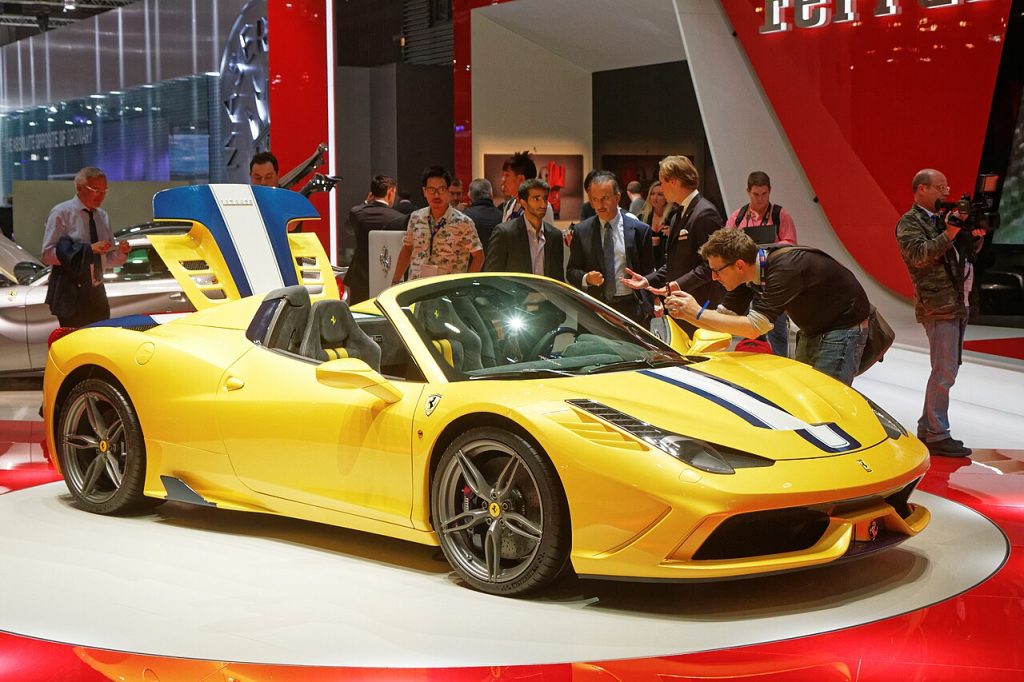
2014 Ferrari 458 Speciale A
The Ferrari 458 Speciale A joined a focused naturally aspirated V8 brief with an open body in 2014.
Explore the full profile05 / An open alternative with a separate name — Aston Martin DB AR1
Aston Martin explains the DB AR1 name as American Roadster 1 and describes its creation as an open alternative to the DB7 Zagato coupé. Its heritage account identifies 99 examples of each derivative. The DB AR1 is therefore a separate body programme, rather than an extra label for the closed car. [5] [6]
The name is a reminder that even a close relationship between two cars does not guarantee matching model designations. A collection record needs to preserve the manufacturer’s actual identity for each derivative, as well as its connection to the underlying family and design partnership.
Placed beside the other cars in this edition, the DB AR1 also shows how broad the roadster idea has become. The history of open motoring can be followed through manufacturers, specialist design collaborations and very different approaches to the cabin, without needing to reduce them to one universal formula.
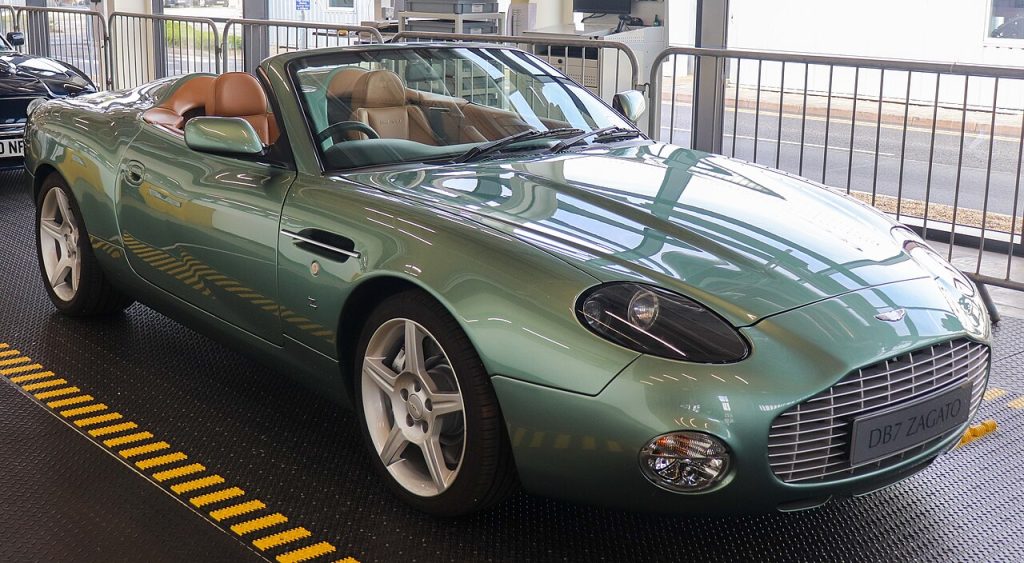
Aston Martin DB AR1
The DB AR1 was Aston Martin’s roofless American Roadster, with Zagato coachwork and a ninety-nine-car customer programme. Revealed in January 2003, it kept the standard Volante platform rather than simply reproducing the…
Explore the full profileDescribe the opening, not just the badge
A useful open-car collection can be organised around three physical questions. Can the cabin be closed? What forms the boundary in front of the occupants? How does the body continue behind the seats? Those questions make comparisons concrete and keep evocative names from doing all the explanatory work.
The Porsche’s fabric roof and the Ferrari’s retractable hardtop offer different ways to move between open and closed forms. The Aston Martin V12 Speedster and Mercedes-Benz Stirling Moss make the missing windscreen central to their identities. The DB AR1 adds the story of a separate design-house derivative.
Save the profiles that make you reconsider an assumption about open cars. The most interesting connection may be a shared silhouette, an entirely different roof mechanism or a name that points towards a particular historical reference. Each is a reason to return to the actual vehicle and read its details again.
Sources & further reading
- Porsche: New 911 Speedster goes into production — Production model, fabric roof and 1,948-car announcement.
- Aston Martin: V12 Speedster launch — Open configuration, powertrain and 88-car programme.
- Mercedes-Benz: 1000 Miglia Experience UAE — Factory retrospective identifying 75 Stirling Moss cars and their roofless, windscreen-free configuration.
- Ferrari: 458 Speciale A — Factory model record and limited series.
- Aston Martin: DB AR1 — Derivative identity and relationship to the DB7 Zagato.
- Aston Martin: DB7 Zagato and DB AR1 — Factory heritage account stating 99 examples of each derivative.