Limited-edition hot hatches: what changes beyond the badge?
A hatchback begins with an unusually practical promise: a compact exterior and flexible access to the space behind the occupants. A performance edition can preserve that promise, modify it or consciously give part of it away. What the manufacturer keeps is often as revealing as what it adds.
This collection follows five limited programmes through those choices. The Ford develops an existing high-output powertrain. Two generations of MINI GP let us examine a recurring two-seat idea without confusing their separate specifications. Honda combines a distinctive edition identity with lightweight components, while Volkswagen makes numbering and colour immediately visible.
These cars are arranged around equipment and usability, rather than lap times. A circuit result belongs to a particular test, driver and condition; it cannot explain the entire ownership proposition. Instead, start with the ordinary hatchback functions, then look carefully at how each programme changes the brief. The exact year and edition name keep the resulting trade-offs understandable.
01 / Develop the existing powertrain — Ford Focus RS500
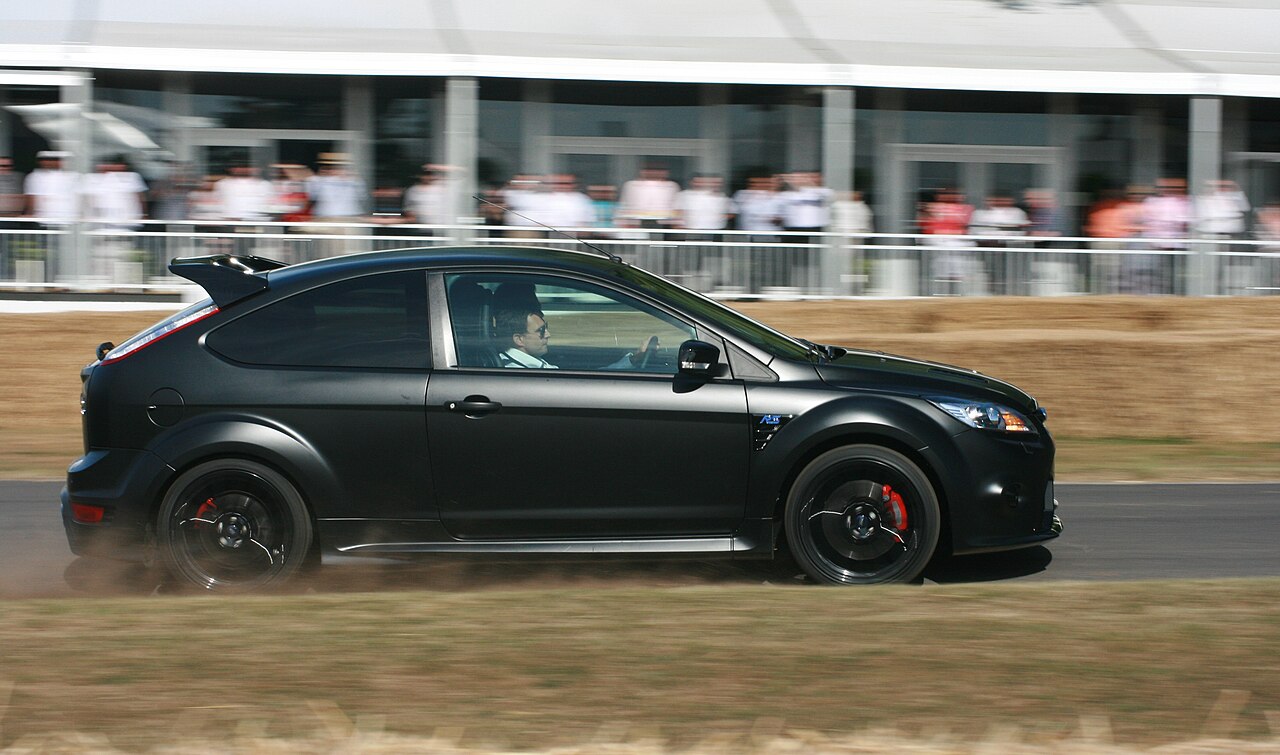
Ford’s 2010 Focus RS500 was announced as 500 individually numbered cars. The programme developed the turbocharged five-cylinder engine used in the contemporary Focus RS and paired its mechanical specification with a distinctive matt-black exterior presentation. The archived launch release provides the period account of that package. [1]
The useful starting point is the relationship to the existing RS. A limited programme can concentrate development within a familiar body and powertrain layout, rather than requiring a new architecture. The edition’s surface treatment makes the result visible from a distance, while the engine changes explain why the badge carries a mechanical meaning.
That combination should remain attached to the specific 2010 Focus. RS500 also appears elsewhere in Ford history, so the name alone is an incomplete identifier. Save the full model and year together. It preserves the distinction between this hatchback programme and other cars that use a related performance designation.
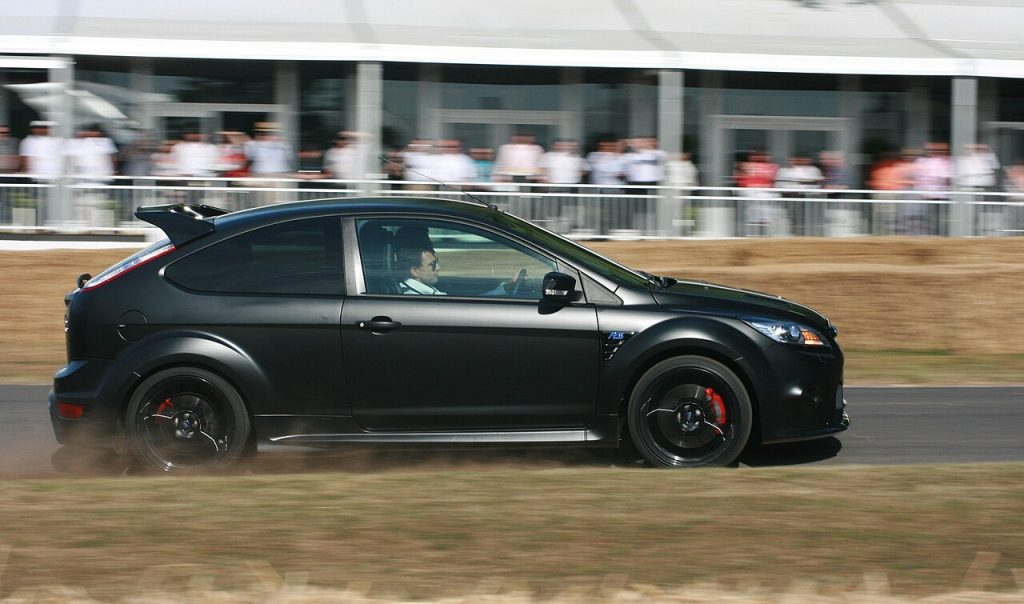
2010 Ford Focus RS500
Ford introduced the Focus RS500 in 2010 as the final special edition of its second-generation Focus RS.
Explore the full profile02 / Give up the rear seats — 2006 MINI GP
The full name was MINI Cooper S with John Cooper Works GP Kit. MINI’s 2006 announcement described a 2,000-car programme and the removal of the rear seat bench. The compact three-door shape remained, but its passenger capacity became a deliberate part of the specification. [2]
That is a significant change to a hatchback’s everyday brief. It is easy to focus on a spoiler, wheels or contrasting mirror caps because they are visible outside. The missing seats ask a more direct question about how the car will be used and who it will carry.
The GP therefore demonstrates a form of specialisation that can be understood without a performance ranking. The owner accepts a two-seat layout within a familiar small body. Its significance comes from that decision and the complete factory package, rather than an assumption that every car carrying GP identification shares the same generation, engine or component list.
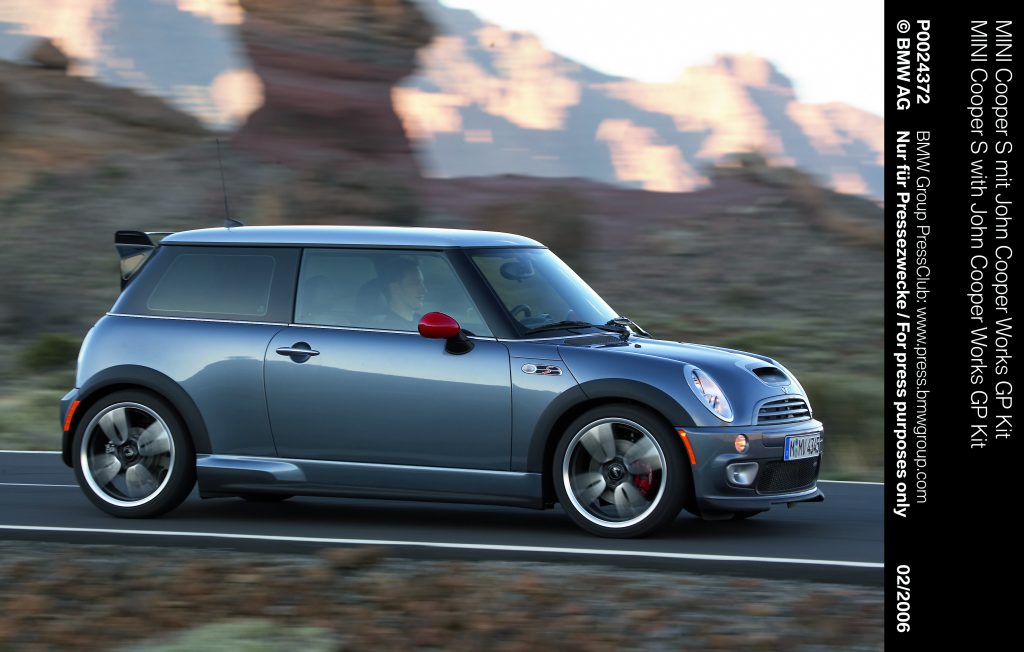
2006 MINI Cooper S with John Cooper Works GP Kit
The 2006 MINI Cooper S with John Cooper Works GP Kit is the original modern GP: a complete limited-edition performance car whose official name can be mistaken for an accessory package. Its…
Explore the full profile03 / Change components, keep the power figure in context — Civic Type R Limited Edition
Honda introduced the FK8 Civic Type R Limited Edition during 2020, with 2021 model-year identification in North America. The US announcement allocated 600 cars to that market and described lightweight BBS forged wheels, reduced weight and edition-specific treatment. The US allocation is not the worldwide programme total. [3]
The distinction between engine output and the rest of the specification matters here. Honda’s North American account retained the familiar turbocharged 2.0-litre engine output while explaining the Limited Edition’s other changes. An edition can make a performance argument through its components and setup without a higher advertised power figure.
Market detail matters as well. Equipment deletions and standard convenience features should be checked against the relevant regional specification, rather than copied indiscriminately from another territory. This profile’s year reflects the programme’s introduction; a North American model-year label describes a related but different calendar convention. Keeping both contexts clear makes the edition easier to identify.
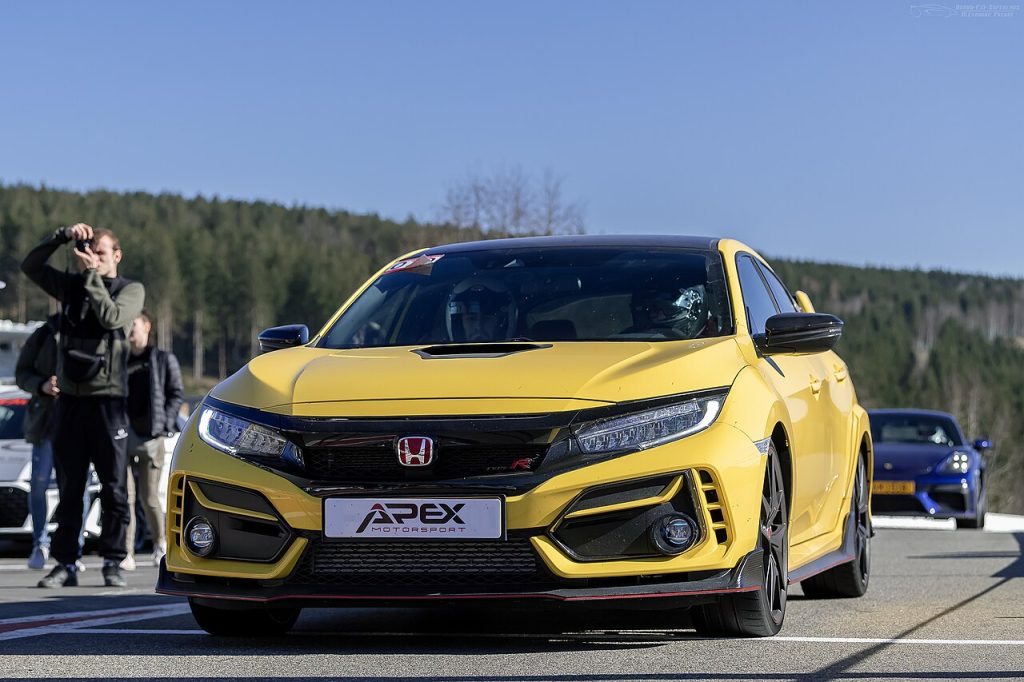
2020 Honda Civic Type R Limited Edition
The Honda Civic Type R Limited Edition introduced a more focused FK8 programme in 2020, with a 2021 model-year identity in some markets.
Explore the full profile04 / Revisit a two-seat idea — 2012 MINI John Cooper Works GP
The next MINI John Cooper Works GP appeared in 2012 as another programme limited to 2,000 examples. Its launch material described two seats, coilover suspension, model-specific wheels, sports brakes and aerodynamic components. The specification provides a new chapter rather than simply repeating the earlier GP’s parts list. [4]
Placing the two generations together makes continuity and change visible. The two-seat decision persists, while the surrounding model and technical package have moved on. A familiar name can carry an enduring brief without making the resulting cars identical.
That is especially useful for a personal collection. Saving both is meaningful when the reason is the development of an idea across generations. It becomes less useful if their production figures, model years or hardware are allowed to blur together. The 2012 car deserves its own exact profile, with its own launch specification and limited-programme boundary.
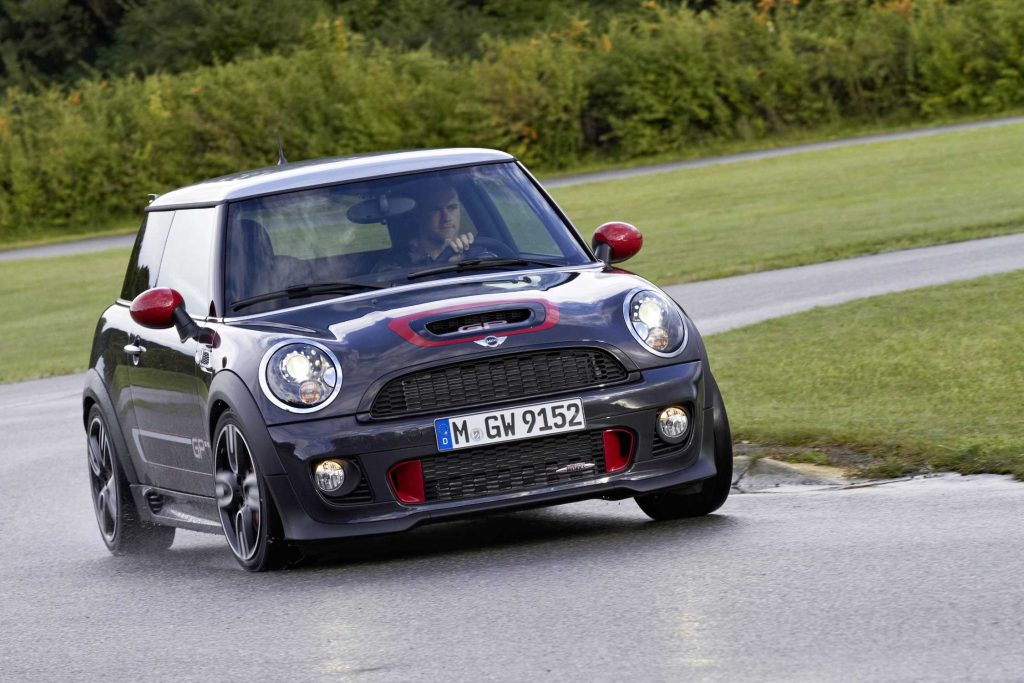
2012 MINI John Cooper Works GP
The second MINI John Cooper Works GP brings the GP idea into the turbocharged R56 generation. Its two-seat cabin and coordinated chassis specification identify a complete limited-edition vehicle. The most useful comparison…
Explore the full profile05 / Make the edition visible — Volkswagen Golf R 333
Volkswagen’s 2023 Golf R 333 Limited Edition used Lime Yellow Metallic paint, black detailing and individual numbering to identify a 333-car programme. The manufacturer also described the Golf R’s torque-vectoring all-wheel-drive system and the edition’s equipment. Its visible identity belongs to an existing performance-hatchback architecture. [5]
The programme shows why an equipment-led edition need not make the same usability choices as a two-seat GP. A limited hatchback can retain a more conventional passenger arrangement while distinguishing itself through configuration, finish and a particularly explicit numerical theme.
Its name also illustrates the need to read units carefully. A model designation, a metric power figure and a production quantity may share digits while describing unrelated things. Use the manufacturer’s stated programme count for rarity, then read the mechanical specification separately. The yellow bodywork makes the car memorable; the documented boundary explains which edition it is.
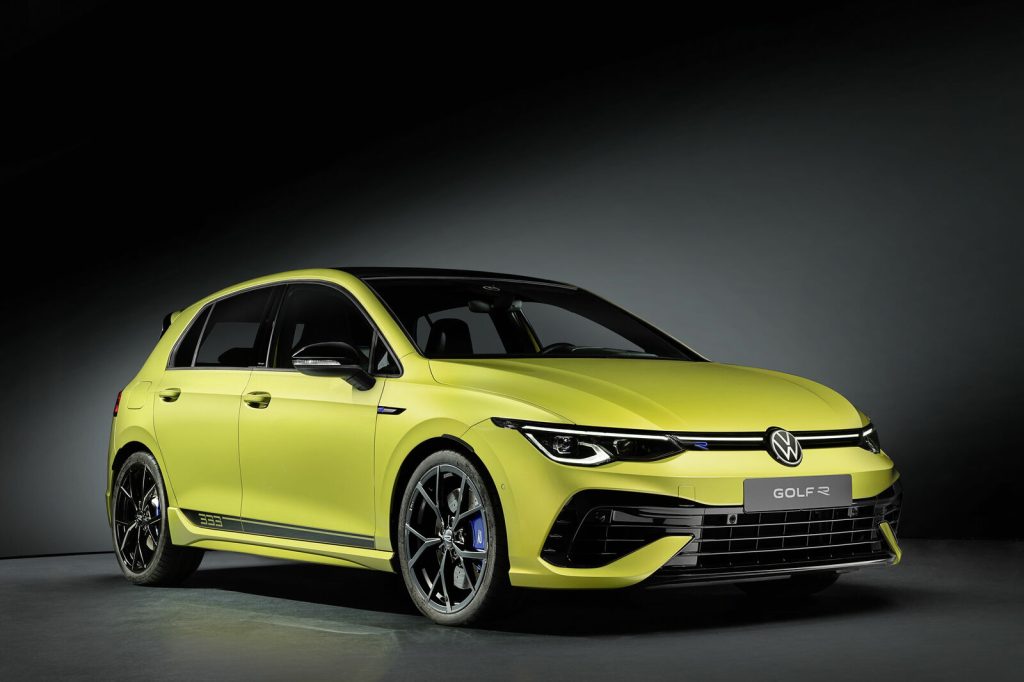
2023 Volkswagen Golf R 333 Limited Edition
The Golf R 333 Limited Edition matched a 333-car programme with a 333 PS engine specification, Lime Yellow Metallic paint and a numbered interior badge. Volkswagen announced the complete German offer in…
Explore the full profileChoose the compromise that interests you
These five programmes offer different answers to the hatchback brief. Ford develops a powertrain, MINI makes passenger capacity part of the argument, Honda directs attention towards components and specification, and Volkswagen turns a numbered configuration into a highly visible identity.
There is no single definition of how far a limited hot hatch should move from its regular counterpart. A two-seat layout is a clear specialisation; retaining more everyday accommodation is also a coherent decision. The interesting question is whether the changes support the purpose of that particular programme.
When returning to a saved car, look again at the less obvious details: seating, regional equipment, the precise generation and the scope of its numbering. Those details often explain more about the edition than the badge that first attracted your attention.
Sources & further reading
- Ford: Focus RS500 launch release, archived — Contemporary Ford announcement reproduced by The Auto Channel.
- MINI: GP at Geneva, 2006 — Original manufacturer release; 2,000 cars and rear-seat removal.
- Honda: Civic Type R Limited Edition, US launch — 2020 announcement of the 2021 US model; 600-car regional allocation.
- MINI: 2012 GP world debut — Manufacturer specification for the second GP programme.
- Volkswagen: Golf R 333 Limited Edition — Manufacturer release; colour, numbering, scope and equipment.
Continue exploring
For another view of specialised road-car engineering, read Road legal, track minded, or browse The Rarity Edit.