2009 Nissan Land Glider
Explore the Land Glider: history, verified identity, specification references, rarity evidence and real credited photos.
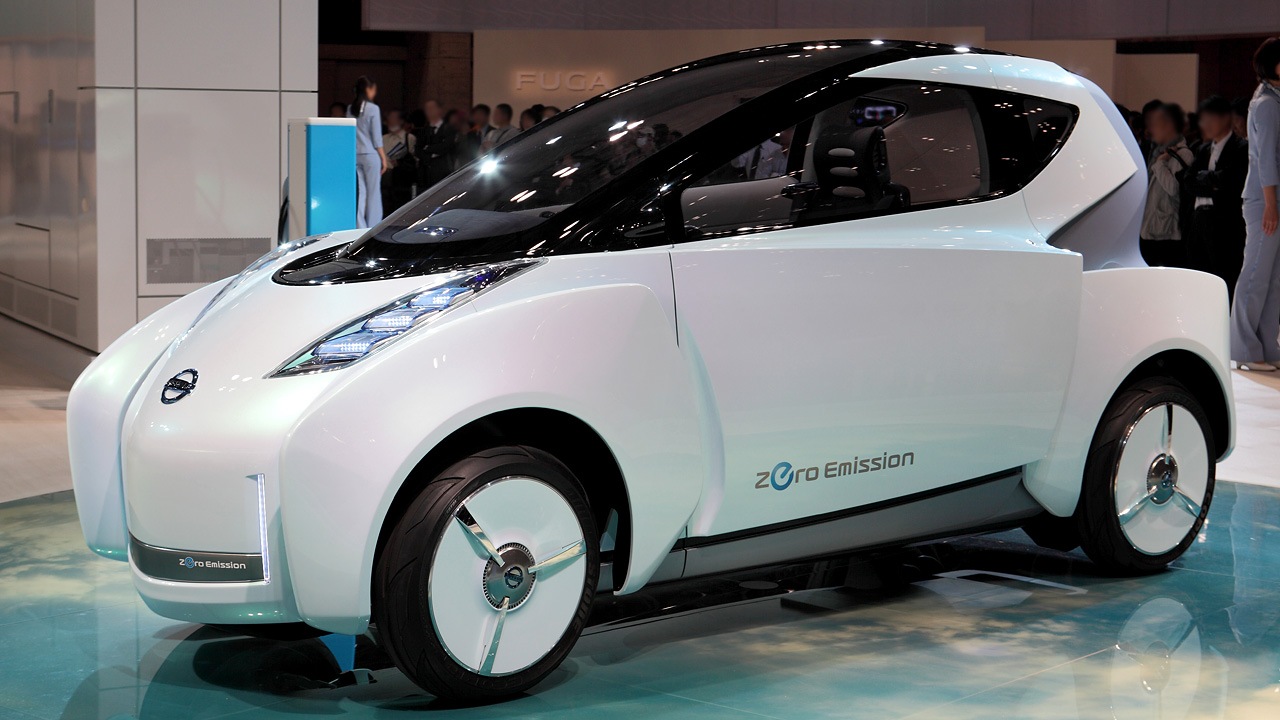
The Nissan Land Glider explored an electric city vehicle with two occupants seated in tandem and a body that leaned into corners. Nissan's electrification history dates the concept to October 2009, resolving an inconsistent date displayed on one migrated press-kit page. Its four-wheel layout, compact package and motorcycle-inspired behaviour make it a distinct physical experiment in urban mobility, not an ordinary Nissan production car with a narrow body kit.
A different shape for city travel
Nissan's historical timeline places Land Glider among its electric concepts of the 2000s. The project considered how a smaller urban vehicle could retain a sense of security while using space more efficiently. Seating the passenger behind the driver was fundamental to that idea. It changed the relationship between cabin width, occupant accommodation and road footprint, rather than merely reducing the dimensions of a conventional side-by-side two-seater.
Nissan: electrification milestones, 2000–2009
The leaning mechanism
The press kit describes a system that allowed the vehicle and tyres to lean by up to seventeen degrees. Sensors measured speed, steering angle and yaw rate to calculate an appropriate lean. These are Nissan's stated concept capabilities, not measurements independently reproduced for this profile. They explain the intended relationship between a narrow vehicle and cornering behaviour while leaving the present operating condition of any surviving exhibit to separate evidence.
Two rear motors and an underfloor battery
Nissan specified two electric motors at the rear and lithium-ion batteries beneath the floor. The arrangement supported the concept's compact package without a conventional front-mounted combustion engine. The selected material does not provide a certified retail driving range or customer performance homologation. Those omissions should remain visible rather than being filled with figures borrowed from the LEAF or another electric demonstrator shown in the same period.
Nissan: electrification milestones, 2000–2009
Charging and collision-avoidance ideas
The concept description included non-contact charging and a sensor-based avoidance system inspired by coordinated movement. These were part of Nissan's intended future-mobility proposition. A concept announcement can establish that the ideas were presented, but not that they were available as an approved production infrastructure or proven across every real-world situation. The historical value is in documenting the experiment accurately, with its intended functions kept distinct from later production technology.
Nissan Europe: Land Glider technical overview
Dates, photographs and physical identity
For chronology, use Nissan's electrification timeline and 2009 Tokyo show material alongside the detailed press kit. One migrated overview carries an inconsistent 2008 date, which is not treated as a separate earlier edition. Dated photographs help distinguish the actual exhibit from illustrations and models. An individual display history should record its venue and condition; repeated appearances cannot establish how many physical Land Glider chassis were built.
Specifications and identity reference
| Historical reference | October 2009 |
|---|---|
| Layout | Two occupants in tandem |
| Wheels | Four |
| Lean capability | Up to 17 degrees, manufacturer description |
| Propulsion | Two rear electric motors |
| Battery placement | Lithium-ion batteries beneath floor |
| Concept systems | Steer-by-wire; non-contact charging; avoidance sensors |
| Completed exhibit census | Not assigned |
Rarity and production scope
Verified physical Land Glider concept, dated to 2009 by Nissan's electrification history and show record. The inconsistent 2008 date on a migrated detailed page is not used to create another identity. No road-production total is assigned.
This is an Archive record. Concepts, restored heritage vehicles, works cars and competition programmes are not added to customer road-production totals. A programme profile does not establish how many physical chassis were made, and repeated exhibition appearances do not create additional vehicles.
What the photograph represents
Nissan Land Glider physical concept at a later exhibition. The photograph documents its appearance rather than independently testing its leaning or charging systems.
Related Nissan heritage profiles
Frequently asked questions
Why is the profile dated 2009?
Nissan’s historical timeline places Land Glider in October 2009, supported by its 2009 Tokyo show record.
Did it have side-by-side seats?
No. Nissan described two occupants seated in tandem.
What is the production-count boundary for this profile?
Verified physical Land Glider concept, dated to 2009 by Nissan's electrification history and show record. The inconsistent 2008 date on a migrated detailed page is not used to create another identity. No road-production total is assigned.
Sources and further reading
- Nissan: electrification milestones, 2000–2009
- Nissan Europe: Land Glider technical overview
- Nissan: 2009 Tokyo Motor Show exhibits
Research checked 16 October 2026. Manufacturer records support identity and the specifically attributed historical figures. Photographic descriptions identify the illustrated subject. Design analysis and suggested authentication steps are editorial interpretation.
Built in limited numbers
Verified physical Land Glider concept, dated to 2009 by Nissan's electrification history and show record. The inconsistent 2008 date on a migrated detailed page is not used to create another identity. No road-production total is assigned.
Gallery
Specifications
Factory specifications may vary by model year, market and configuration.
Identity & production
- Official model
- Nissan Land Glider
Sources and verification
Source citations are being prepared for this profile.