2005 Mitsubishi Concept-D:5
Explore Concept-D:5: factory identity, history, specifications, rarity evidence, identification notes and credited photos.
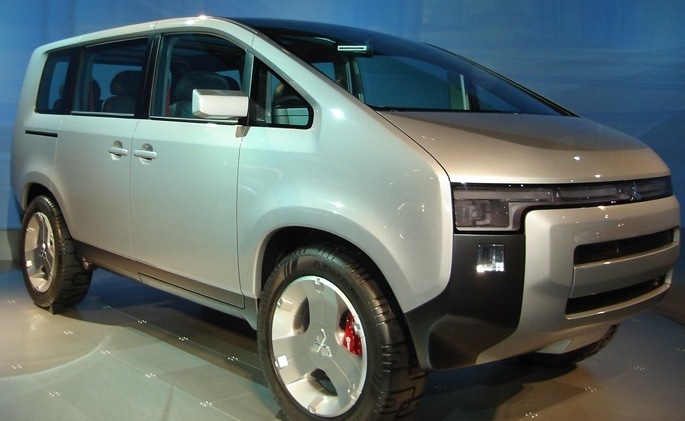
Concept-D:5 investigated how Delica’s utility and all-terrain identity could be expressed in a new minivan. Its tall physical form, cabin treatment and proposed four-wheel-drive powertrain make it a different kind of Mitsubishi concept from a low sports coupe. The profile concerns the 2005 show vehicle, with the production Delica kept as a related but separate subject.
A future Delica brief
Mitsubishi’s 2005 Tokyo Motor Show release identifies Concept-D:5 as a next-generation Delica proposal. That statement gives the archive a clear subject and development purpose. It does not make every later Delica a concept vehicle or a limited edition. The colon and D:5 name should be preserved in display text, while a stable web slug can simplify the punctuation.
Mitsubishi Motors: original 2005 Tokyo Motor Show release
A documented powertrain proposal
The manufacturer describes a 2.4-litre MIVEC engine and an electronically controlled four-wheel-drive system, paired with its INVECS-III Sport Mode CVT. The specification table lists 170 PS and seating for six. The simulated six-speed mode should not be mistaken for a conventional six-speed manual gearbox. Record these as the show car’s announced configuration, with no production-model substitution.
Mitsubishi Motors: original 2005 Tokyo Motor Show release
Utility as a design subject
The tall, straight-sided body and short nose make interior accommodation central to the concept. The factory account also discusses the exposed interior frame motif and a large glass roof. As design interpretation, the combination of protective exterior forms and an airy cabin tries to make ruggedness and passenger comfort feel compatible. That is a reading of the documented design brief, not an independent safety certification.
Driver-assistance ideas in their period
Mitsubishi listed several assistance proposals, including peripheral monitoring, lane assistance and adaptive cruise control. Their presence in a concept announcement records what the manufacturer chose to demonstrate or propose. It should not be translated into a current autonomous-driving category or a claim about later customer equipment. The historical interest is in the ideas and their presentation at that point in time.
Mitsubishi Motors: original 2005 Tokyo Motor Show release
The photograph and the archive boundary
The bundled image is a period photograph of the physical concept and has limited original resolution. It remains correctly identified and credited rather than being enlarged into invented detail. No customer production quantity is assigned. Compare the SSU’s performance-utility brief with this Delica-centred approach to understand how different concepts could address usefulness without becoming the same vehicle programme.
Specification and identity reference
| Presentation | 2005 Tokyo Motor Show |
|---|---|
| Programme | Next-generation Delica concept |
| Proposed engine | 2.4-litre MIVEC, 170 PS |
| Proposed transmission | INVECS-III Sport Mode CVT |
| Seating reference | 6 |
| Dimensions | 4,735 × 1,815 × 1,875 mm |
Rarity and production scope
Documented physical concept identity. No customer road-production quantity or audited prototype-build census assigned.
This record belongs to the archive. Concepts are excluded from customer road-production totals; a documented individual is a member of its wider model series and is not added as extra production.
Identifying the documented subject
Match the complete model name, date and programme to the linked evidence. Keep any chassis-specific provenance separate from a general description of the model. A period image confirms what was photographed, while a production or technical claim requires the corresponding document.
Comparisons and related profiles
Continue through these connected Mitsubishi records, each with its own factory identity and production scope.
Frequently asked questions
What is the rarity scope of this archive record?
Documented physical concept identity. No customer road-production quantity or audited prototype-build census assigned.
Does the title date match every photograph?
2005 is the documentary reference used for the profile. A later exhibition or museum photograph can show the same programme. Its caption identifies the photographic scope without creating another edition.
Sources and further reading
Research checked 15 October 2026. Factory literature, independent EPC-derived records and photographic evidence are identified separately. Design readings and documentation guidance are editorial interpretation.
Built in limited numbers
Documented physical concept identity. No customer road-production quantity or audited prototype-build census assigned.
Gallery
Specifications
Factory specifications may vary by model year, market and configuration.
Identity & production
- Official model
- Mitsubishi Concept-D:5
Sources and verification
Source citations are being prepared for this profile.