1989 Mitsubishi HSR-II
Explore HSR-II: factory identity, history, specifications, rarity evidence, identification notes and credited photos.
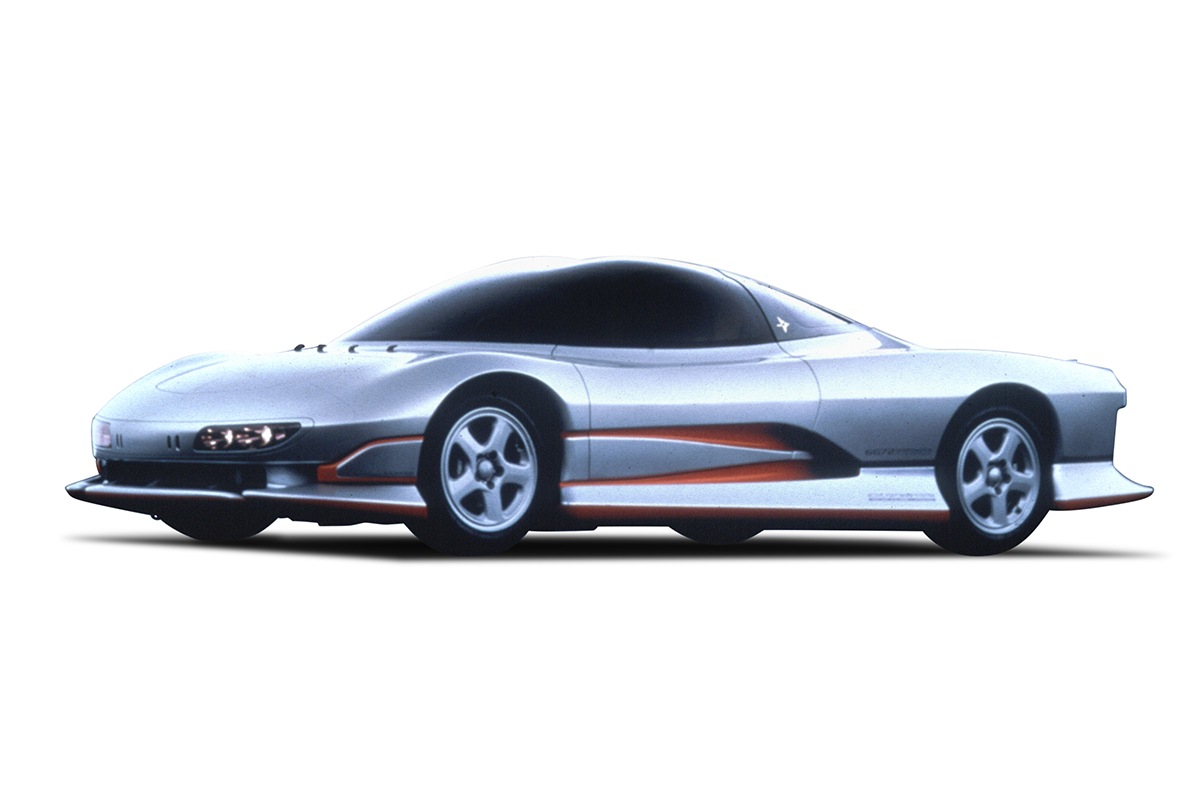
HSR-II is Mitsubishi’s second Highly Sophisticated-transport Research concept: a low, silver physical research car associated with the 1989 Tokyo Motor Show. Its combination of active aerodynamics and integrated vehicle-control ideas makes it an important archive subject, with a manufacturer-documented identity that can be followed into a much later heritage exhibition.
The second HSR, with its identity intact
The Roman numeral is essential to this car’s name. HSR-II is distinct from the earlier HSR, the later HSR-III already covered in this archive, and the subsequent research vehicles. Mitsubishi’s 2025 Automobile Council announcement explicitly identifies the second concept as a 1989 Tokyo exhibit. That later manufacturer account connects a named historic vehicle with a current collection context; it does not reclassify it as a new 2025 concept or a customer model year.
Mitsubishi Motors: HSR-II identity and research specification in the 2025 heritage announcement
A documented research specification
Mitsubishi’s heritage description identifies a 3.0-litre twin-turbo DOHC V6, full-time four-wheel drive, four-wheel steering, four-wheel ABS and independent suspension. It also describes speed-dependent active aerodynamics and experimental driver-assistance ideas. These are the manufacturer’s descriptions of the research vehicle. They belong in a concept specification, with the original period and purpose visible, rather than being treated as equipment guaranteed on a production sports car.
Mitsubishi Motors: HSR-II identity and research specification in the 2025 heritage announcement
Aerodynamics as a visible part of the design
The supplied manufacturer image shows a long, low body, a dark central canopy and a pronounced rear treatment. As an editorial reading, those proportions make the car feel organised around airflow and the movement of air over a complete shape. The useful question is how the visible body supports the research brief. A static photograph can reveal surfaces and proportions; it cannot establish the operating state of an active aerodynamic device at a particular speed.
Why the assistance claims need their historical context
Mitsubishi’s account includes following assistance and automated parking among the experimental functions. Those descriptions are interesting precisely because they belong to a research programme from the late 1980s. This article does not translate them into a present-day automated-driving level. A historical function name does not disclose all of its sensors, operating conditions, failure responses or readiness for customer use. Keep the named idea attached to the vehicle and source that describe it.
Mitsubishi Motors: HSR-II identity and research specification in the 2025 heritage announcement
A surviving concept is more than a launch photograph
A heritage exhibition provides an opportunity to study the physical object after its initial public life. For an archive, the introduction date and the later display context should remain separate fields. Their relationship creates a chronology, not another edition. If restoration records, mechanical changes or conservation work become available, they can enrich that chronology. The 2025 press image is presented as a later manufacturer reference, rather than a photograph purportedly taken on the 1989 show stand.
Reading HSR-II beside later Mitsubishi studies
D:X Concept offers a useful comparison in this batch because it also presents propulsion, vehicle control and cabin experience together. The contrast is between briefs: HSR-II expresses research through a low sports-car form, while D:X uses an expansive MPV body. That comparison is editorial interpretation, not a claim of shared components. Both demonstrate why a concept record should describe the proposed systems without turning a show car into a numbered road series.
Specification and identity reference
| Introduction | 1989 Tokyo Motor Show |
|---|---|
| Later manufacturer reference | Automobile Council 2025 announcement |
| Engine reference | 3.0-litre twin-turbo DOHC V6 |
| Vehicle control | Full-time 4WD; four-wheel steering; four-wheel ABS |
| Research feature | Speed-dependent active aerodynamics |
| Classification | Physical research concept |
Rarity and production scope
Documented physical concept programme; no customer road-production quantity or audited prototype-build census assigned.
This record belongs to the archive. Concepts are excluded from customer road-production totals; a documented individual is a member of its wider model series and is not added as extra production.
Identifying the documented subject
Match the complete model name, date and programme to the linked evidence. Keep any chassis-specific provenance separate from a general description of the model. A period image confirms what was photographed, while a production or technical claim requires the corresponding document.
Comparisons and related profiles
Continue through these connected Mitsubishi records, each with its own factory identity and production scope.
Frequently asked questions
What is the rarity scope of this archive record?
Documented physical concept programme; no customer road-production quantity or audited prototype-build census assigned.
Does the title date match every photograph?
1989 is the documentary reference used for the profile. A later exhibition or museum photograph can show the same programme. Its caption identifies the photographic scope without creating another edition.
Sources and further reading
Research checked 15 October 2026. Original manufacturer announcements, official competition history and photographic evidence are identified separately. Design readings and documentation guidance are editorial interpretation.
Built in limited numbers
Documented physical concept programme; no customer road-production quantity or audited prototype-build census assigned.
Gallery
Specifications
Factory specifications may vary by model year, market and configuration.
Identity & production
- Official model
- Mitsubishi HSR-II
Sources and verification
Source citations are being prepared for this profile.