1984 Lotus Type 95T Formula One
Explore the 1984 Lotus Type 95T Formula One: programme history, design, verified rarity scope, specifications and credited photography.
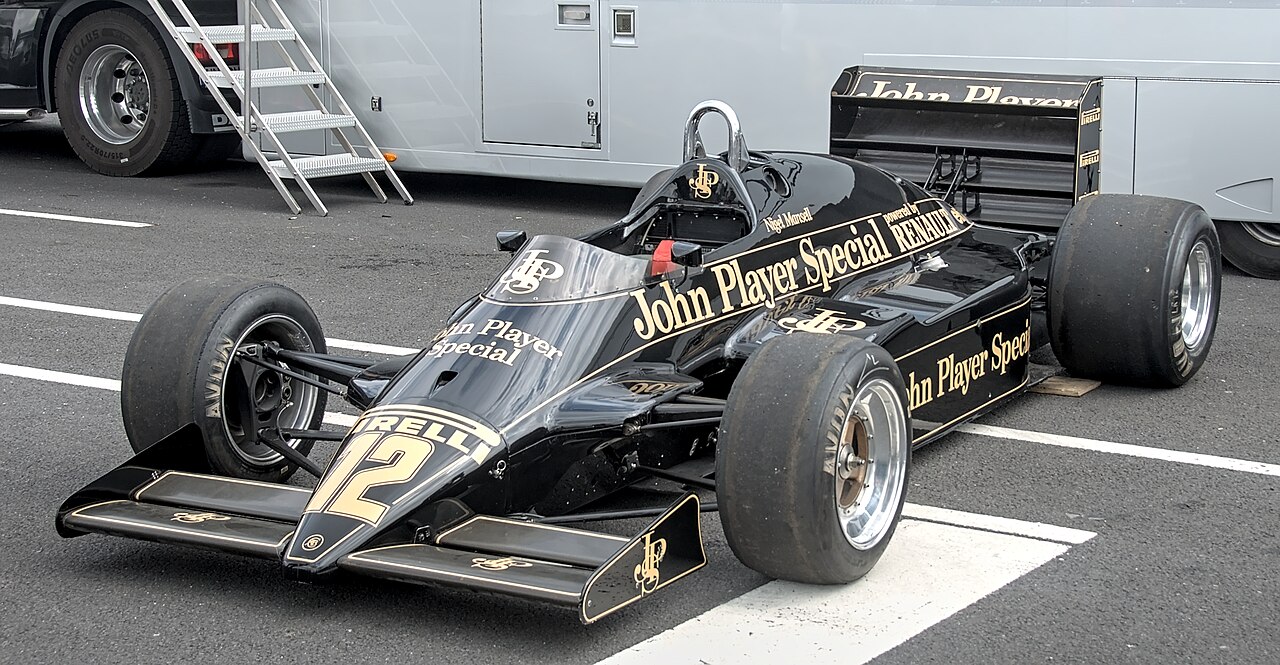
The Lotus Type 95T develops the Renault-turbo Formula One car into a slimmer 1984 design. Its primary account records a December 1983 launch and a distinct 1984 competition programme, illustrated with an exact-model later photograph.
History and verified programme identity
Classic Team Lotus identifies the Type 95T as a Gérard Ducarouge design powered by Renault turbo hardware. The custodian describes it as slimmer, lighter and narrower than its predecessor, launched at Lotus France in Paris in December 1983 for the 1984 programme. The page records six podium finishes during the season and lists four register entries. Those separate references are retained without converting the rows into a survivor tally. The source photograph identifies Classic Days 2022; an inconsistent camera-date field is not adopted as the actual event year.
Engineering and design
The proportions matter because the programme was a physical redesign, not simply a new model number on the preceding body. The custodian’s slimmer-and-narrower description directs attention to the central body and side enclosures. The supplied front-quarter view shows a narrow nose and cockpit inside the wider tyre footprint, with substantial bodywork behind the driver. Exact weight, engine output and turbo settings are not measured from the photograph or borrowed from a later Renault-powered Lotus. A dated technical specification would be required for those figures. The source establishes the redesign relationship while the image illustrates the actual Type.
The physical car in the supplied photograph
Alexander Migl’s photograph shows a black-and-gold Lotus 95T at Classic Days 2022. Its number 12, narrow front body, exposed wheels and rear wing are visible in an outdoor display area. The creator’s event description supplies the caption year; the inconsistent camera EXIF date is not used to recast it as an event in 2000.
A closer look at the design
The front-quarter view helps the reader see the Type 95T as a distinct assembled design. The narrow forward body opens out into the side and rear volumes, giving a visual basis for studying the custodian’s comparison with its predecessor. It does not provide a measurement of the claimed weight change. The source and photograph therefore support different levels of explanation. This same discipline applies to dates: a camera’s mis-set clock should not override the creator’s explicit event identification, and a late-year reveal should not replace the following competition season. Keeping those distinctions visible gives the archive a cleaner chronology and makes the Type 95T easier to compare with both the rapid Type 94T and the subsequent Type 97T.
Collecting and chassis evidence
A Type 95T file should connect its chassis entry to original-season specification and later repairs. The December launch and following-year programme illustrate why reveal date, competition year and image date need separate fields. Its four register rows are a research framework rather than a current manufacturing audit. Engine and body changes during later historic use deserve dates, especially where a restored car adopts a familiar livery. The exact photograph helps identify the physical Type but does not certify the fitted engine’s original components or the car’s first race number.
Related Lotus designs and meaningful comparisons
The Type 94T provides the preceding short-development comparison, while the Type 97T shows the next successful Ducarouge-era programme. Reading them together reveals development continuity without assuming identical monocoques or one common output. Each car’s source period and register remain independent.
Reading the sources
The programme sources and the photograph answer different questions. Manufacturer and custodial records establish the original model, Type, category and published production scope. The creator’s file establishes the pictured subject, setting and image permission. An individual chassis history can then add ownership, competition entries and dated repairs without changing the scope of the original programme. Build references are not survivor counts, and a later specification does not automatically become an additional newly manufactured vehicle. Where primary evidence does not establish a complete fabrication census, that field remains unassigned.
Specifications and rarity evidence
| Programme reference year | 1984 |
|---|---|
| Model / Type | Type 95T Formula One — Type 95T |
| Body / competition role | Ducarouge-designed Renault-turbo single-seater |
| Competition programme | 1984 |
| Launch reference | Paris, December 1983 |
| Designer | Gérard Ducarouge |
| Powertrain partnership | Renault turbo |
| Development reference | Slimmer, lighter and narrower than predecessor |
| Photo setting | Classic Days 2022; creator description |
| Published build / register reference | 4 listed register entries |
| Independently audited completed tally | Not assigned |
| Count scope | Published reference: 4 listed register entries. The named programme scope is retained independently of audited completed output and current survivor counts. |
| Original inventory status | LOT-094 — Verified |
Frequently asked questions
Why is this a 1984 profile if it was launched in December 1983?
The primary record distinguishes its December 1983 Paris launch from the 1984 competition programme. The profile follows the original inventory programme year and states the earlier reveal separately.
How is Type 95T Formula One classified?
This is a Team Lotus competition Type archive. It remains separate from Lotus road-car production. Customer cars, works entries and converted chassis need a reconciled scope before any complete fabrication tally is assigned.
Which technical details are established for the programme?
The primary record supports competition programme: 1984; launch reference: Paris, December 1983; designer: Gérard Ducarouge. These are programme or explicitly attributed photo references. A particular surviving car’s engine, chassis repairs and competition preparation require its own dated documentation.
Does the photographed appearance establish factory originality?
The caption records a real creator-identified Type 95T Formula One subject and its later setting. It establishes the illustration’s scope, while original components, restoration work and individual race provenance require chassis-specific evidence. A competition number, current paint or museum display is not used as an originality certificate.
What rarity or archive scope is verified?
Published reference: 4 listed register entries. The named programme scope is retained independently of audited completed output and current survivor counts.
Who photographed the supplied image?
Alexander Migl via Wikimedia Commons, under CC BY-SA 4.0. The original file and licence are linked with the image. Retain the creator, source and licence when uploading, exporting or reusing it; local retouching and synthetic enlargement have not been performed.
Related Lotus profiles
Sources and photo credits
Photograph: Alexander Migl via Wikimedia Commons original source, CC BY-SA 4.0. Source-provided thumbnail supplied without local cropping, retouching or synthetic enlargement.
Built in limited numbers
Published reference: 4 listed register entries. The named programme scope is retained independently of audited completed output and current survivor counts.
Gallery
Specifications
Factory specifications may vary by model year, market and configuration.
Identity & production
- Official model
- Type 95T Formula One