1982 Lotus Type 91 Formula One
Explore the 1982 Lotus Type 91 Formula One: programme history, design, verified rarity scope, specifications and credited photography.
The Lotus Type 91 combines a clearly documented competition identity with a register that continues earlier carbon-monocoque numbering. Its chassis references need that context before anyone treats the highest number as a production total.
History and verified programme identity
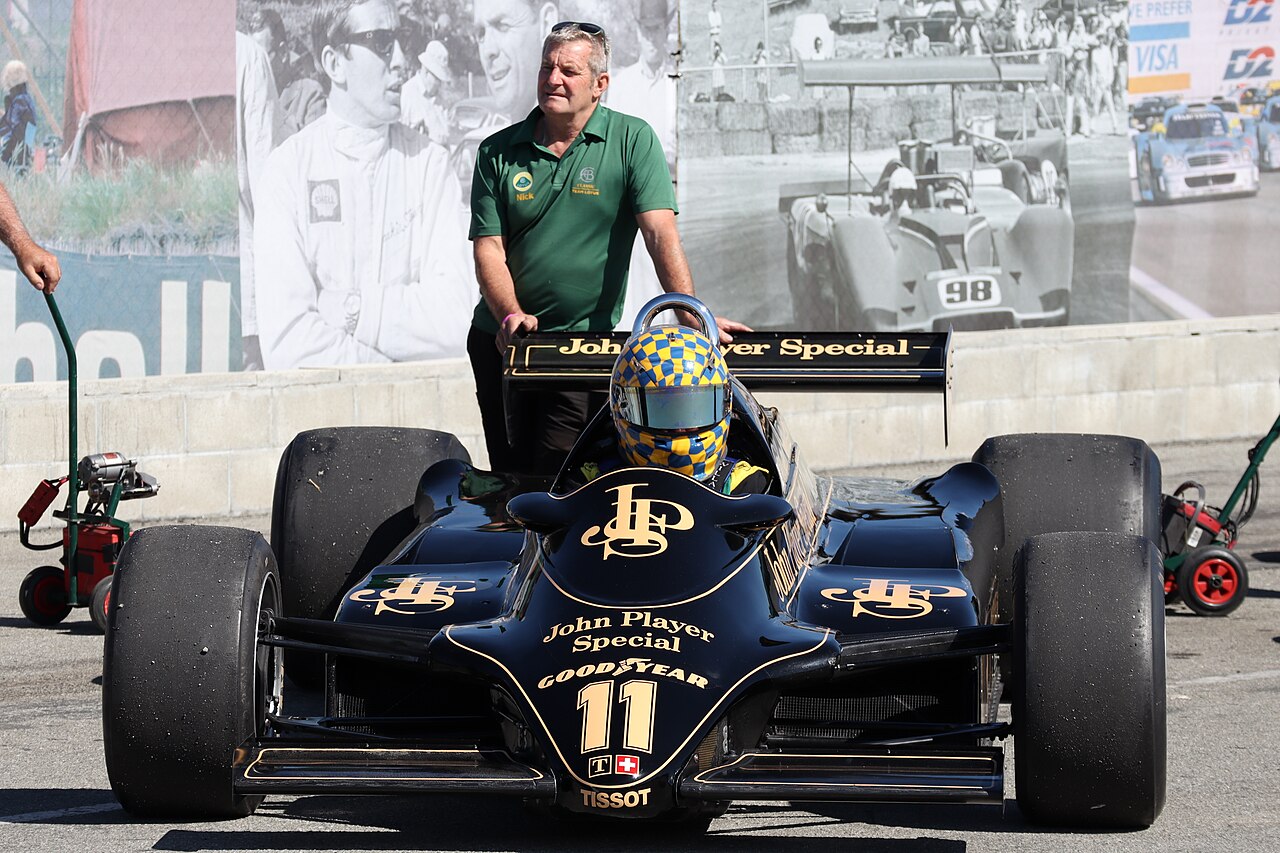
Classic Team Lotus describes the Type 91 with the team’s weight-watcher nickname and records water-cooled brakes. It lists six entries, with identities beginning at 91/5 to continue the carbon-monocoque sequence. Lotus’s manufacturer timeline associates the Type 91 with Elio de Angelis’s 1982 Austrian Grand Prix victory. That programme history remains separate from the driver in the supplied modern photograph. The image’s source identifies Dan Collins and a crew member at the 2022 Rolex Monterey Motorsports Reunion, illustrating a later surviving car in actual event preparation.
Engineering and design
The numbered monocoque sequence provides an unusually important engineering and identity context. A starting number of five does not mean that four additional Type 91s must be invented to complete a consecutive model tally. The custodian’s water-cooled-brake reference also needs to be attached to a dated competition configuration rather than assumed from any exterior photograph. The front-on image shows the wheels, low nose and cockpit, but cannot inspect a hidden brake system or carbon repair. Original technical records and subsequent structural documentation are needed to establish those details for the individual car.
The physical car in the supplied photograph
Prova MO’s photograph shows Dan Collins with a crew member and a 1982 Lotus 91 in the pre-grid area at the 2022 Rolex Monterey Motorsports Reunion. The black-and-gold car is shown head-on with number 11. The creator identifies its modern driver and event; the image is not captioned as Elio de Angelis’s 1982 Austrian victory.
A closer look at the design
The pre-grid scene adds a practical dimension to the model illustration. A driver and crew member stand with the car immediately before later historic use, making it a preserved machine with an ongoing preparation history rather than an abstract diagram. The low frontal view helps locate the cockpit between the exposed tyres, but it cannot disclose the carbon structure beneath the body. The primary numbering account fills an entirely different documentary role. Putting the two together makes a better collector profile: the image records one real modern appearance, while the register explains how to read the chassis identity. Neither is stretched into proof of a complete survivor tally or of every component’s originality.
Collecting and chassis evidence
An individual Type 91 record should keep the monocoque identity and register position together, then connect them to period events and later preservation. Composite work can be significant evidence, so repair history should accompany ownership and race entries. The six listed rows do not certify six original structures surviving unchanged. A modern competition number belongs to its own event and should not replace the chassis identity. The exact supplied photo supports the programme illustration while leaving installed brake equipment and current engine specification to a documented inspection.
Related Lotus designs and meaningful comparisons
The Type 87 explains the earlier monocoque-numbering context, while the Type 92 shows a later active-suspension development with further identity continuity. Reading their registers together helps a researcher follow structures without counting every identifier as a new car. Their competition programmes remain distinct records.
Reading the sources
The programme sources and the photograph answer different questions. Manufacturer and custodial records establish the original model, Type, category and published production scope. The creator’s file establishes the pictured subject, setting and image permission. An individual chassis history can then add ownership, competition entries and dated repairs without changing the scope of the original programme. Build references are not survivor counts, and a later specification does not automatically become an additional newly manufactured vehicle. Where primary evidence does not establish a complete fabrication census, that field remains unassigned.
Specifications and rarity evidence
| Programme reference year | 1982 |
|---|---|
| Model / Type | Type 91 Formula One — Type 91 |
| Body / competition role | Formula One single-seater with continuing carbon-monocoque numbering |
| Programme year | 1982 |
| Primary technical reference | Water-cooled brakes |
| Identity sequence | Register begins at 91/5 |
| Photo driver | Dan Collins, creator identification |
| Photo event | Rolex Monterey Motorsports Reunion, 2022 |
| Published build / register reference | 6 register entries; identities start at 91/5 |
| Independently audited completed tally | Not assigned |
| Count scope | Published reference: 6 register entries; identities start at 91/5. The named programme scope is retained independently of audited completed output and current survivor counts. |
| Original inventory status | LOT-089 — Verified |
Frequently asked questions
Why does the Type 91 register start with 91/5?
The custodian states that its identities continued the sequential carbon-monocoque numbering. The starting numeral is not used as evidence of four additional unlisted Type 91 cars.
How is Type 91 Formula One classified?
This is a Team Lotus competition Type archive. It remains separate from Lotus road-car production. Customer cars, works entries and converted chassis need a reconciled scope before any complete fabrication tally is assigned.
Which technical details are established for the programme?
The primary record supports programme year: 1982; primary technical reference: Water-cooled brakes; identity sequence: Register begins at 91/5. These are programme or explicitly attributed photo references. A particular surviving car’s engine, chassis repairs and competition preparation require its own dated documentation.
Does the photographed appearance establish factory originality?
The caption records a real creator-identified Type 91 Formula One subject and its later setting. It establishes the illustration’s scope, while original components, restoration work and individual race provenance require chassis-specific evidence. A competition number, current paint or museum display is not used as an originality certificate.
What rarity or archive scope is verified?
Published reference: 6 register entries; identities start at 91/5. The named programme scope is retained independently of audited completed output and current survivor counts.
Who photographed the supplied image?
Prova MO via Wikimedia Commons, under CC BY-SA 4.0. The original file and licence are linked with the image. Retain the creator, source and licence when uploading, exporting or reusing it; local retouching and synthetic enlargement have not been performed.
Related Lotus profiles
Sources and photo credits
Photograph: Prova MO via Wikimedia Commons original source, CC BY-SA 4.0. Source-provided thumbnail supplied without local cropping, retouching or synthetic enlargement.
Built in limited numbers
Published reference: 6 register entries; identities start at 91/5. The named programme scope is retained independently of audited completed output and current survivor counts.
Gallery
Specifications
Factory specifications may vary by model year, market and configuration.
Identity & production
- Official model
- Type 91 Formula One