1983 Lotus Type 92 Active Suspension Development
Explore the 1983 Lotus Type 92 Active Suspension Development: programme history, design, verified rarity scope, specifications and credited photography.
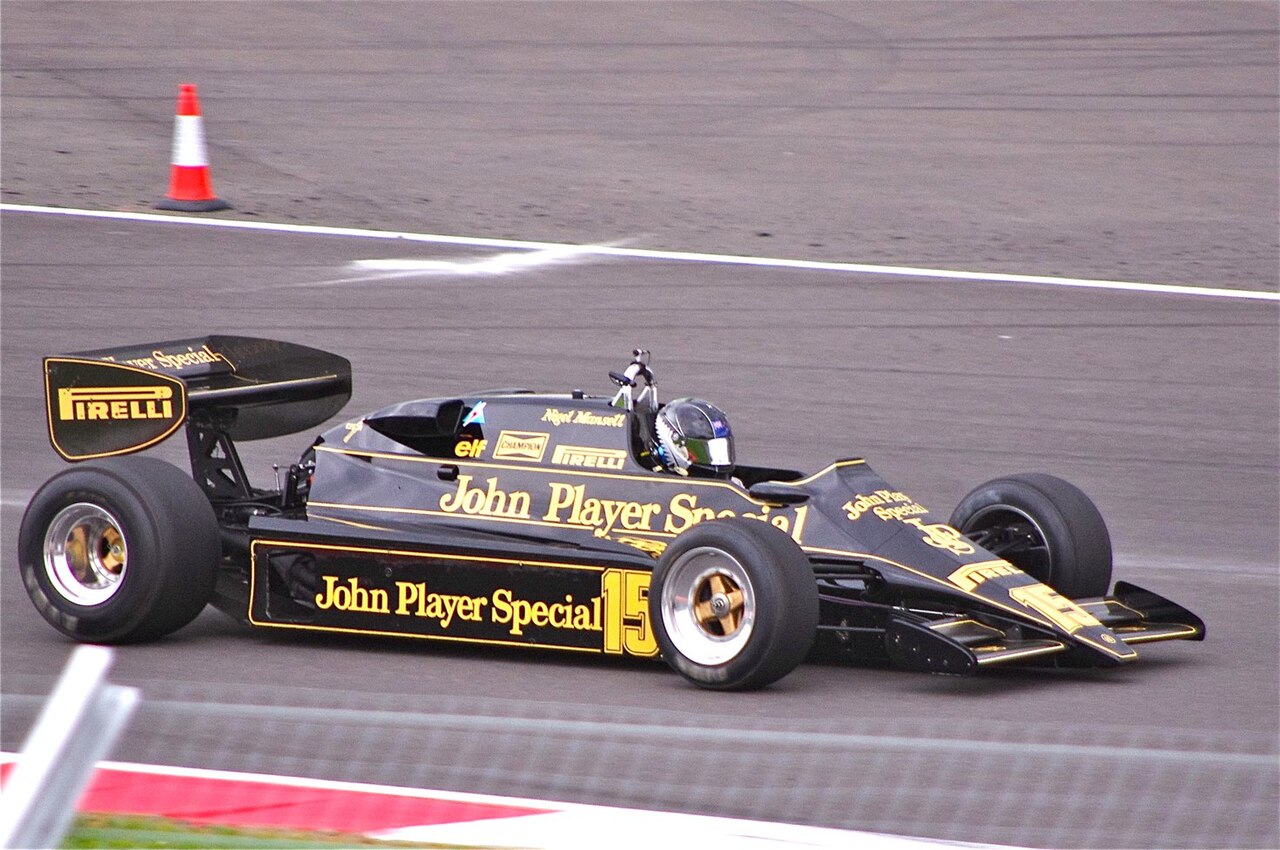
The Lotus Type 92 brings electronic and hydraulic suspension development into a Cosworth-powered Formula One programme. Its primary account explicitly distinguishes active and standard versions, avoiding the assumption that every surviving appearance demonstrates active hardware.
History and verified programme identity
Classic Team Lotus dates the Type 92 to 1983 and describes both active and standard configurations. The custodian records an onboard control brain with a pit readout and hydraulic jacks in place of coil springs, followed by reversion to standard suspension after the second Grand Prix. Its two register entries use identities five and ten, which are retained as listed rather than interpreted as ten manufactured cars. The later Silverstone Classic image illustrates the Type 92, but does not independently establish which suspension configuration was installed for that event.
Engineering and design
The active concept changes the way suspension support is controlled. Instead of an ordinary spring-only description, the primary record identifies hydraulic jacks and an onboard control system. The distinction is functional, not just a different body shell or paint scheme. A photograph of a complete car usually cannot reveal the control electronics or hydraulic connections, so the illustrated example is not certified as actively controlled. The programme’s return to standard suspension also belongs in the technical history. It shows why an archive should follow dated configurations rather than applying the most experimental specification to every race and restoration.
The physical car in the supplied photograph
David Merrett’s photograph shows a black-and-gold Lotus 92 at Silverstone Classic in July 2011. The car carries number 16 and is shown on track with its wings and side body visible. The caption identifies the physical Type and later event without claiming that its hidden active system was operating in the pictured run.
A closer look at the design
The Type 92 makes the difference between a visible model identity and an invisible system especially clear. Its wings, wheels and side body can be studied in the photograph, but those surfaces cannot identify the control logic or hydraulic state beneath them. The primary source therefore does the central explanatory work by describing the active experiment and its subsequent conventional configuration. A collector archive should preserve both phases. Otherwise, a famous technology label can conceal the actual preparation of the car at a particular race or later demonstration. The distinct Type 99T comparison then becomes more informative: it shows that active suspension was revisited, while each programme still needs its own engine, hardware and chassis evidence.
Collecting and chassis evidence
A Type 92 history should record active development, the switch to conventional suspension and any later restoration of the experimental system. Control equipment, hydraulic assemblies and structural identity need their own documentation. The two register entries help organize the programme, but their reused numbers are not a production census. A later historic appearance can be valuable evidence of preservation even when the fitted suspension differs from the original experiment. Keep the car’s dated preparation and the creator’s event context together, with the original model-wide technical account stated separately.
Related Lotus designs and meaningful comparisons
The Type 91 supplies the preceding monocoque and identity context, while the Type 99T provides a later active-suspension comparison with a different engine partnership. Those links show a continuing technical theme without implying uninterrupted identical hardware. The Type 92 remains its own 1983 development archive.
Reading the sources
The programme sources and the photograph answer different questions. Manufacturer and custodial records establish the original model, Type, category and published production scope. The creator’s file establishes the pictured subject, setting and image permission. An individual chassis history can then add ownership, competition entries and dated repairs without changing the scope of the original programme. Build references are not survivor counts, and a later specification does not automatically become an additional newly manufactured vehicle. Where primary evidence does not establish a complete fabrication census, that field remains unassigned.
Specifications and rarity evidence
| Programme reference year | 1983 |
|---|---|
| Model / Type | Type 92 Active Suspension Development — Type 92 |
| Body / competition role | Cosworth-powered active / conventional suspension Formula One car |
| Programme year | 1983 |
| Powertrain reference | Cosworth |
| Experimental suspension | Hydraulic jacks replacing coil springs |
| Control reference | Onboard control with pit readout |
| Configuration change | Standard suspension after second Grand Prix |
| Photo event | Silverstone Classic, July 2011 |
| Published build / register reference | 2 register entries with continuing identities |
| Independently audited completed tally | Not assigned |
| Count scope | Published reference: 2 register entries with continuing identities. The named programme scope is retained independently of audited completed output and current survivor counts. |
| Original inventory status | LOT-090 — Verified |
Frequently asked questions
Does every Type 92 appearance prove active suspension was fitted?
No. The custodian describes active and standard versions and an early return to standard suspension. This exterior photograph verifies the Type, not the installation or operation of hidden control hardware.
How is Type 92 Active Suspension Development classified?
This is a Team Lotus competition Type archive. It remains separate from Lotus road-car production. Customer cars, works entries and converted chassis need a reconciled scope before any complete fabrication tally is assigned.
Which technical details are established for the programme?
The primary record supports programme year: 1983; powertrain reference: Cosworth; experimental suspension: Hydraulic jacks replacing coil springs. These are programme or explicitly attributed photo references. A particular surviving car’s engine, chassis repairs and competition preparation require its own dated documentation.
Does the photographed appearance establish factory originality?
The caption records a real creator-identified Type 92 Active Suspension Development subject and its later setting. It establishes the illustration’s scope, while original components, restoration work and individual race provenance require chassis-specific evidence. A competition number, current paint or museum display is not used as an originality certificate.
What rarity or archive scope is verified?
Published reference: 2 register entries with continuing identities. The named programme scope is retained independently of audited completed output and current survivor counts.
Who photographed the supplied image?
David Merrett from Daventry, England via Wikimedia Commons, under CC BY 2.0. The original file and licence are linked with the image. Retain the creator, source and licence when uploading, exporting or reusing it; local retouching and synthetic enlargement have not been performed.
Related Lotus profiles
Sources and photo credits
Photograph: David Merrett from Daventry, England via Wikimedia Commons original source, CC BY 2.0. Source-provided thumbnail supplied without local cropping, retouching or synthetic enlargement.
Built in limited numbers
Published reference: 2 register entries with continuing identities. The named programme scope is retained independently of audited completed output and current survivor counts.
Gallery
Specifications
Factory specifications may vary by model year, market and configuration.
Identity & production
- Official model
- Type 92 Active Suspension Development