1968 Lotus Type 58 Development Car
Explore the 1968 Lotus Type 58 Development Car: programme history, design, verified rarity scope, specifications and credited photography.
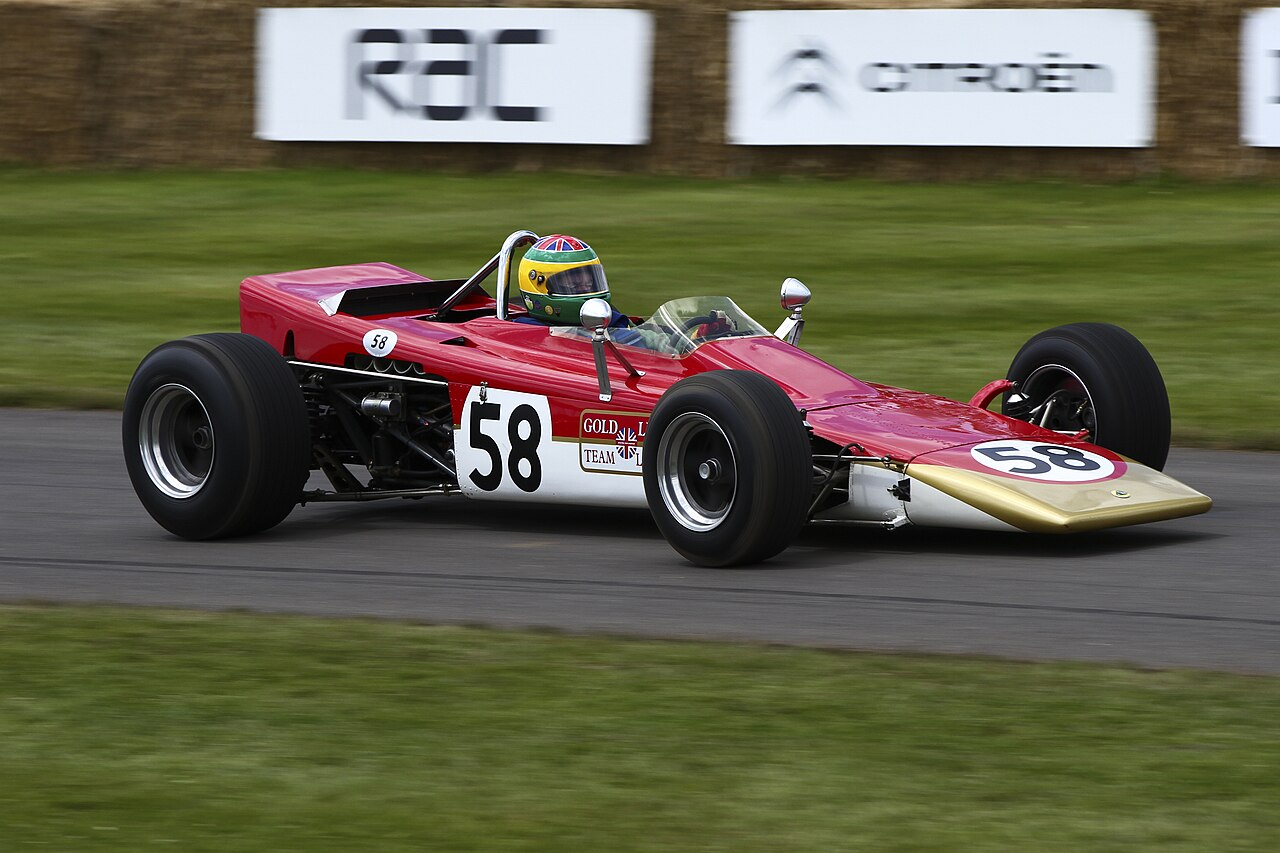
The Lotus Type 58 records a tested development branch rather than a Formula Two production racer. Its primary design description and later demonstration photograph keep the experiment physically grounded.
History and verified programme identity
Classic Team Lotus describes the Type 58 as a De Dion Formula One design developed from the Type 57, subsequently fitted with a 2.5-litre DFW engine for assessment as a possible Tasman car. It records a ZF gearbox, testing by Graham Hill and no period races. One entry is visible in the public register. The workbook’s Formula Two wording remains an alias, while the article uses the narrower custodial account. A later Goodwood appearance does not contradict the statement that the original assessment car never raced in period.
Engineering and design
A development programme can investigate a chassis arrangement without becoming a customer production Type. The De Dion concept and the engine changes belong to that sequence of assessment. The modern moving photograph illustrates a physical car, but it cannot establish the present engine specification from exterior shape. Nor does it turn a demonstration into an original competition result. The primary record explains what was tested and why; a dated individual technical file would describe later restoration and any current powertrain changes.
The physical car in the supplied photograph
The supplied photograph shows the Type 58 at the 2012 Goodwood Festival of Speed, in red-and-gold presentation with number 58. Darren’s file is grouped and titled as the Type 58. The photo documents a later demonstration setting, separate from the 1968 development programme.
A closer look at the programme
The later photograph gives a tangible appearance to a programme that might otherwise be described only through a short register entry. Its current paint and demonstration setting should remain dated, especially where the original purpose was assessment. That distinction preserves the value of both sources: one describes the historical development role and the other records a later physical object. A car can acquire a public demonstration life without receiving retroactive period race results or a customer-production allocation. Keeping those stages separate makes the archive more useful for future chassis research. The modern Type 58 photograph shows an experimental historical car acquiring a later public demonstration chapter. Its number and red-and-gold appearance make the Type recognizable, but the custodial source is what establishes the original assessment role. A moving photograph is not automatically evidence of period competition. Retaining the Goodwood setting allows the article to describe the actual later event while keeping the 1968 test programme intact. The body shape can then be compared with other experimental Lotus designs without inventing original race entries, customer allocations or an unqualified fabrication count.
Collecting and chassis evidence
An assessment car’s history should preserve test records, intended categories and subsequent alterations. One visible register entry is not automatically a complete census of every styling, test or spare structure associated with a programme. It is retained as a custodial reference, with an audited fabrication tally unassigned. The original workbook category remains searchable so a later import using that wording can be recognized as the same record.
Related Lotus designs and meaningful comparisons
The Type 63 offers another later experimental Formula One approach, while the Type 49 supplies a contemporary conventional competition comparison. These links make the difference between an assessment design and an established racing programme clear without inventing race entries for the prototype.
Reading the sources
The programme sources and the photograph answer different questions. Manufacturer and custodial records establish the original model, Type, category and published production scope. The creator’s file establishes the pictured subject, setting and image permission. An individual chassis history can then add ownership, competition entries and dated repairs without changing the scope of the original programme. Build references are not survivor counts, and a later specification does not automatically become an additional newly manufactured vehicle. Where primary evidence does not establish a complete fabrication census, that field remains unassigned.
Specifications and rarity evidence
| Programme reference year | 1968 |
|---|---|
| Model / Type | Type 58 Development Car — Type 58 |
| Body / competition role | De Dion Formula One / Tasman assessment programme |
| Programme year | 1968 |
| Original design | De Dion Formula One development from Type 57 |
| Assessment engine | 2.5-litre DFW for possible Tasman use |
| Transmission reference | ZF |
| Period activity | Tested by Graham Hill; not raced |
| Photo event | Goodwood, 2012 |
| Published build / register reference | 1 listed register entry |
| Independently audited completed tally | Not assigned |
| Count scope | Published source reference: 1 listed register entry. Scope follows the named programme or register; independently audited completed output and survivor census remain unassigned. |
| Original inventory status | LOT-056 — Verified |
Frequently asked questions
Why does a later track photo not mean the car raced in 1968?
A modern demonstration and original-period competition are different events. The custodian states that the Type 58 was tested but never raced in period.
How is Type 58 Development Car classified?
This is a Team Lotus competition Type archive. It remains separate from Lotus road-car production. Customer cars, works entries and converted chassis need a reconciled scope before any complete fabrication tally is assigned.
Which technical details are established for the programme?
The primary record supports programme year: 1968; original design: De Dion Formula One development from Type 57; assessment engine: 2.5-litre DFW for possible Tasman use. These are programme or explicitly attributed photo references. A particular surviving car’s engine, chassis repairs and competition preparation require its own dated documentation.
Does the photographed appearance establish factory originality?
The caption records a real creator-identified Type 58 Development Car subject and its later setting. It establishes the illustration’s scope, while original components, restoration work and individual race provenance require chassis-specific evidence. A competition number, current paint or museum display is not used as an originality certificate.
What rarity or archive scope is verified?
Published source reference: 1 listed register entry. Scope follows the named programme or register; independently audited completed output and survivor census remain unassigned.
Who photographed the supplied image?
Darren via Wikimedia Commons, under CC BY 2.0. The original file and licence are linked with the image. Retain the creator, source and licence when uploading, exporting or reusing it; local retouching and synthetic enlargement have not been performed.
Related Lotus profiles
Sources and photo credits
Photograph: Darren via Wikimedia Commons original source, CC BY 2.0. Source-provided thumbnail supplied without local cropping, retouching or synthetic enlargement.
Built in limited numbers
Published source reference: 1 listed register entry. Scope follows the named programme or register; independently audited completed output and survivor census remain unassigned.
Gallery
Specifications
Factory specifications may vary by model year, market and configuration.
Identity & production
- Official model
- Type 58 Development Car