1966 Lotus Type 41 Formula Three
Explore the 1966 Lotus Type 41 Formula Three: programme history, design, verified rarity scope, specifications and credited photography.
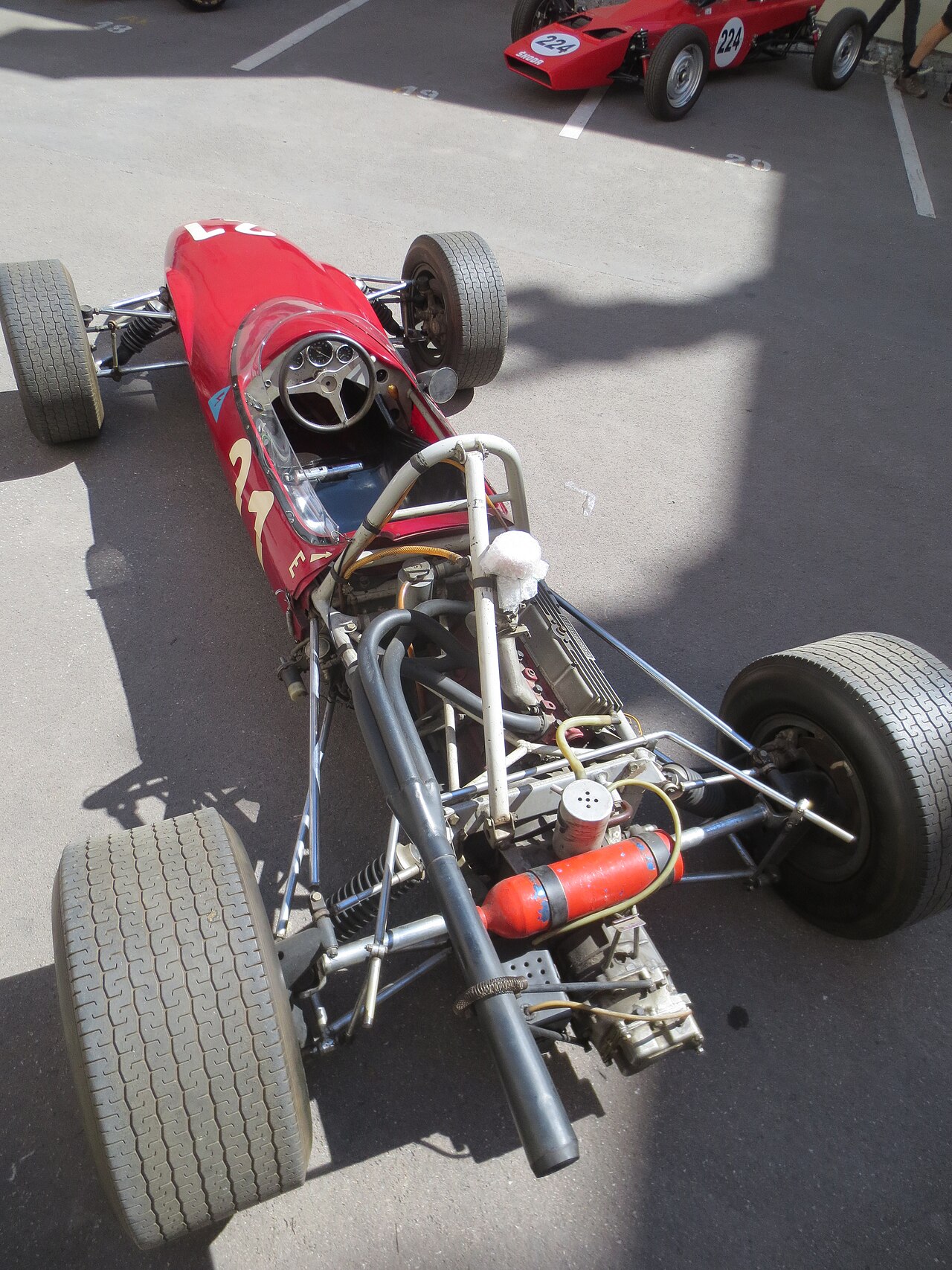
The Lotus Type 41 continues the small Formula-car spaceframe with a defined 1966–1967 custodial programme. A real 41C exhibition photograph illustrates the family while keeping that variant and its present engine separate from the original specification.
History and verified programme identity
Classic Team Lotus describes the Type 41 as a spaceframe Formula Three car using Cosworth MAE and Holbay R66 engines, dated 1966–1967. The inventory’s 1965 wording is preserved as an alias, while the profile uses the custodian’s period. The accessible page establishes the physical Type but does not give a complete build tally. The supplied photo identifies a 41C Ford-Cosworth variant associated with Vladimír Hubáček. That specific example is not relabelled as an unchanged first-season Formula Three car.
Engineering and design
A spaceframe family can develop through different engine installations and competition uses. Its exterior body may remain recognizable even when the mechanical record becomes more complicated. The high-angle photograph exposes the rear running gear and the narrow structure behind the cockpit, which helps explain the single-seater arrangement. It cannot certify the original tubing or every attachment. The programme’s Formula Three engines and the exhibit’s Ford-Cosworth description therefore occupy separate specification fields. A restoration file would connect the individual components with their dates and intended category.
The physical car in the supplied photograph
The supplied photograph shows the rear of a red Type 41C Ford-Cosworth, with its exposed engine and suspension visible. Ltosnar’s source identifies the variant and its association with Vladimír Hubáček. The photo supplies a later physical display appearance, not an original-period race scene.
A closer look at the programme
The exposed mechanical view gives this illustration a different purpose from a closed-body track photograph. It invites the reader to study how the powertrain and rear suspension fit behind one driver. The creator’s variant identification remains essential because visible engine hardware cannot establish the original category by itself. The primary programme record supplies the general Type 41 identity, while an individual file would date the particular 41C configuration. Preserving both levels makes the image useful without flattening the family’s development into one undated specification. The rear-facing Type 41C image exposes components that a nose-on portrait would hide. The wheels, suspension and powertrain surround a narrow central structure behind the driver. The perspective helps explain the single-seater package while leaving exact original materials and geometry to technical records. Its portrait orientation is retained, so the complete rear assembly remains visible instead of being forced into a wide crop. The specific creator label is essential: it identifies a later 41C configuration, while the primary custodian’s Formula Three description supplies the original family context.
Collecting and chassis evidence
The useful individual record starts with the chassis and then identifies its category and later changes. A variant label should explain a development rather than create another original-car count without evidence. The profile leaves the fabrication census unassigned and preserves the original inventory year for recognition. That permits later research to refine the Type’s chronology without creating a duplicate under the earlier wording.
Related Lotus designs and meaningful comparisons
The Type 44 uses Type 41-related suspension and bodywork in a Formula Two context, while the Type 51 offers another spaceframe competition role. Those comparisons show how a design component can be shared without making the programmes mechanically identical or merging their production records.
Reading the sources
The programme sources and the photograph answer different questions. Manufacturer and custodial records establish the original model, Type, category and published production scope. The creator’s file establishes the pictured subject, setting and image permission. An individual chassis history can then add ownership, competition entries and dated repairs without changing the scope of the original programme. Build references are not survivor counts, and a later specification does not automatically become an additional newly manufactured vehicle. Where primary evidence does not establish a complete fabrication census, that field remains unassigned.
Specifications and rarity evidence
| Programme reference year | 1966 |
|---|---|
| Model / Type | Type 41 Formula Three — Type 41 |
| Body / competition role | Spaceframe Formula Three family |
| Custodial period | 1966–1967 |
| Structure | Spaceframe |
| Original category | Formula Three |
| Programme engines | Cosworth MAE and Holbay R66 |
| Photo variant | 41C Ford-Cosworth |
| Published build / register reference | No complete tally assigned |
| Independently audited completed tally | Not assigned |
| Count scope | Verified physical competition Type programme. Complete fabrication census unassigned; later engine, body and suspension changes are dated configurations, not automatically additional manufactured cars. |
| Original inventory status | LOT-038 — Verified |
Frequently asked questions
Why is the programme year 1966 instead of 1965?
Classic Team Lotus dates the Type 41 programme to 1966–1967. The inventory’s 1965 title remains an alias; the supplied image depicts a separately captioned 41C variant.
How is Type 41 Formula Three classified?
This is a Team Lotus competition Type archive. It remains separate from Lotus road-car production. Customer cars, works entries and converted chassis need a reconciled scope before any complete fabrication tally is assigned.
Which technical details are established for the programme?
The primary record supports custodial period: 1966–1967; structure: Spaceframe; original category: Formula Three. These are programme or explicitly attributed photo references. A particular surviving car’s engine, chassis repairs and competition preparation require its own dated documentation.
Does the photographed appearance establish factory originality?
The caption records a real creator-identified Type 41 Formula Three subject and its later setting. It establishes the illustration’s scope, while original components, restoration work and individual race provenance require chassis-specific evidence. A competition number, current paint or museum display is not used as an originality certificate.
What rarity or archive scope is verified?
Verified physical competition Type programme. Complete fabrication census unassigned; later engine, body and suspension changes are dated configurations, not automatically additional manufactured cars.
Who photographed the supplied image?
Ltosnar via Wikimedia Commons, under CC BY 4.0. The original file and licence are linked with the image. Retain the creator, source and licence when uploading, exporting or reusing it; local retouching and synthetic enlargement have not been performed.
Related Lotus profiles
Sources and photo credits
Photograph: Ltosnar via Wikimedia Commons original source, CC BY 4.0. Source-provided thumbnail supplied without local cropping, retouching or synthetic enlargement.
Built in limited numbers
Verified physical competition Type programme. Complete fabrication census unassigned; later engine, body and suspension changes are dated configurations, not automatically additional manufactured cars.
Gallery
Specifications
Factory specifications may vary by model year, market and configuration.
Identity & production
- Official model
- Type 41 Formula Three