1963 Lotus Type 27 Formula Junior
Explore the 1963 Lotus Type 27 Formula Junior: programme history, design, verified rarity scope, specifications and credited photography.
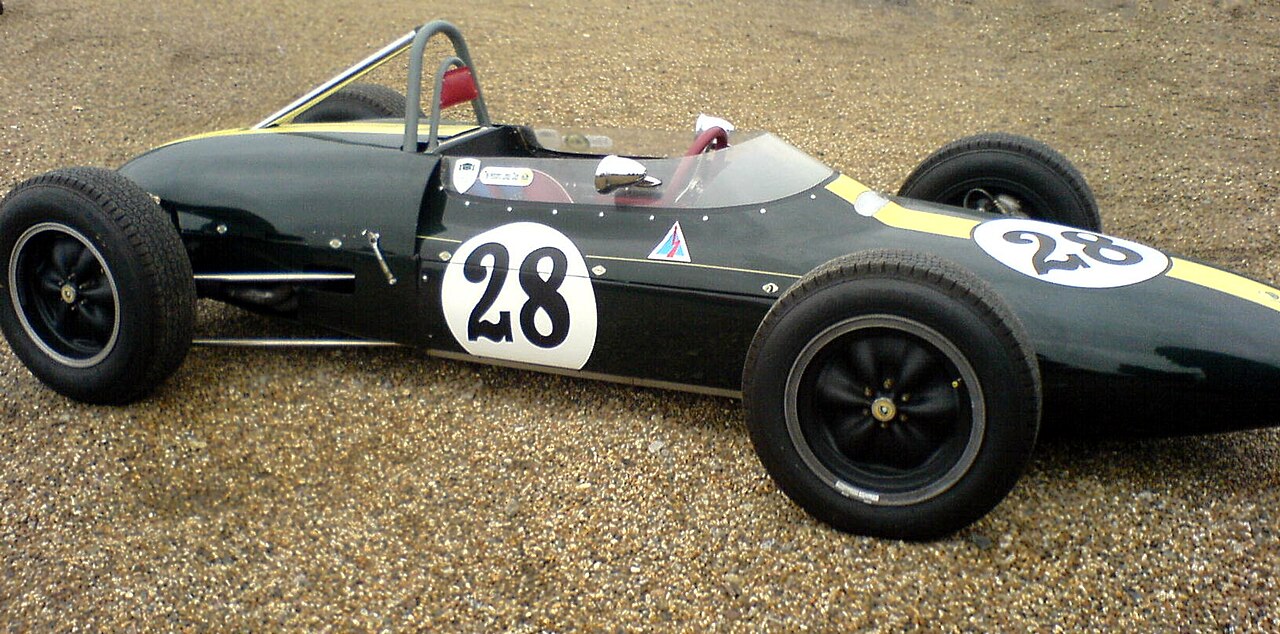
The 1963 Lotus Type 27 brings a monocoque approach to Formula Junior. Its structure and small Ford-based engine make it a distinct competition programme, with its own identity beside both the earlier Type 22 and the Grand Prix Type 25.
History and verified programme identity
Classic Team Lotus identifies the Type 27 as a monocoque Formula Junior car, dates it to 1963 and lists a 1,098 cc Ford 105E engine. That establishes a defined original competition design. The accessible custodial page does not publish a full fabrication total, so the profile does not assign one from an unverified secondary list. The record also avoids populating the Junior car with the Coventry-Climax V8 specifications of the Type 25. A shared structural idea does not make the Formula Junior and Formula One programmes the same chassis, category or manufacturing run.
Engineering and design
The monocoque is the key distinction in the Type 27’s engineering account. A structural shell around the driver can carry loads differently from the separate tubular frame of an earlier single-seater. In the Formula Junior setting, that approach still has to work with a small production-derived engine and the demands of the category. The photograph shows the narrow body and open wheel arrangement, but internal panel construction cannot be authenticated from the fitted exterior. The primary custodial description supplies the original design identity. A restored car’s actual materials, joins and replacement components would need its own technical file before precise structural claims were made.
The physical car in the supplied photograph
The supplied photograph shows a green Type 27 at the Lotus Brands Hatch Celebration in 2007, carrying competition number 28. The creator identifies the model explicitly. Its low nose, small screen and exposed rear mechanical area are visible in the outdoor display. The caption records a later physical appearance and does not assign an original works driver, chassis number or unchanged 1963 powertrain.
A shared structural method does not transfer specifications
The Type 27’s monocoque description makes it tempting to borrow the more famous Type 25’s technical story. The comparison is useful only if the Formula category and engine remain explicit. A small Ford-based Junior car and a Grand Prix car can explore related structural ideas while facing different regulations and operating requirements. In the supplied photograph, the green body and yellow wheels are familiar Lotus cues, but they do not identify the engine or prove an individual works history. The custodial Type record supplies that boundary. This is a practical lesson for a photo-led collection: visual resemblance can lead to a relevant comparison, while the model’s own primary record must still determine its specifications. The two cars can be connected without becoming interchangeable entries.
Collecting and chassis evidence
For the Type 27, an individual chassis history is the useful next level of evidence. Original category, build record and later competition preparation can be traced alongside structural repairs. A modern exhibition label is a helpful clue, but it does not prove the origin of every panel. The primary model page establishes the monocoque Junior programme; the photograph provides a matched real subject. The full fabrication census remains unassigned. This allows later research to add a reconciled output reference without confusing cars constructed originally as Type 27s with another Type that received later components or bodywork.
Related Lotus designs and meaningful comparisons
The Type 22 provides the earlier Formula Junior context, while the Type 25 offers a contemporary Lotus monocoque comparison in a different category. Reading all three makes both continuity and distinction clear: the competition role can remain familiar while the chassis method changes, and a structural approach can appear in more than one programme without making their engines interchangeable. The Type 27 deserves its own record for exactly that reason. It is part of a connected design sequence, with a specific Type and a specific primary description rather than only a generic Lotus single-seater label.
Reading the sources
The programme sources and the photograph answer different questions. Manufacturer and custodial records establish the original model, Type, category and published production scope. The creator’s file establishes the pictured subject, setting and image permission. An individual chassis history can then add ownership, competition entries and dated repairs without changing the scope of the original programme. Build references are not survivor counts, and a later specification does not automatically become an additional newly manufactured vehicle. Where primary evidence does not establish a complete fabrication census, that field remains unassigned.
Specifications and rarity evidence
| Programme reference year | 1963 |
|---|---|
| Model / Type | Type 27 Formula Junior — Type 27 |
| Body / competition role | Monocoque Formula Junior single-seater |
| Custodial programme year | 1963 |
| Competition category | Formula Junior |
| Structure | Monocoque |
| Engine reference | 1,098 cc Ford 105E |
| Photographed setting | Lotus Brands Hatch Celebration, 2007 |
| Published build / register reference | No complete tally assigned |
| Independently audited completed tally | Not assigned |
| Count scope | Documented physical Team Lotus competition Type archive. Complete fabrication census unassigned; works, customer and later converted cars are not added into an invented total. |
| Original inventory status | LOT-027 — Verified |
Frequently asked questions
Can Type 25 Formula One engine data be used for the Type 27?
No. Classic Team Lotus identifies the Type 27 as Formula Junior with a 1,098 cc Ford 105E engine. Its structural relationship does not transfer the Type 25’s Formula One powertrain.
How is Type 27 Formula Junior classified?
This is a Team Lotus competition Type archive. It remains separate from Lotus road-car production. Customer cars, works entries and converted chassis need a reconciled scope before any complete fabrication tally is assigned.
Which technical details are established for the programme?
The primary record supports custodial programme year: 1963; competition category: Formula Junior; structure: Monocoque. These are programme or explicitly attributed photo references. A particular surviving car’s engine, chassis repairs and competition preparation require its own dated documentation.
Does the photographed appearance establish factory originality?
The caption records a real creator-identified Type 27 Formula Junior subject and its later setting. It establishes the illustration’s scope, while original components, restoration work and individual race provenance require chassis-specific evidence. A competition number, current paint or museum display is not used as an originality certificate.
What rarity or archive scope is verified?
Documented physical Team Lotus competition Type archive. Complete fabrication census unassigned; works, customer and later converted cars are not added into an invented total.
Who photographed the supplied image?
Mariegriffiths at English Wikipedia via Wikimedia Commons, under CC BY-SA 3.0. The original file and licence are linked with the image. Retain the creator, source and licence when uploading, exporting or reusing it; local retouching and synthetic enlargement have not been performed.
Related Lotus profiles
Sources and photo credits
Photograph: Mariegriffiths at English Wikipedia via Wikimedia Commons original source, CC BY-SA 3.0. Source-provided thumbnail supplied without local cropping, retouching or synthetic enlargement.
Built in limited numbers
Documented physical Team Lotus competition Type archive. Complete fabrication census unassigned; works, customer and later converted cars are not added into an invented total.
Gallery
Specifications
Factory specifications may vary by model year, market and configuration.
Identity & production
- Official model
- Type 27 Formula Junior