1962 Lotus Type 25 Formula One Monocoque
Explore the 1962 Lotus Type 25 Formula One Monocoque: programme history, design, verified rarity scope, specifications and credited photography.
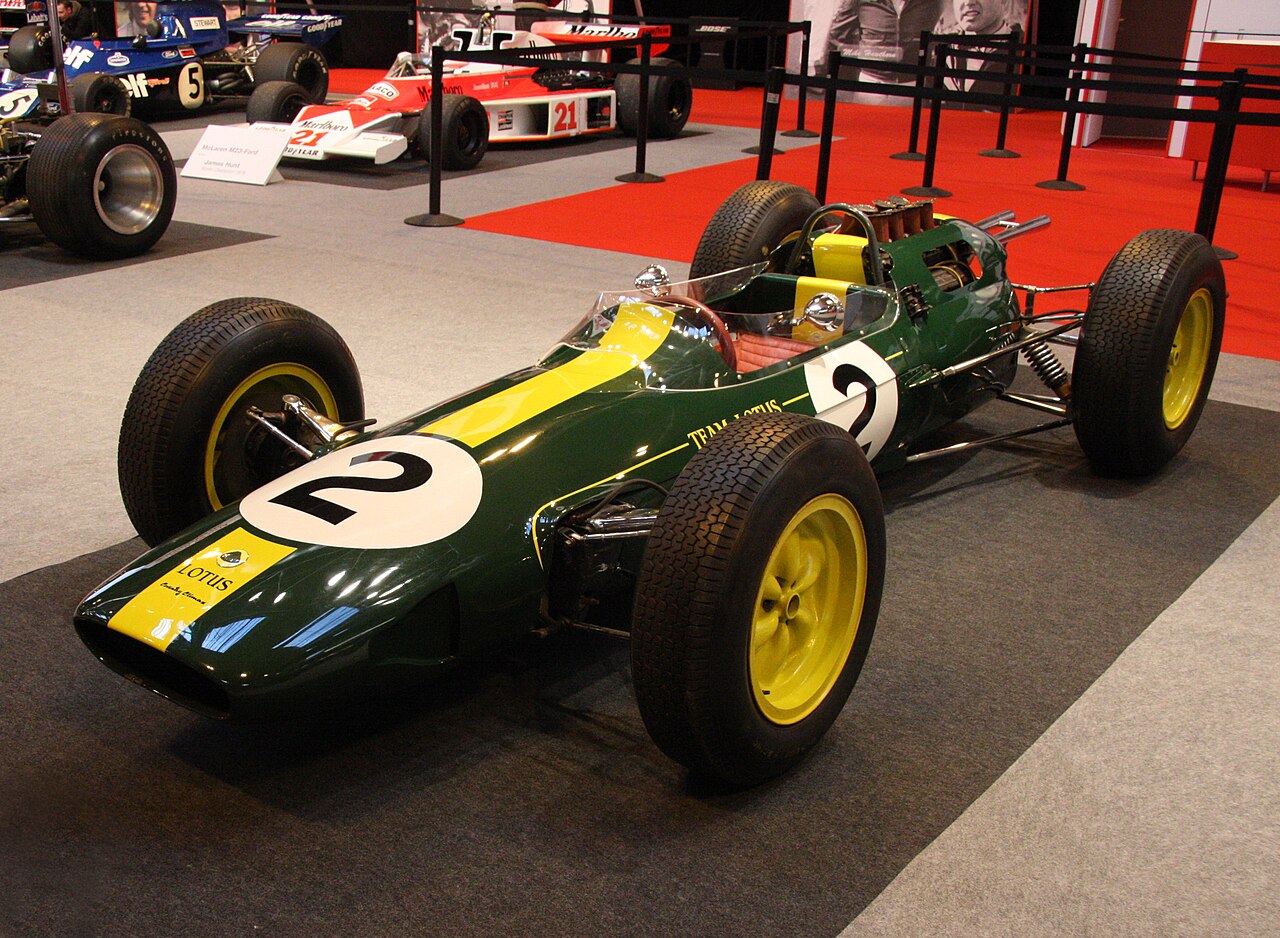
The Lotus Type 25 makes chassis structure central to the story of a Formula One car. Its semi-monocoque approach, small Coventry-Climax V8 and compact driver environment give it a clear identity within the 1962 Lotus competition programme.
History and verified programme identity
Classic Team Lotus describes the Type 25 as a radical semi-monocoque chassis and links the design to the 1.5-litre Coventry-Climax V8 and Jim Clark. Its public register lists R1 through R7 as works entries, with later title status recorded separately. Lotus’s manufacturer history places the Type 25’s introduction in 1962 and its championship success in the following period. The seven listed references are retained as a custodial register statement. They are not described as an independently audited survivor count, and later Type 25/33 development histories are not added as an extra original production run.
Engineering and design
A semi-monocoque changes the way the structure around the driver carries loads. Rather than making a separate network of tubes do all of that work, the body-like structural assembly itself becomes an important part of the chassis. The Type 25 therefore invites a different reading from a superficially similar spaceframe single-seater. Its exterior shape alone cannot reveal every load path, but the primary custodial description supplies the structural distinction. The design also makes the relationship between the cockpit, fuel space and engine mounting important. A restoration needs documentation of its actual construction before its stiffness or component originality can be assessed.
The physical car in the supplied photograph
The supplied photograph shows a creator-identified 1962 Type 25 Climax at a later public display. Its green body, yellow front stripe and competition number 2 are visible among other racing cars. The view illustrates the narrow nose and low driver environment. The photo does not establish a specific R-number, and this profile does not assign the pictured car every race result associated with Jim Clark or the Type 25 programme.
A structural idea can be more important than a silhouette
The Type 25’s fitted body can look deceptively familiar beside another green Lotus single-seater. The primary structural description is what makes the model’s significance legible beyond colour and proportions. A reader looking at the supplied display photograph can see the low cockpit and narrow body, then connect those visible features with the semi-monocoque account. The image alone cannot reveal every internal join or later repair. This is why the source links remain part of the article rather than being replaced by a confident visual claim. The Type 25’s design identity and championship association can be explained at programme level, while a particular R-number’s originality and race history stay in its individual file. That separation makes the archive informative without turning fame into a substitute for provenance.
Collecting and chassis evidence
The R-number is the useful starting point for an individual Type 25 history. A register entry, a period race photograph and a later museum label can each contribute, but they need to be reconciled before a particular title-winning chassis is identified. The separate Type 25/33 development record is especially relevant where a car was altered. A later configuration does not automatically represent a newly fabricated original chassis. This programme profile preserves the Type 25’s structural identity and public register references, with a credited physical illustration and an unassigned independently audited completion tally.
Related Lotus designs and meaningful comparisons
The Type 24 provides the contemporary Formula One comparison, while the Type 33 shows the later development of Lotus’s monocoque approach. The useful connection is the design problem rather than an assumed uninterrupted specification: chassis structure, suspension and wheels continued to evolve. Looking across those profiles helps the reader distinguish a parallel 1962 customer Type from a later monocoque successor. The separate programme names also prevent a famous championship association from being used as a substitute for the actual identity of an unknown photographed car.
Reading the sources
The programme sources and the photograph answer different questions. Manufacturer and custodial records establish the original model, Type, category and published production scope. The creator’s file establishes the pictured subject, setting and image permission. An individual chassis history can then add ownership, competition entries and dated repairs without changing the scope of the original programme. Build references are not survivor counts, and a later specification does not automatically become an additional newly manufactured vehicle. Where primary evidence does not establish a complete fabrication census, that field remains unassigned.
Specifications and rarity evidence
| Programme reference year | 1962 |
|---|---|
| Model / Type | Type 25 Formula One Monocoque — Type 25 |
| Body / competition role | Semi-monocoque Formula One competition programme |
| Programme reference year | 1962 |
| Structure | Semi-monocoque, custodial description |
| Engine reference | 1.5-litre Coventry-Climax V8 |
| Public register references | R1–R7 |
| Related conversion boundary | Type 25/33 histories kept separate from new-build counts |
| Published build / register reference | 7 listed register entries |
| Independently audited completed tally | Not assigned |
| Count scope | Published complete named programme reference: 7 listed register entries. This is a source-reported reference, not an independently audited completed tally or a surviving-car census. |
| Original inventory status | LOT-024 — Verified |
Frequently asked questions
Does every Type 25 photograph identify Jim Clark’s championship-winning chassis?
No. The programme is associated with Clark, but an individual claim needs an identified chassis and dated primary history. The supplied image is used as a Type 25 model illustration.
How is Type 25 Formula One Monocoque classified?
This is a Team Lotus competition Type archive. It remains separate from Lotus road-car production. Customer cars, works entries and converted chassis need a reconciled scope before any complete fabrication tally is assigned.
Which technical details are established for the programme?
The primary record supports programme reference year: 1962; structure: Semi-monocoque, custodial description; engine reference: 1.5-litre Coventry-Climax V8. These are programme or explicitly attributed photo references. A particular surviving car’s engine, chassis repairs and competition preparation require its own dated documentation.
Does the photographed appearance establish factory originality?
The caption records a real creator-identified Type 25 Formula One Monocoque subject and its later setting. It establishes the illustration’s scope, while original components, restoration work and individual race provenance require chassis-specific evidence. A competition number, current paint or museum display is not used as an originality certificate.
What rarity or archive scope is verified?
Published complete named programme reference: 7 listed register entries. This is a source-reported reference, not an independently audited completed tally or a surviving-car census.
Who photographed the supplied image?
Brian Snelson from Hockley, Essex, England via Wikimedia Commons, under CC BY 2.0. The original file and licence are linked with the image. Retain the creator, source and licence when uploading, exporting or reusing it; local retouching and synthetic enlargement have not been performed.
Related Lotus profiles
Sources and photo credits
Photograph: Brian Snelson from Hockley, Essex, England via Wikimedia Commons original source, CC BY 2.0. Source-provided thumbnail supplied without local cropping, retouching or synthetic enlargement.
Built in limited numbers
Published complete named programme reference: 7 listed register entries. This is a source-reported reference, not an independently audited completed tally or a surviving-car census.
Gallery
Specifications
Factory specifications may vary by model year, market and configuration.
Identity & production
- Official model
- Type 25 Formula One Monocoque