1959 Lotus Type 17 Sports Racer
Explore the 1959 Lotus Type 17 Sports Racer: programme history, design, verified rarity scope, specifications and credited photography.
The 1959 Lotus Type 17 is a compact sports racer whose suspension history is central to its identity. It belongs to the original Lotus competition archive, with later changes described as part of its development rather than hidden inside a timeless specification.
History and verified programme identity
Classic Team Lotus identifies the Type 17 as a sports racer intended to replace the Eleven. Its record dates the model to 1959 and describes it as the first Lotus fitted with strut-type front suspension, later replaced with double wishbones. Lotus’s manufacturer timeline also places the small-capacity Type 17 in 1959. That establishes the programme and the documented change in suspension approach. The accessible custodial description does not provide a complete manufacturing count, so the profile does not assign one. It also does not transfer an individual car’s race results to the entire Type 17 family.
Engineering and design
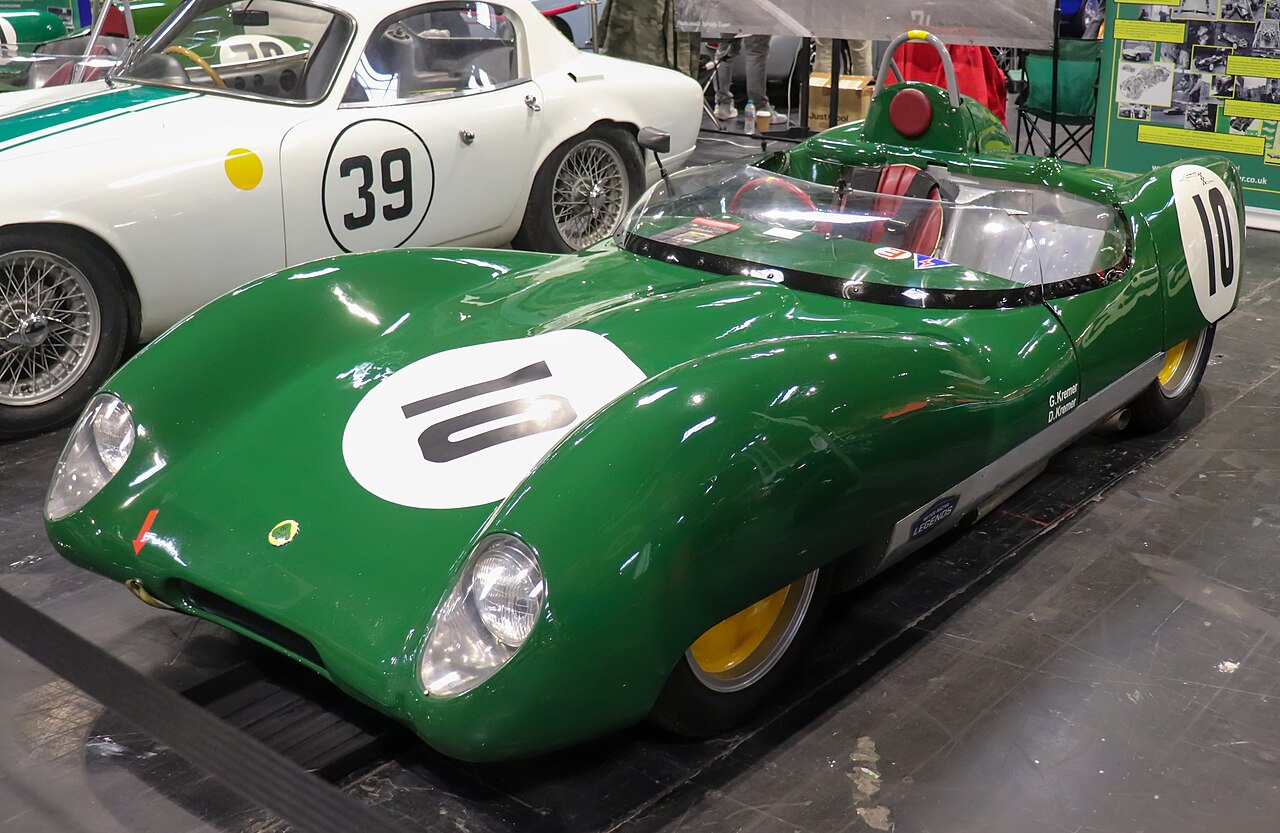
A suspension change is more than a detail in a specification table. It affects how the wheel is located relative to the chassis and how loads enter the structure. The Type 17’s original strut arrangement and its subsequent wishbone development therefore belong in a dated account of the programme. A car restored in one configuration can be an accurate record of that phase without representing every stage of the model’s history. The photograph gives a clear view of the low body and open driver compartment, but it cannot establish the internal geometry or certify the provenance of the components hidden beneath the body.
The physical car in the supplied photograph
The supplied photograph shows a green 1959 Type 17 at the NEC Classic Motor Show in 2019. The small headlamps, low nose, narrow cockpit and yellow wheels are visible, with number 10 on the front. The creator identifies a 1.1-litre example. That photo-source description is retained as an individual reference, while the present suspension and component originality remain matters for a chassis-specific file.
A configuration can be historically accurate without being first
The Type 17’s suspension chronology gives a useful way to think about restored competition cars. A later arrangement may be a documented part of the car’s active development, even though it differs from its first configuration. Describing the change plainly avoids forcing the vehicle into an oversimplified original-versus-modified distinction. The important questions are which chassis is involved, when the work occurred and what the surviving evidence shows. The exhibit photograph is useful for the present body and cockpit, while the primary model account establishes that the suspension approach changed. Neither source alone resolves the entire individual history. A catalogue can preserve both without calling every later component an unrelated alteration or claiming that a current appearance represents the car’s first race. This is particularly valuable for a model whose development is part of its significance.
Collecting and chassis evidence
The important collection question is which configuration is being described. Period images, workshop drawings and later restoration records can show when suspension changes occurred on a particular chassis. A model history that simply says the Type 17 had one arrangement forever would lose that information. The same care applies to the body and engine: a current exhibit should not be given every technical detail of a different race car because the Type number matches. This record provides the programme’s verified suspension sequence and a matched photograph, with an unassigned full fabrication census and no invented survivor number.
Related Lotus designs and meaningful comparisons
The Eleven gives the earlier sports-racing context, while the Type 15 offers another related front-engined development. A comparison of their visible cockpit openings and body widths helps show how Lotus explored small sports-racing packages. The Type 17’s suspension account supplies a further distinction that photographs alone may not reveal. Keeping the three profiles separate allows the same family relationship to be described without claiming that an Eleven body, a Type 15 engine installation and a Type 17 chassis are interchangeable parts of one manufacturing programme.
Reading the sources
The programme sources and the photograph answer different questions. Manufacturer and custodial records establish the original model, Type, category and published production scope. The creator’s file establishes the pictured subject, setting and image permission. An individual chassis history can then add ownership, competition entries and dated repairs without changing the scope of the original programme. Build references are not survivor counts, and a later specification does not automatically become an additional newly manufactured vehicle. Where primary evidence does not establish a complete fabrication census, that field remains unassigned.
Specifications and rarity evidence
| Programme reference year | 1959 |
|---|---|
| Model / Type | Type 17 Sports Racer — Type 17 |
| Body / competition role | Small-capacity sports racer with evolving front suspension |
| Custodial programme year | 1959 |
| Original programme intention | Replace the Eleven |
| Initial front suspension | Strut type, custodial description |
| Later front suspension | Double wishbones |
| Photo example | Creator-identified 1959 1.1-litre car |
| Published build / register reference | No complete tally assigned |
| Independently audited completed tally | Not assigned |
| Count scope | Documented physical Team Lotus competition Type archive. Complete fabrication census unassigned; works, customer and later converted cars are not added into an invented total. |
| Original inventory status | LOT-015 — Verified |
Frequently asked questions
Did the Type 17 retain one front-suspension arrangement throughout its history?
No. Classic Team Lotus describes original strut-type front suspension followed by a change to double wishbones. A particular car’s configuration needs dated evidence.
How is Type 17 Sports Racer classified?
This is a Team Lotus competition Type archive. It remains separate from Lotus road-car production. Customer cars, works entries and converted chassis need a reconciled scope before any complete fabrication tally is assigned.
Which technical details are established for the programme?
The primary record supports custodial programme year: 1959; original programme intention: Replace the Eleven; initial front suspension: Strut type, custodial description. These are programme or explicitly attributed photo references. A particular surviving car’s engine, chassis repairs and competition preparation require its own dated documentation.
Does the photographed appearance establish factory originality?
The caption records a real creator-identified Type 17 Sports Racer subject and its later setting. It establishes the illustration’s scope, while original components, restoration work and individual race provenance require chassis-specific evidence. A competition number, current paint or museum display is not used as an originality certificate.
What rarity or archive scope is verified?
Documented physical Team Lotus competition Type archive. Complete fabrication census unassigned; works, customer and later converted cars are not added into an invented total.
Who photographed the supplied image?
Vauxford via Wikimedia Commons, under CC BY-SA 4.0. The original file and licence are linked with the image. Retain the creator, source and licence when uploading, exporting or reusing it; local retouching and synthetic enlargement have not been performed.
Related Lotus profiles
Sources and photo credits
Photograph: Vauxford via Wikimedia Commons original source, CC BY-SA 4.0. Source-provided thumbnail supplied without local cropping, retouching or synthetic enlargement.
Built in limited numbers
Documented physical Team Lotus competition Type archive. Complete fabrication census unassigned; works, customer and later converted cars are not added into an invented total.
Gallery
Specifications
Factory specifications may vary by model year, market and configuration.
Identity & production
- Official model
- Type 17 Sports Racer