1956 Lotus Eleven
Explore the 1956 Lotus Eleven: programme history, design, verified rarity scope, specifications and credited photography.
The 1956 Lotus Eleven combines the streamlined sports-racing body with a small, adaptable competition chassis. Its name and Type 11 identity belong to the original 1950s programme, separate from the much later Lotus 3-Eleven and from independent replicas.
History and verified programme identity
Classic Team Lotus describes the Eleven as the spaceframe aerodynamic sports racer that replaced the Mark IX. The custodial record dates it to 1956–1958, reports around 250 built and notes stressed alloy skinning. It lists 1,098 cc and 1,460 cc Coventry-Climax engines. The original Lotus programme also included differing customer specifications, so a general model history should not assign one engine or competition category to every car. The approximate build reference remains a published whole-programme estimate; it is neither a hard announced allocation nor a census of surviving original chassis.
Engineering and design
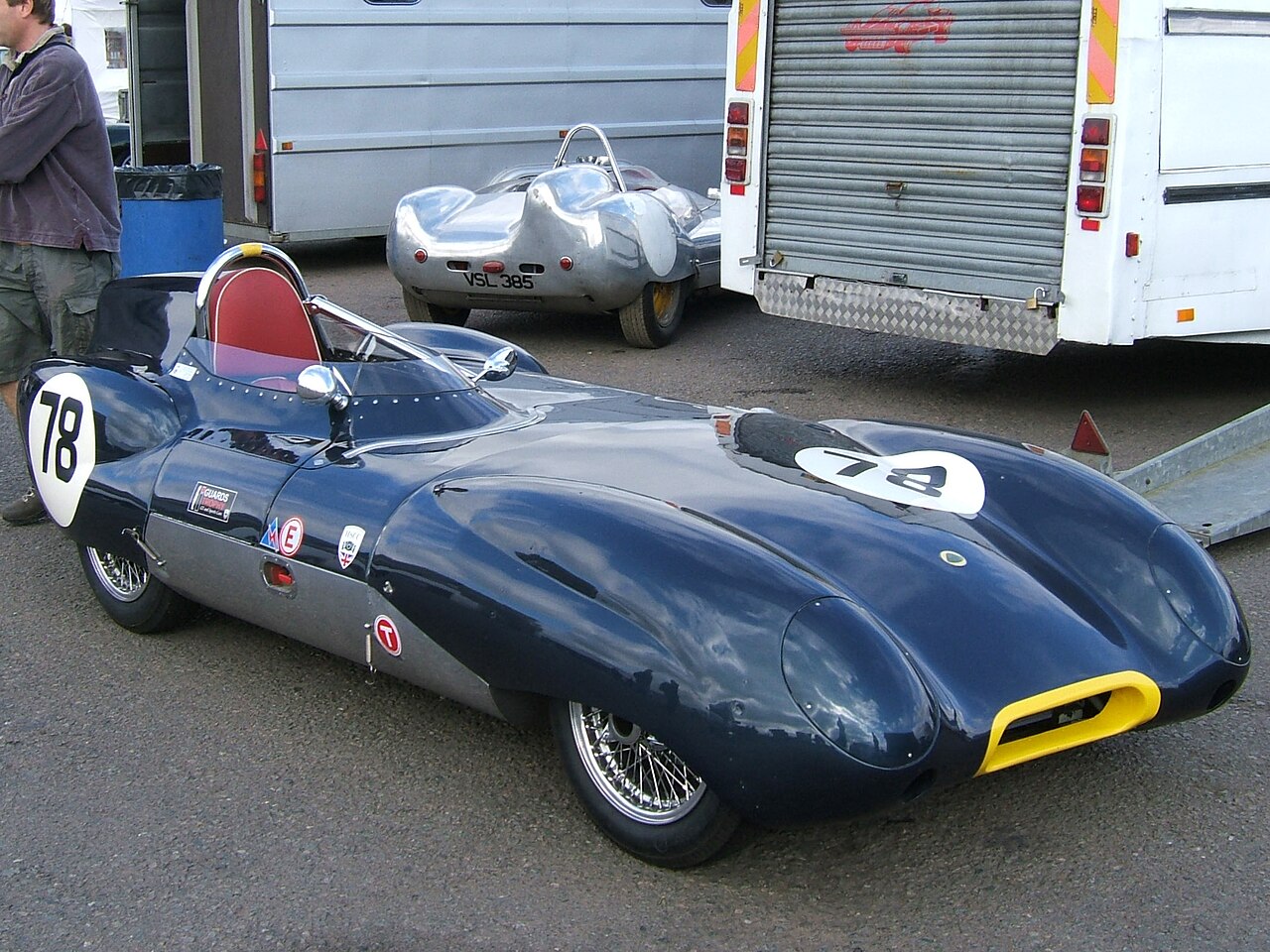
The Eleven’s body makes the driver compartment part of a low, continuous sports-racing form. In the supplied view, the front surface flows into rounded wheel enclosures and then into the open cockpit. That gives the car a distinct visual relationship between covered running gear and an exposed occupant. A spaceframe and stressed skin can work together as a lightweight package, but the structural contribution of a particular restored panel requires technical documentation. The useful design discussion is therefore about the original arrangement and visible form, rather than an assertion that every modern replacement panel duplicates the original construction or stiffness.
The physical car in the supplied photograph
The supplied photograph shows the foreground Eleven in a Donington Park paddock in September 2007. Its dark body, yellow-edged front opening and competition number 78 are visible, with a Lotus 15 behind it. The creator identifies the foreground car as an Eleven. The background model remains part of the setting; it is not counted as another Eleven or used to certify the foreground car’s mechanical originality.
Names can connect cars without merging them
The Eleven’s written-out name is memorable, which makes it useful for public interpretation and potentially confusing in search results. A reader may encounter a modern 3-Eleven or an independent XI replica before finding the original Type 11. The distinction is therefore worth making in the title, caption and programme scope together. In the supplied Donington photograph, the original sports-racing form is visible in a real paddock, with its driver area offset within a low covered-wheel body. The neighbouring Type 15 adds useful context only because it is identified as a different car. The same discipline applies to names: a shared word can describe a lineage or inspiration, while the original manufacturer and Type still determine the vehicle record. Clear naming helps the article remain useful beyond a single event photograph.
Collecting and chassis evidence
Replica identification is particularly important for the Eleven because the form has been reproduced by independent builders. A photograph of a Westfield or another derivative can illustrate that separate manufacturer’s work, but it cannot supply the original Lotus programme’s chassis evidence. This profile uses a creator-identified Lotus Eleven photograph and keeps the complete chassis census unassigned beyond the custodial approximate reference. A detailed individual file would add the chassis number, build record, dated body history and competition entries. Those records would also help distinguish a later replacement body from an independently constructed replica without relying on appearance alone.
Related Lotus designs and meaningful comparisons
The Mark IX shows the immediate earlier design context, while the Type 15 demonstrates a later development in the sports-racing family. Together they help explain why the Eleven should be read as its own model rather than as a generic shape. The later 3-Eleven is a different programme despite its related name. The original car’s silhouette, small-capacity racing context and mid-1950s production reference remain the focus here. Clear naming makes search results and collection records more useful by preventing similarly named cars from sharing specifications or build totals.
Reading the sources
The programme sources and the photograph answer different questions. Manufacturer and custodial records establish the original model, Type, category and published production scope. The creator’s file establishes the pictured subject, setting and image permission. An individual chassis history can then add ownership, competition entries and dated repairs without changing the scope of the original programme. Build references are not survivor counts, and a later specification does not automatically become an additional newly manufactured vehicle. Where primary evidence does not establish a complete fabrication census, that field remains unassigned.
Specifications and rarity evidence
| Programme reference year | 1956 |
|---|---|
| Model / Type | Eleven — Type 11 |
| Body / competition role | Spaceframe aerodynamic sports racer |
| Custodial programme period | 1956–1958 |
| Chassis | Spaceframe with stressed alloy skinning, source description |
| Engine references | 1,098 cc and 1,460 cc Coventry-Climax |
| Photographed setting | Donington Park paddock, September 2007 |
| Published build / register reference | Around 250 |
| Independently audited completed tally | Not assigned |
| Count scope | Published complete named programme reference: Around 250. This is a source-reported reference, not an independently audited completed tally or a surviving-car census. |
| Original inventory status | LOT-009 — Verified |
Frequently asked questions
Does this profile include Westfield XI replicas or the modern 3-Eleven?
No. It follows the original Lotus Eleven / Type 11 programme. Independent replicas and the later 3-Eleven have separate manufacturers or programme identities.
How is Eleven classified?
This is a Team Lotus competition Type archive. It remains separate from Lotus road-car production. Customer cars, works entries and converted chassis need a reconciled scope before any complete fabrication tally is assigned.
Which technical details are established for the programme?
The primary record supports custodial programme period: 1956–1958; chassis: Spaceframe with stressed alloy skinning, source description; engine references: 1,098 cc and 1,460 cc Coventry-Climax. These are programme or explicitly attributed photo references. A particular surviving car’s engine, chassis repairs and competition preparation require its own dated documentation.
Does the photographed appearance establish factory originality?
The caption records a real creator-identified Eleven subject and its later setting. It establishes the illustration’s scope, while original components, restoration work and individual race provenance require chassis-specific evidence. A competition number, current paint or museum display is not used as an originality certificate.
What rarity or archive scope is verified?
Published complete named programme reference: Around 250. This is a source-reported reference, not an independently audited completed tally or a surviving-car census.
Who photographed the supplied image?
John Chapman (Pyrope) via Wikimedia Commons, under CC BY-SA 3.0. The original file and licence are linked with the image. Retain the creator, source and licence when uploading, exporting or reusing it; local retouching and synthetic enlargement have not been performed.
Related Lotus profiles
Sources and photo credits
Photograph: John Chapman (Pyrope) via Wikimedia Commons original source, CC BY-SA 3.0. Source-provided thumbnail supplied without local cropping, retouching or synthetic enlargement.
Built in limited numbers
Published complete named programme reference: Around 250. This is a source-reported reference, not an independently audited completed tally or a surviving-car census.
Gallery
Specifications
Factory specifications may vary by model year, market and configuration.
Identity & production
- Official model
- Eleven