2017 Honda Urban EV Concept
Honda Urban EV Concept: the original 2017 electric concept, distinctive door design and credited photography.
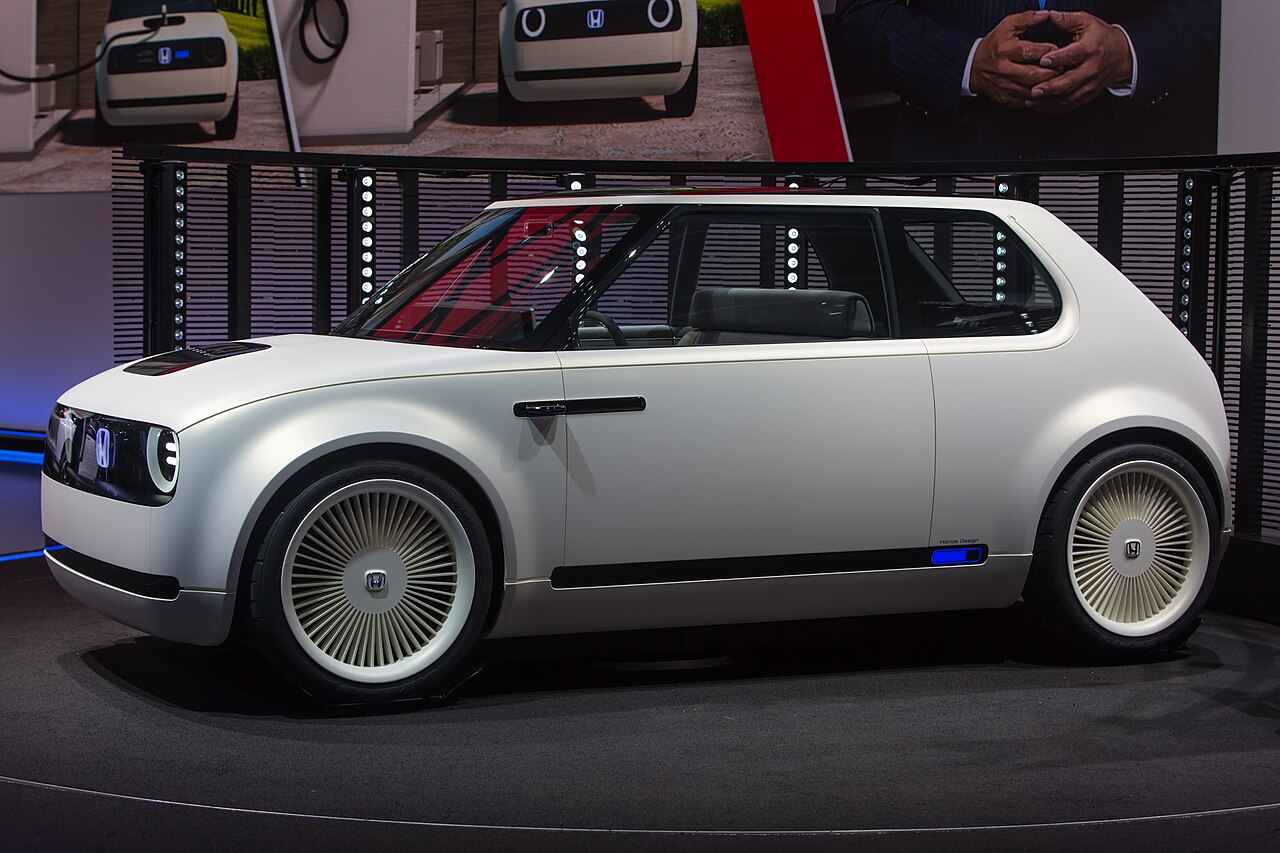
The Honda Urban EV Concept appeared at Frankfurt in September 2017 as a new direction for the company’s electric passenger cars.
History and purpose
The Honda Urban EV Concept appeared at Frankfurt in September 2017 as a new direction for the company’s electric passenger cars. Honda’s original release identifies the physical concept and its compact, approachable design intent. The supplied photograph records that original show presentation. The archive treats it as a distinct subject, separate from the 2019 e Prototype and later retail Honda e. A planned production future is not a manufacturing count for the concept. Its complete fabrication tally therefore stays unknown, while the original introduction and visible configuration provide the historical foundation for the profile.
Design and engineering
Honda describes four occupants, rear-hinged side doors, a panoramic dashboard display and camera-based side views. The front could show messages between the headlamps, placing communication within the exterior design. The supplied side three-quarter photograph shows an upright cabin, short-looking body and unusually graphic wheels. Its simple panel shapes and dark glazing make the concept visually coherent. Those details can explain the proposal without assigning a battery capacity or motor output absent from the cited model-specific account. A displayed screen or exterior message function likewise should not be treated as proof of full production-system reliability.
Identifying the original configuration
The selected photograph explicitly names Urban EV Concept at Frankfurt IAA and dates the image to 12 September 2017. Keep that identity and introduction date together. The later e Prototype uses a related visual language, but it remains a separate development-stage object with its own presentation. A useful archive record would add the original cabin, door movement and display details alongside construction and custodial information. Any later exhibition changes should be dated. This preserves the original concept configuration while leaving room to document how the physical car was transported, maintained or altered after its first public appearance.
Collector context and preservation
Urban EV works particularly well beside Sports EV because their photographs show different body arrangements within Honda’s electric concept presentation. Compare the upright passenger compartment with the coupe’s stretched sports outline, then use Honda’s sources to explain the relationship actually documented by the maker. The e Prototype provides a subsequent, separately identified chapter. A collection can make that sequence clear through captions and exact photos rather than a single generic electric-car image. Keep proposed functions, demonstrated functions and later production specifications distinct. That discipline helps readers understand why the original concept matters without mistaking its show presentation for a retail car’s validated equipment list.
The supplied angle makes the passenger compartment and wheel graphics easy to compare. A cabin image would add another dimension to the original proposal, particularly the relationship between seating and display surfaces. A useful archive keeps each view dated so exhibition changes remain visible in the historical record.
Reading the evidence for this profile
The original source links below identify the programme and the historical statements used in this article. The photograph has its own creator and licence record, separate from the manufacturer’s vehicle history. Keep both when transferring this profile into a collection catalogue. A manufacturing tally describes how many cars belong to a defined original programme; it does not measure how many survive, how many are publicly visible, or how many retain all their original components. Those individual questions require dated chassis and restoration evidence. The reference year likewise describes the programme’s introduction or named historic configuration, while the supplied caption states the photographed setting and any established individual identity. This lets future research expand the car’s history without blurring the scope of the record already assembled here.
Specifications and verified rarity
| Reference year | 2017 |
|---|---|
| Model / programme | Urban EV Concept |
| Body / role | Compact electric passenger-car concept |
| Power unit / proposal | Battery-electric proposal; model-specific installed output and capacity unconfirmed |
| Layout / transmission | Four-occupant concept with rear-hinged side doors and panoramic dashboard display |
| Exact manufacturing tally | Not established |
| Rarity evidence | Physical concept archive scope; tally unknown |
| Rarity scope | Physical Honda Urban EV Concept unveiled at Frankfurt in September 2017. Complete fabrication tally unknown. Separate from the 2019 e Prototype and later Honda e retail manufacturing. |
| Inventory reference | HON-115 — Verified |
Frequently asked questions
What is the Honda Urban EV Concept?
The original physical 2017 Urban EV show concept, with four-occupant and rear-hinged-door proposals, separate from later Honda e development stages.
What engineering defines this vehicle?
Battery-electric proposal; model-specific installed output and capacity unconfirmed. Four-occupant concept with rear-hinged side doors and panoramic dashboard display. The specifications describe the original programme or published concept proposal. An individual example’s installed equipment and any later changes need their own dated evidence.
Why does this profile use 2017?
This is the documented introduction or original configuration year. Photograph dates and market model years can differ. Keeping those dates separate makes it possible to follow the car’s development without creating a second identity for the same programme.
How should an individual Urban EV Concept be authenticated?
Connect the chassis identifier to original delivery, edition or custodial records. Compare period exterior, cabin and mechanical photographs with the documented configuration. Record replacement parts, paint changes and restoration work as dated events. A badge or colour alone cannot establish that a car belongs to this original programme.
What rarity or archive scope is verified?
Physical Honda Urban EV Concept unveiled at Frankfurt in September 2017. Complete fabrication tally unknown. Separate from the 2019 e Prototype and later Honda e retail manufacturing.
Who took the supplied photograph?
Matti Blume via Wikimedia Commons, under CC BY-SA 4.0. The original file and licence links accompany the image. Retain that credit when the photograph is uploaded, exported or reused.
Related Honda family profiles
Sources and photo credits
Photograph: Matti Blume via Wikimedia Commons original file, CC BY-SA 4.0. Source-provided photograph supplied without local cropping, retouching or text removal. A source thumbnail is used where available. Honda Urban EV Concept at Frankfurt IAA on 12 September 2017, documenting the original show configuration.
Built in limited numbers
Physical Honda Urban EV Concept unveiled at Frankfurt in September 2017. Complete fabrication tally unknown. Separate from the 2019 e Prototype and later Honda e retail manufacturing.
Gallery
Specifications
Factory specifications may vary by model year, market and configuration.
Identity & production
- Official model
- Urban EV Concept