2005 Ford Shelby GR-1 Concept
Explore 2005 Ford Shelby GR-1 Concept: history, specifications, rarity evidence and credited photography.
Ford’s Shelby GR-1 Concept developed the enclosed fastback side of the Shelby performance story.
History and purpose
Ford’s Shelby GR-1 Concept developed the enclosed fastback side of the Shelby performance story. The polished-aluminium 2005 vehicle followed an earlier design presentation and explored a front-engine V10 layout with a rear transaxle. Ford’s original release supplies a 6.4-litre engine and a 605-horsepower rating. This profile identifies the physical polished-body concept seen in the licensed Toronto photograph. It does not assume that every earlier GR-1 display object contained the same operating drivetrain. Complete fabrication totals remain unknown, and there was no corresponding Ford customer-production series established by the release. The reference year belongs to this developed concept configuration.
Design and engineering
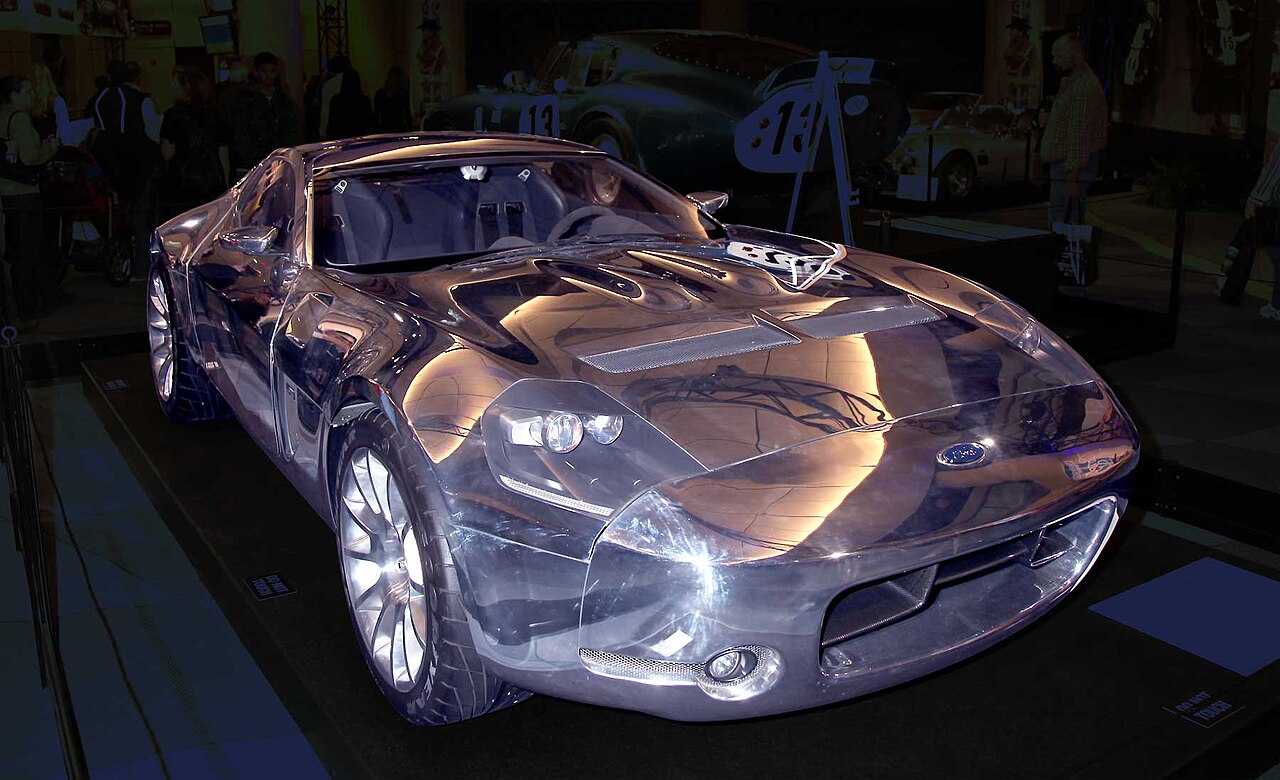
The polished body makes light and reflection part of the GR-1’s identity. In the photograph, show lighting travels across the bonnet and rearward surfaces, emphasising the long front section and compact enclosed cabin. Its presentation recalls the importance of an aerodynamic coupe in Shelby history without making the GR-1 an original Daytona Coupe. The manufacturer’s V10 and rear-transaxle description provides the mechanical framework for those proportions. The image itself establishes the visible concept body, not its measured drag, operating condition or interior completeness. A collection caption can explain that distinction while still giving the polished finish a central role.
Identifying the original configuration
A strong GR-1 record should state which concept configuration is being shown. A static earlier presentation, a later functional development and a photographed public display are connected historically but are not interchangeable evidence about every component. The supplied image identifies the polished GR-1 at the 2010 Toronto show, years after the 2005 announcement. Its date belongs in the caption rather than replacing the programme’s reference year. Preserve the manufacturer’s engine rating separately from any later operating observation. That prevents a detailed specification from being transferred to an object whose construction or present mechanical state has not been documented.
Collector context and preservation
The GR-1 is particularly effective beside Ford’s contemporary Shelby Cobra Concept. Their different bodies make the relationship between open roadster and enclosed fastback easy to discuss, while their documented engineering connects them to the same broader performance era. Preservation should include dated surface-condition photographs because a polished metal body communicates differently from a painted one. Retain clear views of panel edges, glazing and cabin details before adding dramatic lighting studies. A carefully assembled archive can show the design’s visual strength and still leave unverified fabrication totals, operating demonstrations and later ownership events available for further research.
Reading the evidence for this profile
The original source links below identify the programme and the historical statements used in this article. The photograph has its own creator and licence record, separate from the manufacturer’s vehicle history. Keep both when transferring this profile into a collection catalogue. A manufacturing tally describes how many cars belong to a defined original programme; it does not measure how many survive, how many are publicly visible, or how many retain all their original components. Those individual questions require dated chassis and restoration evidence. The reference year likewise describes the programme’s introduction or named historic configuration, while the supplied caption states the photographed setting and any established individual identity. This lets future research expand the car’s history without blurring the scope of the record already assembled here.
Specifications and verified rarity
| Reference year | 2005 |
|---|---|
| Model / programme | Shelby GR-1 Concept |
| Body / role | Two-seat fastback concept |
| Documented engine | 6.4-litre V10, manufacturer-rated 605 hp |
| Architecture / transmission | Front engine, rear transaxle; six-speed manual |
| Exact manufacturing tally | Not established |
| Eligibility bound | Physical concept archive scope; tally unknown |
| Rarity scope | Physical Shelby GR-1 concept archive in the functional polished-aluminium 2005 configuration. Related earlier display models are not assigned its drivetrain. Complete fabrication tally unknown; no retail production series is claimed. |
| Inventory reference | FRD-280 — Verified |
Frequently asked questions
What is the Ford Shelby GR-1 Concept?
A physical Ford/Shelby fastback concept in its developed 2005 polished-aluminium configuration; distinct from earlier non-running displays and original Daytona Coupes.
What engineering defines this Ford?
6.4-litre V10, manufacturer-rated 605 hp. Front engine, rear transaxle; six-speed manual. These are the documented programme or preserved-concept specifications. Connect an individual vehicle’s installed components to its own dated records before assigning a factory configuration to that particular example.
Why is 2005 the reference year?
It identifies the introduction or original historical configuration described in this article. The photograph can show a later example or a later display of the original subject. The source inventory’s original heading remains an identity alias wherever the date or model name has been corrected.
How should an individual Shelby GR-1 Concept be documented?
Start with the chassis identity and connect it to dated construction, registration or custodial records. Keep exterior, interior, engine and underbody photographs together. Record changes to finish, equipment and mechanical specification as separate events, so the physical car’s history can grow without changing the definition of the original programme.
What rarity or archive scope is verified?
Physical Shelby GR-1 concept archive in the functional polished-aluminium 2005 configuration. Related earlier display models are not assigned its drivetrain. Complete fabrication tally unknown; no retail production series is claimed.
Who took the supplied photograph?
George Socka from Toronto, Canada via Wikimedia Commons, under CC BY 2.0. The original file and licence links accompany the image. Retain that credit when the photograph is uploaded, exported or reused.
Related Ford profiles
Sources and photo credits
Photograph: George Socka from Toronto, Canada via Wikimedia Commons original file, CC BY 2.0. Source-provided photograph supplied without local cropping, retouching or text removal. A source thumbnail is used where available. Polished-aluminium Ford Shelby GR-1 Concept at the 2010 Toronto Auto Show; its display date is later than the 2005 reference configuration.
Built in limited numbers
Physical Shelby GR-1 concept archive in the functional polished-aluminium 2005 configuration. Related earlier display models are not assigned its drivetrain. Complete fabrication tally unknown; no retail production series is claimed.
Gallery
Specifications
Factory specifications may vary by model year, market and configuration.
Identity & production
- Official model
- Shelby GR-1 Concept