2005 Ford GT — First Generation
Explore 2005 Ford GT — First Generation: history, specifications, rarity evidence and credited photography.
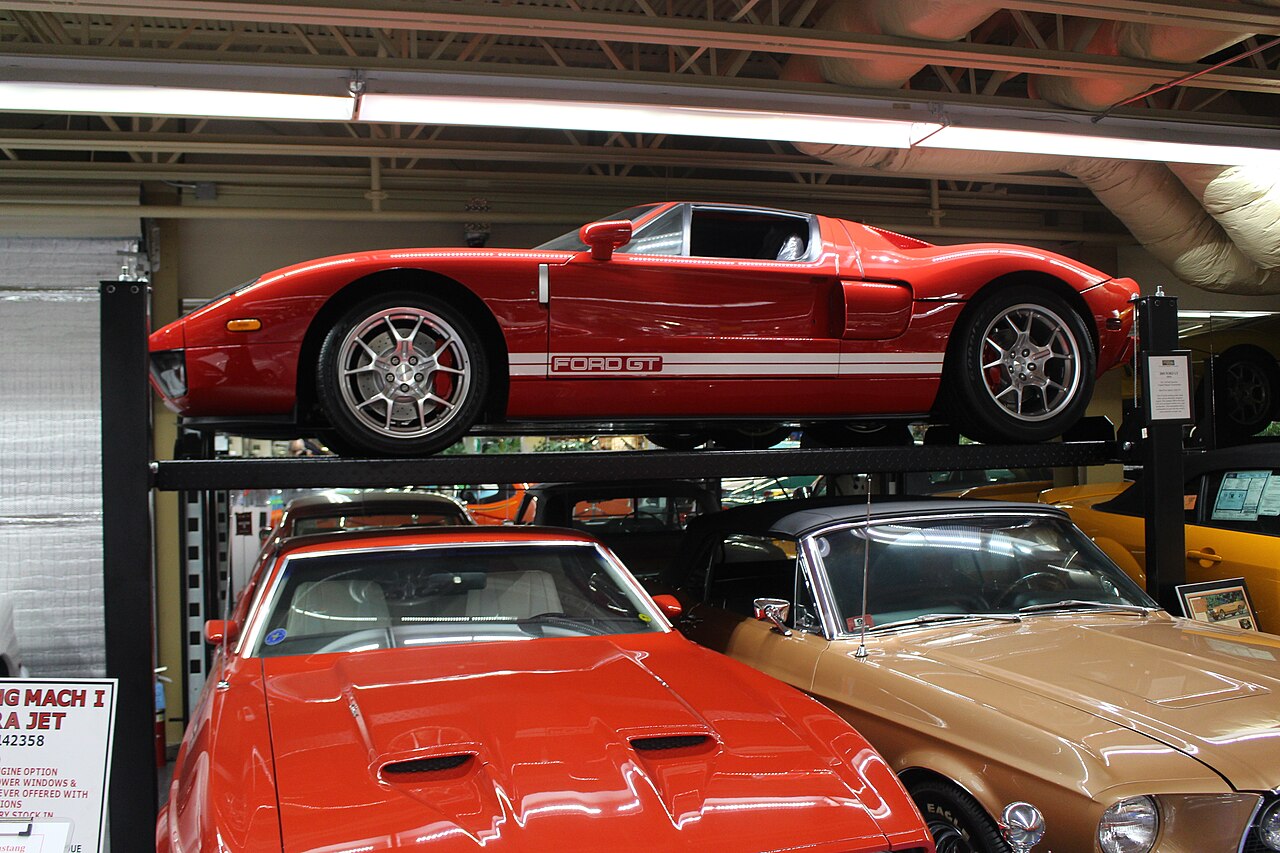
The first-generation Ford GT translated the visual identity of the GT40 into a substantially later road-going supercar.
History and purpose
The first-generation Ford GT translated the visual identity of the GT40 into a substantially later road-going supercar. Its customer programme covered the 2005 and 2006 model years and used a supercharged 5.4-litre V8 with a six-speed manual transmission. RM Sotheby’s original custodial histories give a total of 4,033 cars, while other published accounts use 4,038. This profile preserves that disagreement, uses the higher research figure as a conservative rarity scale and leaves the exact manufacturing tally unset. It covers the complete original programme. A single model year, a national allocation or a first/last-car milestone would provide a narrower and potentially misleading definition.
Design and engineering
The red museum example shows the low roof, broad rear body and contrasting stripes that make the GT’s heritage immediately legible. Its shape resembles the earlier racing family without making the modern car a continuation chassis. Contemporary road equipment and the larger passenger package belong to a separate design. In the photograph, the car sits above other vehicles in a museum display, so the image is particularly useful for reading the whole side profile. The documented mid-engine arrangement explains the cabin’s forward position and the substantial body behind it. Those proportions carry much of the visual link to Ford’s endurance-racing history.
Identifying the original configuration
Keep GT and GT40 distinct in the title and chassis file. The modern first-generation GT is not an original 1960s GT40, and a museum photograph does not identify it as an auction car or a particular first-built example. The supplied source names a 2005 GT at the Tallahassee Automobile Museum. Its display text contains its own approximate production statement; that is not used to establish the programme count. The linked custodial histories provide the engineering and manufacturing context, while the photograph documents a matching physical example. Originality, installed equipment and individual provenance remain matters for that car’s records.
Collector context and preservation
For a collector, the first-generation GT is valuable as a complete engineering programme, not simply as a colour or an annual production figure. A useful file should connect chassis identity with delivery documentation, service work, body repairs and any changes to drivetrain or finish. Photographs of doors, cabin, engine bay and underbody can extend the profile without replacing the clear whole-car view. Keep the two competing total figures visible until a reconciled factory ledger resolves them. Neither figure is a survival census, and the existence of special liveries inside the programme does not make their counts additional manufacture.
Reading the evidence for this profile
The original source links below identify the programme and the historical statements used in this article. The photograph has its own creator and licence record, separate from the manufacturer’s vehicle history. Keep both when transferring this profile into a collection catalogue. A manufacturing tally describes how many cars belong to a defined original programme; it does not measure how many survive, how many are publicly visible, or how many retain all their original components. Those individual questions require dated chassis and restoration evidence. The reference year likewise describes the programme’s introduction or named historic configuration, while the supplied caption states the photographed setting and any established individual identity. This lets future research expand the car’s history without blurring the scope of the record already assembled here.
Specifications and verified rarity
| Reference year | 2005 |
|---|---|
| Model / programme | GT — First Generation |
| Body / role | Mid-engine two-seat road coupe |
| Documented engine | Supercharged 5.4-litre DOHC V8, rated 550 bhp |
| Architecture / transmission | Rear mid-engine, rear-wheel drive; six-speed manual |
| Exact manufacturing tally | Not established |
| Eligibility bound | 4038 for the documented scope or parent programme |
| Rarity scope | Complete first-generation Ford GT customer programme across the 2005–2006 model years. Original custodial histories report 4,033; other published totals report 4,038. Conservative research scale 4,038; exact manufacturing tally unconfirmed. First/last production milestones are not extra programmes. |
| Inventory reference | FRD-277 — Verified |
Frequently asked questions
What is the Ford GT — First Generation?
The complete 2005–2006 first-generation Ford GT road programme, recorded together with uncertainty between published 4,033 and 4,038 totals.
What engineering defines this Ford?
Supercharged 5.4-litre DOHC V8, rated 550 bhp. Rear mid-engine, rear-wheel drive; six-speed manual. These are the documented programme or preserved-concept specifications. Connect an individual vehicle’s installed components to its own dated records before assigning a factory configuration to that particular example.
Why is 2005 the reference year?
It identifies the introduction or original historical configuration described in this article. The photograph can show a later example or a later display of the original subject. The source inventory’s original heading remains an identity alias wherever the date or model name has been corrected.
How should an individual GT — First Generation be documented?
Start with the chassis identity and connect it to dated construction, registration or custodial records. Keep exterior, interior, engine and underbody photographs together. Record changes to finish, equipment and mechanical specification as separate events, so the physical car’s history can grow without changing the definition of the original programme.
What rarity or archive scope is verified?
Complete first-generation Ford GT customer programme across the 2005–2006 model years. Original custodial histories report 4,033; other published totals report 4,038. Conservative research scale 4,038; exact manufacturing tally unconfirmed. First/last production milestones are not extra programmes.
Who took the supplied photograph?
Michael Rivera via Wikimedia Commons, under CC BY-SA 4.0. The original file and licence links accompany the image. Retain that credit when the photograph is uploaded, exported or reused.
Related Ford profiles
Sources and photo credits
- Manufacturer, institutional or original custodial record
- Independent original custodial account reporting 4,038
Photograph: Michael Rivera via Wikimedia Commons original file, CC BY-SA 4.0. Source-provided photograph supplied without local cropping, retouching or text removal. A source thumbnail is used where available. 2005 Ford GT in red at the Tallahassee Automobile Museum; no individual chassis number or first/last production claim assigned.
Built in limited numbers
Complete first-generation Ford GT customer programme across the 2005–2006 model years. Original custodial histories report 4,033; other published totals report 4,038. Conservative research scale 4,038; exact manufacturing tally unconfirmed. First/last production milestones are not extra programmes.
Gallery
Specifications
Factory specifications may vary by model year, market and configuration.
Identity & production
- Official model
- GT — First Generation