2004 Ford Shelby Cobra Concept
Explore 2004 Ford Shelby Cobra Concept: history, specifications, rarity evidence and credited photography.
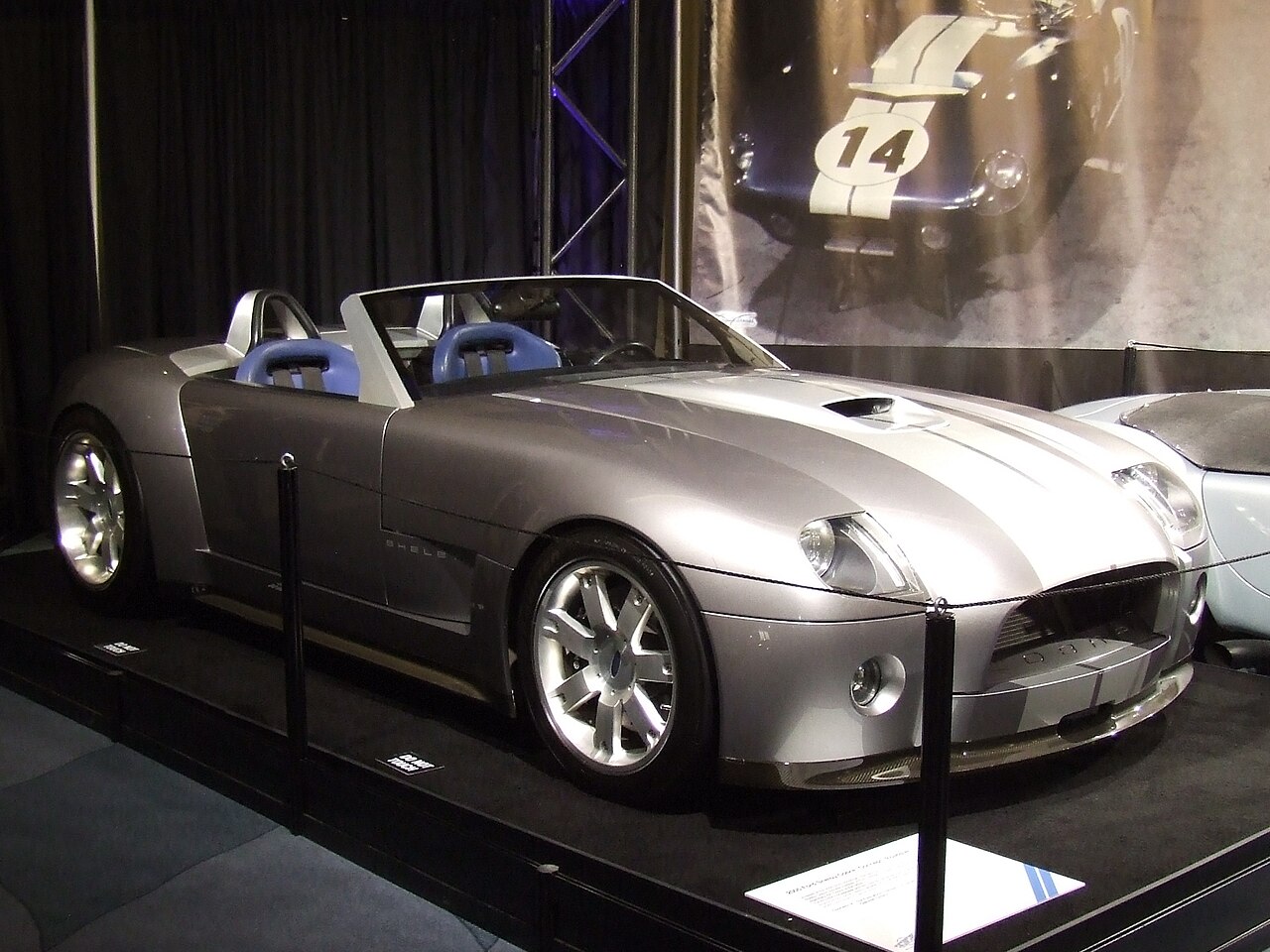
The 2004 Ford Shelby Cobra Concept revisited the open two-seat Cobra idea with a new chassis and a large naturally aspirated V10.
History and purpose
The 2004 Ford Shelby Cobra Concept revisited the open two-seat Cobra idea with a new chassis and a large naturally aspirated V10. Ford’s original release gives the engine as 6.4 litres and 605 horsepower, an important correction to inconsistent figures repeated elsewhere. The project explored a modern Cobra rather than creating another original 1960s competition chassis. Its technical description linked the front-engine roadster with rear-transaxle components developed around the contemporary Ford GT programme. This profile records the actual concept as a physical archive subject. No complete fabrication tally is claimed, and later replicas or independently built Cobra-style cars do not enter its scope.
Design and engineering
The photograph shows the silver concept’s compact cabin, broad rear haunches and unusually clean front surfaces. Small rounded lamps sit within a body that recalls a Cobra without repeating every feature of the original. The close relationship between passenger space and rear wheels gives the roadster a muscular stance. Ford’s documented rear-transaxle arrangement adds mechanical context to that visual balance. A single display photograph cannot reveal the internal drivetrain, but it can show how the body packages two occupants within a short open cockpit. The engineering record and the image therefore contribute different, complementary kinds of evidence.
Identifying the original configuration
Use Shelby Cobra Concept with its 2004 date when cataloguing this vehicle. Cobra alone is too broad: it can refer to original AC/Shelby cars, replicas, kit cars and numerous later proposals. The supplied Toronto show photograph identifies the Ford concept, while the original release defines its intended mechanical specification. The image does not certify an individual chassis marking or every component’s present condition. Those details belong in a dated physical inspection. The model record should also retain the manufacturer’s horsepower wording so future research does not accidentally combine a V10 concept specification with a V8 replica’s engine.
Collector context and preservation
The concept gives a collection a useful bridge between the heritage of the Cobra roadster and Ford’s early-2000s supercar development. Place it beside the GR-1 and the connection becomes easier to understand: an open roadster and an enclosed fastback explored related performance themes through different bodies. Preservation should record the show car’s structure, controls, trim and operating condition independently of its original publicity. A working demonstration, if documented, is an event in the physical car’s history. It does not turn the concept into a certified retail programme or establish how many experimental assemblies were constructed during development.
Reading the evidence for this profile
The original source links below identify the programme and the historical statements used in this article. The photograph has its own creator and licence record, separate from the manufacturer’s vehicle history. Keep both when transferring this profile into a collection catalogue. A manufacturing tally describes how many cars belong to a defined original programme; it does not measure how many survive, how many are publicly visible, or how many retain all their original components. Those individual questions require dated chassis and restoration evidence. The reference year likewise describes the programme’s introduction or named historic configuration, while the supplied caption states the photographed setting and any established individual identity. This lets future research expand the car’s history without blurring the scope of the record already assembled here.
Specifications and verified rarity
| Reference year | 2004 |
|---|---|
| Model / programme | Shelby Cobra Concept |
| Body / role | Open two-seat roadster concept |
| Documented engine | 6.4-litre aluminium V10, manufacturer-rated 605 hp |
| Architecture / transmission | Front engine, rear transaxle; six-speed manual |
| Exact manufacturing tally | Not established |
| Eligibility bound | Physical concept archive scope; tally unknown |
| Rarity scope | Physical 2004 Ford Shelby Cobra concept archive. Complete fabrication tally unknown; no customer-production run or replica population is included. |
| Inventory reference | FRD-275 — Verified |
Frequently asked questions
What is the Ford Shelby Cobra Concept?
A physical Ford/Shelby roadster concept introduced in 2004 with a 6.4-litre V10; distinct from original Cobras, replicas and customer kit cars.
What engineering defines this Ford?
6.4-litre aluminium V10, manufacturer-rated 605 hp. Front engine, rear transaxle; six-speed manual. These are the documented programme or preserved-concept specifications. Connect an individual vehicle’s installed components to its own dated records before assigning a factory configuration to that particular example.
Why is 2004 the reference year?
It identifies the introduction or original historical configuration described in this article. The photograph can show a later example or a later display of the original subject. The source inventory’s original heading remains an identity alias wherever the date or model name has been corrected.
How should an individual Shelby Cobra Concept be documented?
Start with the chassis identity and connect it to dated construction, registration or custodial records. Keep exterior, interior, engine and underbody photographs together. Record changes to finish, equipment and mechanical specification as separate events, so the physical car’s history can grow without changing the definition of the original programme.
What rarity or archive scope is verified?
Physical 2004 Ford Shelby Cobra concept archive. Complete fabrication tally unknown; no customer-production run or replica population is included.
Who took the supplied photograph?
Jaydec via Wikimedia Commons, under CC BY-SA 3.0. The original file and licence links accompany the image. Retain that credit when the photograph is uploaded, exported or reused.
Related Ford profiles
Sources and photo credits
Photograph: Jaydec via Wikimedia Commons original file, CC BY-SA 3.0. Source-provided photograph supplied without local cropping, retouching or text removal. A source thumbnail is used where available. Ford Shelby Cobra Concept at the 2010 Canadian International AutoShow in Toronto; later display of the original concept programme.
Built in limited numbers
Physical 2004 Ford Shelby Cobra concept archive. Complete fabrication tally unknown; no customer-production run or replica population is included.
Gallery
Specifications
Factory specifications may vary by model year, market and configuration.
Identity & production
- Official model
- Shelby Cobra Concept