1969 Fiat Dino Spider 2400
Explore the Fiat Dino Spider 2400: second-series V6 and suspension, Pininfarina body, documented Spider scope and credited photography.
The Fiat Dino Spider 2400 continued the original open-body programme with a larger engine and revised rear-suspension architecture.
History and purpose
The Fiat Dino Spider 2400 continued the original open-body programme with a larger engine and revised rear-suspension architecture. The manufacturer places the second series in 1969. This gives the profile a specific point in the Dino chronology rather than treating every Spider as one interchangeable specification. The design remains recognisably Pininfarina, while the documented technical changes explain why the 2400 deserves its own named-model record. Numerical eligibility is handled conservatively: historical body-programme research reports 1,583 Spiders across both series. The complete body bound is retained, and an independently reconciled exact tally for the 2400 subset is not invented from competing enthusiast figures.
Design and engineering
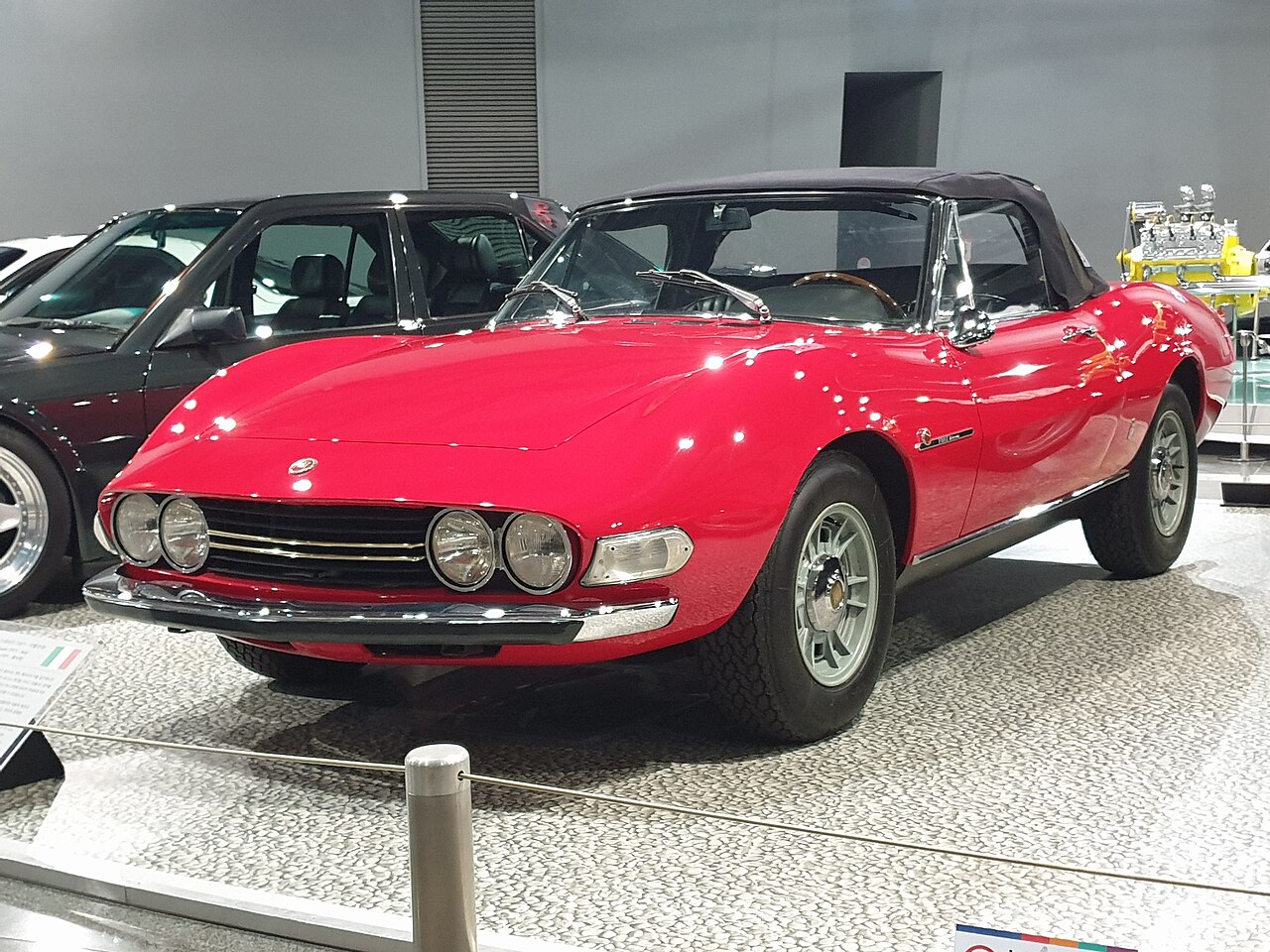
The supplied photograph shows a red 1971 example with its dark fabric roof raised. That closed state is useful because it reveals the Spider’s weather protection and the relationship between hood, windscreen and rear body. The rounded nose and low sides still communicate an open-car package, but the roof gives the passenger compartment a more enclosed visual mass. Comparing this image with the open two-litre photograph makes the change in presentation easy to see. It is a configuration comparison, not evidence that every trim piece changed with the engine series. Mechanical updates belong to the manufacturer’s account and the individual car’s records.
Identifying the original configuration
Use Fiat Dino Spider 2400 as the complete identity. The 1969 reference year marks the series introduction; the photographed car’s 1971 identification remains in the caption. The original 2000 Spider, Fiat Dino Coupé and Ferrari Dino models remain separate records. A later engine conversion does not automatically turn a two-litre chassis into an original 2400 example. Chassis and engine documentation should therefore accompany an individual upload when available. The photographed museum subject is explicitly identified as a 2400 Spider and matches the relevant body configuration. No chassis number, manufacturing month or history of mechanical originality is assigned solely from the image.
Collector context and preservation
The 2400 offers a useful collector link between a familiar open shape and Fiat’s larger-car engineering context. The documented independent rear suspension can be studied alongside the 130 Coupé profile, whose broader grand touring brief used a very different body. For preservation, record hood fit, glazing, brightwork and interior configuration with the same care given to engine maintenance. These pieces determine how the open-car design is experienced and how it appears in later photographs. A connected archive can then distinguish programme-level evolution from restoration changes on one example, keeping the Dino’s engine story, Pininfarina body identity and conservative numerical scope readable together.
Reading the evidence for this profile
The original source links below identify the programme and the historical statements used in this article. The photograph has its own creator and licence record, separate from the manufacturer’s vehicle history. Keep both when transferring this profile into a collection catalogue. A manufacturing tally describes how many cars belong to a defined original programme; it does not measure how many survive, how many are publicly visible, or how many retain all their original components. Those individual questions require dated chassis and restoration evidence. The reference year likewise describes the programme’s introduction or named historic configuration, while the supplied caption states the photographed setting and any established individual identity. This lets future research expand the car’s history without blurring the scope of the record already assembled here.
Specifications and verified rarity
| Reference year | 1969 |
|---|---|
| Model / programme | Dino Spider 2400 |
| Body / role | Second-series Pininfarina V6 spider |
| Documented engineering | Front-mounted 2,418 cc 65-degree V6 |
| Architecture / transmission reference | Five-speed manual; second-series independent rear suspension |
| Exact manufacturing tally | Not established |
| Eligibility bound | 1583 for the documented scope or parent programme |
| Rarity scope | Original Fiat Dino Spider 2400, introduced in 1969. Published complete Spider body-programme total of 1,583 supplies a conservative bound across both engine series; exact reconciled 2400 subset tally is unset. |
| Inventory reference | FIA-060 — Verified |
Frequently asked questions
What is the Fiat Dino Spider 2400?
The 1969-introduced second-series Fiat Dino Spider with the 2.4-litre V6 and revised rear suspension. Exact subset tally remains unset.
What engineering details are documented?
Front-mounted 2,418 cc 65-degree V6. Five-speed manual; second-series independent rear suspension. The specification table identifies the documented model, concept package or explicitly named donor architecture. It does not certify an unseen engine number, individual component condition or a restoration specification from the exterior photograph.
Why is 1969 used in the profile title?
This is the reference year for the original configuration, introduction or public presentation explained in the history section. A photographed example can be younger. Where the supplied inventory used a different date, its original title remains an identity alias so that the same programme is not uploaded twice.
What belongs in an individual vehicle file?
Connect the chassis identity with original configuration records, dated photographs, custodial history and restoration paperwork. Record changes to paint, trim, mechanical components and bodywork as dated events. This profile establishes the named subject and its rarity or physical archive scope; the individual file supplies the history of the particular example.
What rarity or archive scope is verified?
Original Fiat Dino Spider 2400, introduced in 1969. Published complete Spider body-programme total of 1,583 supplies a conservative bound across both engine series; exact reconciled 2400 subset tally is unset.
Who took the supplied photograph?
Damian B Oh via Wikimedia Commons, under CC BY-SA 4.0. The original file and licence links accompany the image. Retain that credit when the photograph is uploaded, exported or reused.
Related Fiat profiles
Sources and photo credits
- Original manufacturer, museum or custodial record
- Historical complete Spider body-programme research, Auto d’Epoca, December 2005
- Stellantis Heritage: second-series engine and suspension architecture
Photograph: Damian B Oh via Wikimedia Commons original file, CC BY-SA 4.0. Source-provided photograph supplied without local cropping, retouching or text removal. A source thumbnail is used where available. Source-identified 1971 Fiat Dino 2400 Spider with the fabric roof raised; reference year follows the 1969 series introduction.
Built in limited numbers
Original Fiat Dino Spider 2400, introduced in 1969. Published complete Spider body-programme total of 1,583 supplies a conservative bound across both engine series; exact reconciled 2400 subset tally is unset.
Gallery
Specifications
Factory specifications may vary by model year, market and configuration.
Identity & production
- Official model
- Dino Spider 2400