Bentley EXP 100 GT
The EXP 100 GT is Bentley’s physical centenary concept, unveiled on 10 July 2019 to explore grand touring in 2035. Its long body, upward-opening doors and experimental cabin combine electric and autonomous-driving ideas with new approaches to materials and passenger experience. It is a design demonstrator, so concept targets and imagined functions remain distinct from measured customer-car specifications.
The EXP 100 GT is Bentley’s physical centenary concept, unveiled on 10 July 2019 to explore grand touring in 2035. Its long body, upward-opening doors and experimental cabin combine electric and autonomous-driving ideas with new approaches to materials and passenger experience. It is a design demonstrator, so concept targets and imagined functions remain distinct from measured customer-car specifications.
Bentley EXP 100 GT at a glance
| Manufacturer | Bentley |
|---|---|
| Model / family | EXP concept family |
| Profile scope | Factory concept demonstrator |
| Historical reference year | 2019 |
| Inventory reference | BEN-134 |
| Engine reference | Electric propulsion design vision; not a certified customer-car specification |
| Documented individual subject | Documented EXP 100 GT physical concept; no customer production programme |
A physical concept unveiled on Bentley’s centenary
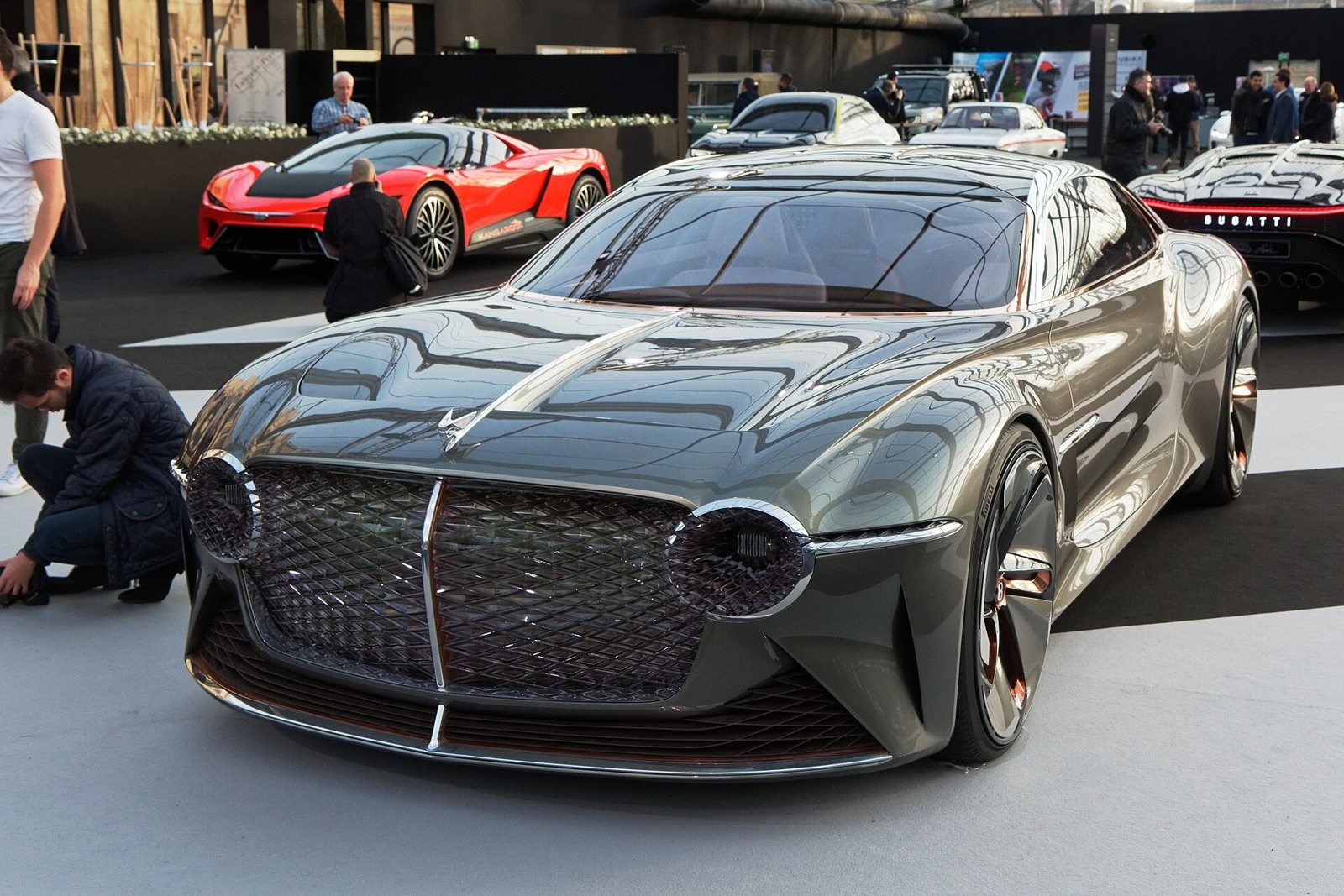
Bentley introduced the EXP 100 GT on 10 July 2019, exactly a century after the marque’s founding. The concept’s purpose was to imagine a future approach to grand touring, not to launch another numbered customer edition. The exhibition photograph shows the physical car, giving the article a real subject rather than a digital-only illustration. This distinction matters in a rare-vehicle archive. A concept can deserve its own profile because of what it demonstrates and how it influenced later work, but its importance should not be expressed through an invented customer production total. Here, the documented concept identity is the basis of the record.
Why 2035 is a vision date rather than a model year
Bentley frames the EXP 100 GT around how grand touring could look in 2035. That year belongs to the design brief. The concept itself was unveiled in 2019, and the credited photograph records a later public exhibition in 2020. Keeping those dates separate gives readers a coherent chronology. It also avoids making the car appear to be an already manufactured 2035 customer model. When reading concept coverage, identify whether a number describes an event, a target or a measured result. That simple distinction makes an experimental vehicle easier to understand without reducing the ambition of the proposal or presenting imagined capabilities as established road-car equipment.
A body that changes the sense of arrival
The official account describes a 5.8-metre body and doors approximately two metres wide that open upwards. These dimensions and movements are part of the concept’s presentation of arrival and passenger access. In the photograph, the broad front and low glazing establish a different visual balance from an ordinary Continental. The long surfaces give light room to move across the body, while the door concept changes how occupants approach the cabin. A complete visual record should include both closed and open-door views where available. Each explains a different part of the design, and a static front-quarter photograph cannot capture the entire access proposal on its own.
Electric and autonomous ideas belong to the concept brief
Bentley’s concept account combines electric propulsion with an imagined ability to be driven autonomously or by an occupant. This article treats those ideas as the manufacturer’s design vision. It does not convert them into a certification claim or a measured road-test specification. That distinction is particularly important for autonomy, where a compelling display can express a proposed experience without proving its implementation across real driving conditions. The EXP 100 GT can be studied through the questions it raises: what should a passenger cabin do when travel is not always driver-led, and how should the controls remain understandable when the driver chooses to take over?
The cabin as an environment rather than only a cockpit
The manufacturer describes adaptable seating, light, air curation and concealed technology as parts of the passenger experience. The design interest lies in how these elements would work together. If a cabin changes between active driving and quieter travel, its surfaces, controls and seating have to communicate those different uses. Interior photographs help readers examine the proposal without relying only on promotional language. Look at where information appears, how the seats relate to one another and how the visible materials frame the occupants. Those observations make the concept useful as a design subject even when its imagined functions are not presented as equipment available in a customer vehicle.
Materials connect the concept with later coachbuilding
The EXP 100 GT explored alternative material choices, and Bentley subsequently identified the Bacalar as bringing some of those ideas into a coachbuilt car. This connection gives the concept a practical place in the archive. The question is not whether the Bacalar duplicates the entire experimental cabin, but which design ideas could be translated into a real customer programme. Materials are especially useful for that comparison because they can move between very different vehicle structures. A concept may propose a new visual or tactile experience; a later car then has to incorporate its chosen materials into parts that can be made, maintained and used.
A traceable photograph of the actual exhibition car
Thesupermat’s Commons photograph identifies the EXP 100 GT at the 2020 Festival Automobile International. The image shows the physical demonstrator among other displayed cars, supplying evidence of the object and its exhibition context. The caption retains the photographer and event rather than labelling the image as the original 2019 unveiling. It is also separate from manufacturer renderings or imagined future driving scenes. For an archive, such a photograph is valuable because readers can study the body’s real proportions, reflections and surrounding scale. The source and licence links remain attached so the visual record can be followed back to its creator.
What the EXP 100 GT contributes to the collection
The concept provides a future-facing counterpart to the centenary editions that looked back at historic Bentleys. Number 1 and Number 9 use artefacts and visual references to commemorate earlier cars; EXP 100 GT asks how the marque’s grand-touring purpose might change. Bacalar and Batur then offer useful comparisons with later coachbuilt programmes. The connected profiles allow a reader to follow ideas across different kinds of vehicles without treating them as one production family. EXP 100 GT’s rarity is the documented experimental subject itself. Its significance comes from a specific design proposal and its place in Bentley’s centenary presentation, rather than an unsupported assertion of customer exclusivity.
Frequently asked questions
When was EXP 100 GT unveiled?
On 10 July 2019, Bentley’s centenary date. The 2035 reference describes its future design vision.
Was it a customer production model?
No. This profile covers the documented physical concept demonstrator, not a customer-car edition.
Are its future functions measured road-car specifications?
They are presented as concept ideas and targets. This profile does not treat them as certified customer-car capabilities.
What does the photograph show?
The physical EXP 100 GT exhibited at the 2020 Festival Automobile International, photographed by Thesupermat.
Explore related vehicle profiles
- Bentley Bacalar by Mulliner
- Bentley Batur by Mulliner
- Bentley Continental GT Number 9 Edition by Mulliner
Sources
- Bentley Motors — EXP 100 GT concept and its 2035 design vision
- Bentley — EXP 100 GT public display at Monterey, August 2019
- Bentley — Bacalar launch and coachbuilding programme, 3 March 2020
Facts are sourced to the linked manufacturer, institutional and specialist records. Design comparisons and documentation suggestions are editorial analysis. Announced limits and completed production populations are labelled separately.
Photography and credit
The physical EXP 100 GT concept exhibited at the 2020 Festival Automobile International, photographed by Thesupermat. Photo: Thesupermat / Wikimedia Commons · CC BY-SA 4.0. Resized and JPEG encoded without cropping or content changes. Retain author attribution, a link to the source and license, and the stated changes. Where ShareAlike applies, redistributed adaptations retain the same license.
Why this machine matters
The EXP 100 GT is Bentley’s physical centenary concept, unveiled on 10 July 2019 to explore grand touring in 2035. Its long body, upward-opening doors and experimental cabin combine electric and autonomous-driving ideas with new approaches to materials and passenger experience. It is a design demonstrator, so concept targets and imagined functions remain distinct from measured customer-car specifications.
Built in limited numbers
Documented physical concept scope. Inventory one-off label retained as subject identity; no independently established manufacturing census asserted. Electric/autonomous functions are concept vision, not measured production specifications.
Gallery
Specifications
Factory specifications may vary by model year, market and configuration.
Identity & production
- Official model
- Bentley EXP 100 GT
- Base model
- EXP concept family
Powertrain & performance
- Engine
- Electric propulsion design vision; not a certified customer-car specification