Auto Union Type D Grand Prix Car
The Auto Union Type D brought a three-litre supercharged V12 to the company’s 1938 Grand Prix programme. It is a separate type from the earlier V16 cars and from the Type C/D hill-climb hybrid. Its archive story includes both period competition and documented recovery and restoration, with replacement bodies distinguished from surviving original components.
The Auto Union Type D brought a three-litre supercharged V12 to the company’s 1938 Grand Prix programme. It is a separate type from the earlier V16 cars and from the Type C/D hill-climb hybrid. Its archive story includes both period competition and documented recovery and restoration, with replacement bodies distinguished from surviving original components.
Auto Union Type D Grand Prix Car at a glance
| Manufacturer | Auto Union |
|---|---|
| Archive connection | Audi corporate heritage |
| Model / programme | Type D |
| Profile scope | Auto Union works Grand Prix heritage archive |
| Historical reference year | 1938 |
| Inventory reference | AUDI-005 |
| Historical engine reference | Three-litre supercharged V12 |
| Exact original build total | Unresolved; no certified production number populated |
A new type under new Grand Prix rules
The Type D belongs to the regulatory and engineering change that Auto Union faced for 1938. It retains the company’s distinctive engine position behind the driver, but should not be described simply as a Type C carrying a new badge. In a model archive, the year marks that historical programme. A displayed car’s own manufacture, recovery and restoration dates need separate treatment. This makes it possible to discuss the design coherently without assuming that every object labelled Type D has the same specification or physical history.
The three-litre supercharged V12
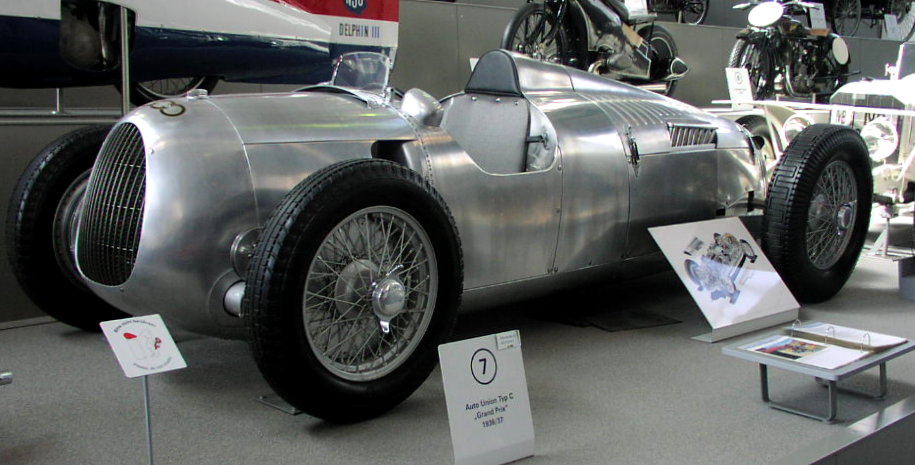
Audi credits Robert von Eberan-Eberhorst with the three-litre twelve-cylinder supercharged engine for the new formula. That specification is the central distinction from the six-litre V16 Type C. A profile should preserve it in the title’s surrounding context, especially where a photograph includes another Auto Union machine. The Type C/D hill-climb car is a separate hybrid subject; its name and surviving parts cannot be used as evidence for the Type D’s engine or original-series production total.
1938 and 1939 configurations
Audi’s recovery account distinguishes a car restored to single-supercharger 1938 specification and a twin-supercharger 1939 version. The difference demonstrates why a generic Type D power figure can be misleading. The guide leaves exact output metadata unset rather than assigning one photographed configuration to every car. For an individual inspection, identify the installed engine, supercharger arrangement and restoration choice. A season-specific description gives readers more useful information than a single headline number disconnected from the object or event under discussion.
Nuvolari and the period race story
The manufacturer links the Type D era with Tazio Nuvolari and Hans Stuck, and describes notable Grand Prix results. Those programme associations explain the model’s importance without proving that every restored Type D was driven by either man at a particular race. A chassis-level attribution requires a race record connected to the physical object. If a later exhibition adopts a familiar number, treat that as presentation until documentary evidence establishes more. The historical driver story and the surviving-car story should support each other rather than substitute for each other.
Rarity: original construction is not a survival count
Audi’s 2012 release discusses original Auto Union racing cars surviving into the modern heritage collection. That is a dated statement about recovered objects across the racing family, not a total of Type Ds manufactured. This profile therefore does not populate a verified original-series production number. Museum displays, surviving engines and rebuilt bodies cannot simply be counted as equivalent cars. An eventual census would need clear inclusion rules and evidence for each chassis, including how altered, incomplete and recreated objects were handled.
Recovering parts after the war
The factory retrospective explains the long search associated with Paul and Barbara Karassik and the recovery of dismantled racing-car components. The account is valuable because it describes a documentary process rather than a miraculous untouched discovery. Engines, frames and other parts were examined before a restoration configuration was chosen. The guide uses that history to explain how surviving material can be meaningful even when the original complete car no longer exists in its period form. It does not infer current custody from a source published years earlier.
New bodies on cars with original material
Audi explicitly says complete replacement bodies were required for both Karassik restorations because original body parts had not survived. That is an important qualification to preserve wherever those cars are described. A rebuilt body does not automatically erase every original component, but neither should the resulting vehicle be called untouched. A transparent report identifies the historical components and the later work together. This gives a reader a better understanding of what was preserved and allows a specialist to examine the evidence behind the attribution.
The 2012 repurchase in its proper time
The factory release records Audi’s repurchase of the 1939 twin-supercharger car in 2012. It should remain a dated transaction reference, not a declaration of today’s title or the whereabouts of every Type D. An archive can explain how the collection developed while leaving present ownership for a current object record. This is especially relevant when a museum photograph was taken after the acquisition: the picture may show a Type D in the collection but still need identification before it is tied to the particular repurchased vehicle.
What the museum photograph tells the reader
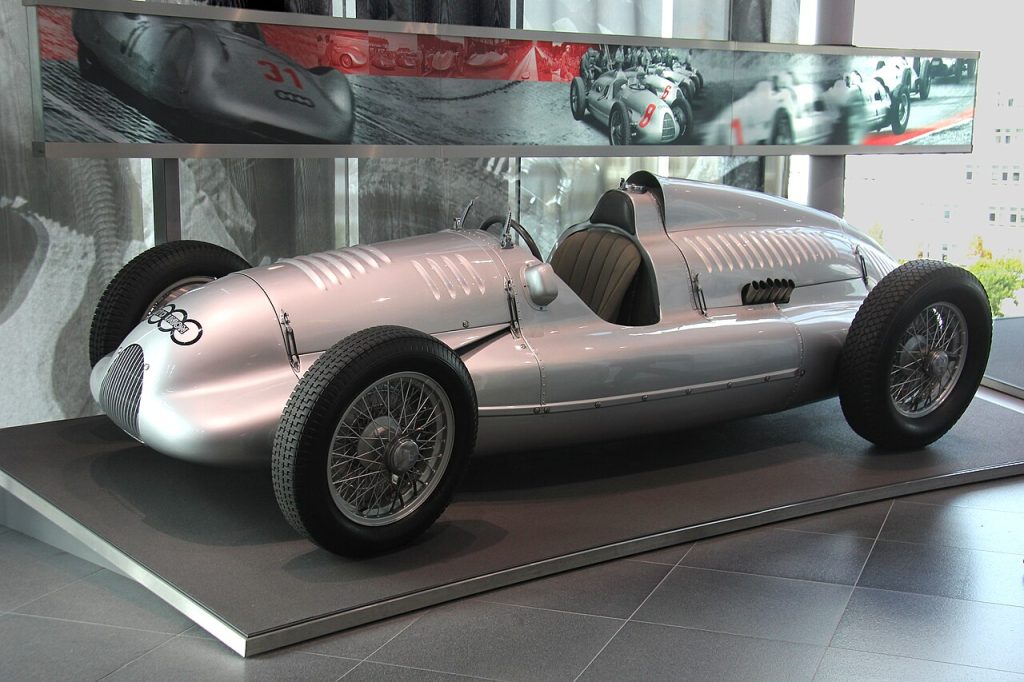
The selected image shows a source-identified Type D at Audi museum mobile in September 2013. The photo description calls it a restored surviving car. The caption retains that restoration context but does not certify a particular race chassis, exact season configuration or every component’s originality. Its side view makes the overall layout useful for readers comparing the V12 car with the V16 Type C. The photograph and its licence provide an illustration; the manufacturer restoration account supplies a separate historical layer.
Examining an individual restoration file
A collector or curator should look for the component inventory used at the beginning of restoration, the reasons for the chosen specification and the records of new construction. Dated photographs before, during and after the work can explain changes that a finished car conceals. Keep a distinction between retained original material, repaired original parts and newly made replacements. When descriptions disagree, seek the specific underlying document rather than choosing whichever account gives the object the more impressive headline. The file should be understandable to the next custodian.
A running demonstration has another purpose
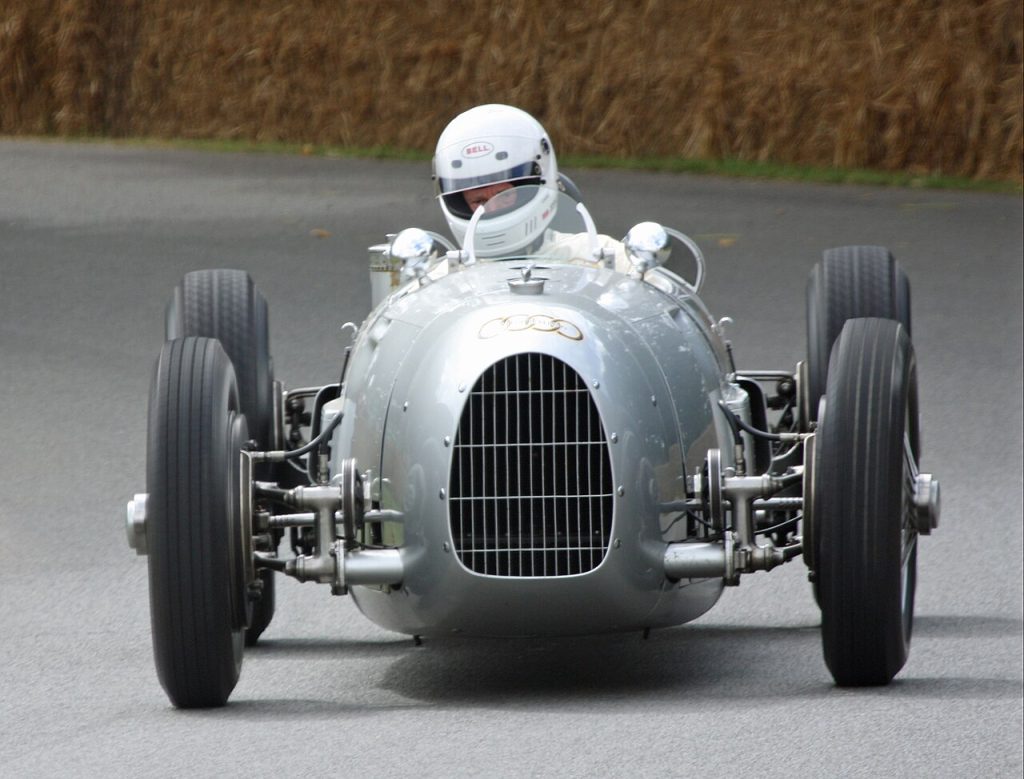
Public demonstrations can allow audiences to hear and see an historic design in motion. They should not be described as proof that the car remains in an untouched race-period state or can repeat every historical performance claim. Preparation, maintenance and replacement parts belong in the demonstration vehicle’s record. Its role is to communicate the machinery’s character under controlled contemporary conditions. For an archive, the event date and identified object are more useful than treating a modern appearance as an extension of a 1930s competition entry.
Why the Type D rewards a careful guide
The Type D’s interest combines engineering change with the recovery of lost heritage. It also provides a clear counterpoint to the Type A and Type C, showing how a works programme responded to different rules rather than following one fixed specification. Its rarity should be explained through documented objects and historical context, not through a survival statement mislabelled as production. Preserving restoration details makes the story richer: readers can appreciate both the period design and the later effort required to make surviving material comprehensible again.
Frequently asked questions
Did the Type D have a V16?
No. Audi identifies its Grand Prix engine as a three-litre supercharged V12.
Were all Type Ds built to the same specification?
No. The restoration account distinguishes 1938 single-supercharger and 1939 twin-supercharger configurations.
Do the restored Karassik cars have original bodies?
Audi says complete replacement bodies were constructed because no original body parts survived.
Is Audi’s dated surviving-car statement a production total?
No. A reconciled original Type D manufacture census is not established here.
Explore related vehicle profiles
Sources
- Audi — The age of the Silver Arrows
- Audi — Type D recovery and restoration, 2012
- FIVA authenticity forum — Audi heritage representative on recreations
Programme history and specifications follow the linked manufacturer and heritage records. Where figures or dates differ, their source contexts are retained. Collector-file and inspection guidance is editorial analysis; exact physical-car identity requires its own evidence.
Photography and credit
Source-identified Auto Union Type D at Audi museum mobile in September 2013. The source describes a restored surviving car. Restoration bodywork and individual race provenance require the object record; no untouched-original claim. Photo: Lothar Spurzem / Wikimedia Commons · CC BY-SA 2.0 de. Wikimedia thumbnail resized from original; no cropping or color changes.
Why this machine matters
The Auto Union Type D brought a three-litre supercharged V12 to the company’s 1938 Grand Prix programme. It is a separate type from the earlier V16 cars and from the Type C/D hill-climb hybrid. Its archive story includes both period competition and documented recovery and restoration, with replacement bodies distinguished from surviving original components.
Built in limited numbers
Audi’s 2012 release discusses original Auto Union racing cars surviving into the modern heritage collection. That is a dated statement about recovered objects across the racing family, not a total of Type Ds manufactured. This profile therefore does not populate a verified original-series production number. Museum displays, surviving engines and rebuilt bodies cannot simply be counted as equivalent cars. An eventual census would need clear inclusion rules and evidence for each chassis, including how altered, incomplete and recreated objects were handled.
Gallery
Specifications
Factory specifications may vary by model year, market and configuration.
Identity & production
- Official model
- Auto Union Type D Grand Prix Car
- Base model
- Type D
Powertrain & performance
- Engine
- Three-litre supercharged V12