Aston Martin DBX Bowmore Edition
The DBX Bowmore Edition connects Q craftsmanship with the materials and heritage of an Islay whisky distillery. Announced in December 2020, it combines a defined SUV specification with a planned Scottish owner experience. A later Aston Martin release confirms that 18 examples were produced.
The DBX Bowmore Edition connects Q craftsmanship with the materials and heritage of an Islay whisky distillery. Announced in December 2020, it combines a defined SUV specification with a planned Scottish owner experience. A later Aston Martin release confirms that 18 examples were produced.
Aston Martin DBX Bowmore Edition at a glance
| Manufacturer | Aston Martin |
|---|---|
| Model / family | DBX |
| Profile scope | Factory collaboration edition |
| Historical reference year | 2020 |
| Inventory reference | AST-155 |
| Original series total | 18 — DBX Bowmore completed edition confirmed by manufacturer in May 2023 |
| Historical engine reference | 4.0-litre twin-turbo V8 |
An SUV commission built around material provenance
The DBX Bowmore Edition is most interesting when its material story is treated as part of the vehicle’s identity. The manufacturer links the edition with Bowmore and its Islay heritage. That connection provides a reason to examine the specification beyond color and badging. A collector description should establish the original order and document the distinctive materials that remain with the car. Brand association alone cannot authenticate an example, while a coherent account of the commission gives the design context a useful evidential foundation.
Rarity: eighteen produced in the factory retrospective
The December 2020 announcement set an eighteen-car programme. Aston Martin’s May 2023 ARC-52 release later explicitly stated that eighteen Bowmore DBXs were produced. The profile therefore records the completed total at the level confirmed by the manufacturer. This is separate from a chassis-by-chassis survival register or a finding that every example retains all original accessories. The retrospective count supplies a strong programme reference while leaving the identity, condition and documentary completeness of an individual car to its own evidence.
Correcting the announcement reference year
The edition was announced on December 7, 2020. The inventory’s 2021 reference relates to the planned delivery period and should not be treated as the edition’s launch date. The source scheduled customer deliveries for the fourth quarter of 2021, without establishing every actual handover. This guide uses 2020 as the announcement reference and preserves the original inventory year in the import data. A particular car’s build, delivery and registration chronology should be described from its documents rather than inferred from that correction.
Two factory exterior routes
Bowmore Blue and the alternative Xenon Grey were documented choices. An example should therefore be assessed against its actual original order rather than rejected merely because it does not match the leading launch photograph. The distinction between a factory option and a later repaint deserves explicit wording. Photograph the finish under consistent conditions and keep paint-code documentation available. The color name is part of a specification record, while the appearance of a blue metallic surface alone is insufficient to assign edition membership.
Copper with an identified source
The factory described copper from the original Bowmore still in the edition’s inlays. This supplies a specific material-provenance story rather than a general use of copper-colored decoration. In an inspection, identify the relevant trim and compare it with the order, noting any known replacements. A replacement may be well made, but its relationship to the original material should be explained. Photograph small elements in context so a reader can see where they belong and understand what evidence supports the description.
Tweed and the cabin’s collecting significance
The Islay Woollen Mill’s Bowmore tweed contributes to the edition’s documented cabin identity. Its appeal lies in the connection between vehicle and place, rather than a generic luxury-material checklist. An archive should record the original cabin specification, present textile condition and any repair account. Images benefit from both a full interior view and close-ups that show the material clearly. Do not infer an exact supplier history for replacement upholstery unless records establish it; describe the actual evidence available for the example.
The original DBX mechanical context
The launch identifies the underlying 4.0-litre twin-turbo V8 DBX with 550 PS and 700 Nm. The Bowmore edition should not inherit DBX707 figures from the later high-performance model. Its rarity is tied to this collaboration and specification, rather than an independently established engine upgrade. Mechanical condition still needs a normal example-specific inspection supported by service history. A low programme count does not provide evidence of maintenance quality, and a detailed car file should explain both the special trim and the underlying vehicle.
The Scottish experience is part of the launch story
The release set out an intended Scottish owner experience connected with delivery. That plan provides historical context but does not establish that every original owner completed every element described. Retain invitations, travel material or delivery photographs where available, while distinguishing them from the car’s build identity. A later buyer should not assume an original experience transfers with ownership. The vehicle and associated objects can be assessed together without presenting a past invitation as a current contractual entitlement.
The later ARC-52 auction is a different object
The 2023 release about the ARC-52 Mokume Edition is useful here because it retrospectively confirms the DBX count. Its auction subject was a whisky decanter, not the sale of all eighteen vehicles or proof that a particular Bowmore DBX was a charity allocation. Preserve that distinction when using the source. A later collaboration can supply evidence about an earlier programme without becoming part of the vehicle’s original production count, specification or individual transaction history.
Photographic reference and its publication hold
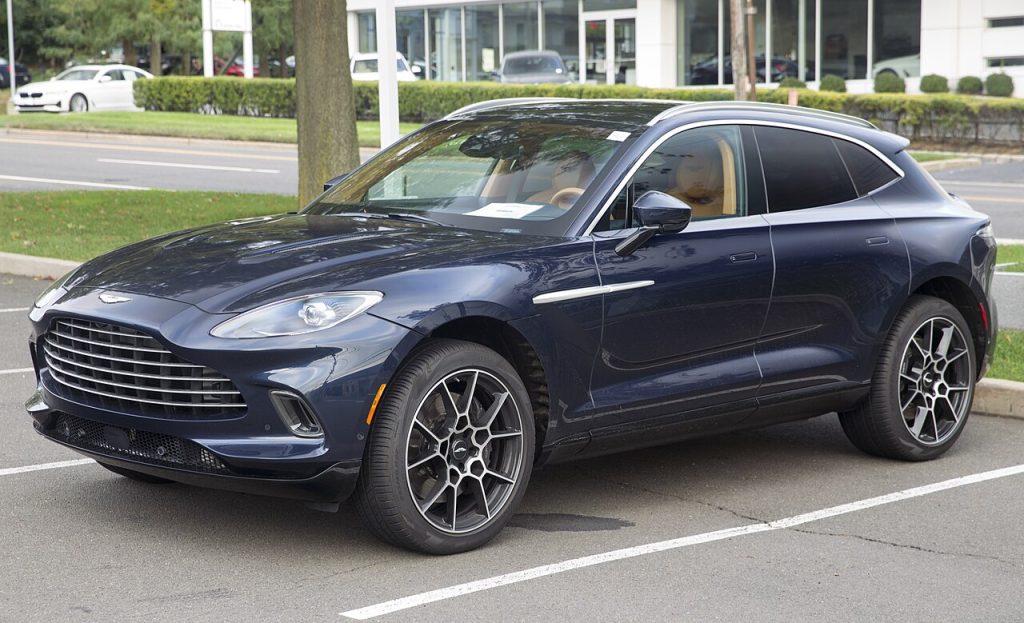
The bundled photograph shows a standard DBX in Midnight Blue. It is labelled as a base-model reference and is not described as Bowmore Blue or as a Bowmore Edition. Its purpose is to illustrate the underlying SUV form while an exact-edition licensed photograph remains outstanding. The draft carries a photo-review hold, and the caption makes the limitation visible. An authenticated replacement should show the specific edition details with its own photographer, source and permission record retained alongside the image.
Building an example-specific collector file
A useful collector file for the Aston Martin DBX Bowmore Edition connects the physical vehicle with its original specification, subsequent care and present description. Keep original documents in sequence and distinguish copies, later summaries and unverified notes. Service invoices should identify the work performed rather than merely supply a stamped date. Add photographs of relevant details and explanations of later changes. That structure gives a future reader a way to follow the evidence and reduces reliance on a general claim of rarity, low mileage or originality.
Condition and originality are separate questions
An original component can require repair, while a replacement component can be in excellent condition. A careful description should explain both identity and state, with the inspection date clearly attached. Ask a suitably qualified specialist to assess the actual car and record what could and could not be inspected. Photographs of exterior finish do not establish hidden structure, mechanical health or serviceability. The archive should preserve findings at their supported level and avoid converting a dated observation into a permanent guarantee about the vehicle.
Reading sale descriptions without inventing value
A production number supplies context, but it does not determine the value of a particular example. This guide assigns no current price, investment return or guaranteed premium. A useful sale record identifies the date, venue, currency, fee treatment, configuration and evidence of the transaction. An asking price and a completed sale are different observations. Compare documentation, condition and accompanying objects before drawing a conclusion from rarity alone, and leave any unsupported market claim outside the verified vehicle history.
Maintaining the archive as evidence develops
Keep new information attached to its source and date. When a later record resolves a production count, delivery event or photograph identity, update that specific finding while preserving the earlier evidence and the reason for the change. A revised fact should not silently rewrite unrelated parts of the car’s history. This approach makes the profile a useful research record rather than a collection of repeated claims. Readers should be able to distinguish confirmed programme information, individual-vehicle evidence and clearly identified editorial guidance.
Frequently asked questions
How many DBX Bowmore Editions were produced?
Aston Martin’s May 2023 retrospective explicitly confirms eighteen produced.
Was the Bowmore Edition announced in 2021?
No. The announcement was December 2020; fourth-quarter 2021 was the planned delivery period.
Is it a DBX707 edition?
No. The launch describes the original V8 DBX foundation.
Is the bundled blue DBX a Bowmore Edition?
No. It is a labelled standard DBX reference in Midnight Blue, pending an exact-edition photograph.
Explore related Aston Martin profiles
- Aston Martin DBX707 Japan Midnight Podium Edition
- Aston Martin DBS Superleggera TAG Heuer Edition
- Aston Martin Vantage Roadster A3
Sources
- Aston Martin: DBX Bowmore announcement 7 December 2020 and Q4 2021 delivery schedule
- Aston Martin: May 2023 ARC-52 release retrospectively confirms 18 Bowmore DBXs produced
Historical claims follow the linked manufacturer, archive, specialist and catalogue records, with disputed findings retained. Inspection and collecting guidance is editorial analysis. Catalogue condition and custody statements remain dated to their sources.
Photography and credit
BASE-MODEL REFERENCE: standard DBX in Midnight Blue, photographed in October 2021. This is not a Bowmore Edition and Midnight Blue is not Bowmore Blue. Photo: Mr.choppers / Wikimedia Commons · CC BY-SA 3.0. Wikimedia thumbnail resized from original; no cropping or colour changes.
Why this machine matters
The DBX Bowmore Edition connects Q craftsmanship with the materials and heritage of an Islay whisky distillery. Announced in December 2020, it combines a defined SUV specification with a planned Scottish owner experience. A later Aston Martin release confirms that 18 examples were produced.
Built in limited numbers
The December 2020 announcement set an eighteen-car programme. Aston Martin’s May 2023 ARC-52 release later explicitly stated that eighteen Bowmore DBXs were produced. The profile therefore records the completed total at the level confirmed by the manufacturer. This is separate from a chassis-by-chassis survival register or a finding that every example retains all original accessories. The retrospective count supplies a strong programme reference while leaving the identity, condition and documentary completeness of an individual car to its own evidence.
Gallery
Specifications
Factory specifications may vary by model year, market and configuration.
Identity & production
- Official model
- Aston Martin DBX Bowmore Edition
- Base model
- DBX
- Worldwide production
- 18
Powertrain & performance
- Engine
- 4.0-litre twin-turbo V8