Aston Martin DBS Superleggera TAG Heuer Edition
The DBS Superleggera TAG Heuer Edition turns a watch partnership into a coordinated car-and-timepiece collection. Its appeal lies in a defined Monaco Black specification, red detailing and the accompanying DBS Edition Carrera. The factory release dates to February 2019, with a worldwide allocation of 50 cars.

The DBS Superleggera TAG Heuer Edition turns a watch partnership into a coordinated car-and-timepiece collection. Its appeal lies in a defined Monaco Black specification, red detailing and the accompanying DBS Edition Carrera. The factory release dates to February 2019, with a worldwide allocation of 50 cars.
Aston Martin DBS Superleggera TAG Heuer Edition at a glance
| Manufacturer | Aston Martin |
|---|---|
| Model / family | DBS |
| Profile scope | Factory collaboration edition archive |
| Historical reference year | 2019 |
| Inventory reference | AST-140 |
| Factory allocation limit | 50; completed census not independently certified |
| Historical engine reference | 5.2-litre twin-turbo V12; DBS Superleggera foundation |
A car-and-watch collaboration with a defined brief
The TAG Heuer Edition makes most sense as a complete design collaboration. A black DBS with red accents can be attractive in its own right, but the collecting question concerns how a factory edition connected the car, its presentation and the watch supplied with it. That distinction gives the profile a useful focus. Assess the original specification and associated objects together, then describe what remains with a particular example. A partnership logo on an otherwise regular car does not provide the same documentary identity.
Rarity: the fifty-car worldwide allocation
Aston Martin announced a global allocation of 50 cars. The number defines the edition ceiling used here, while a complete reconciled chassis census has not been retrieved. It should remain separate from the production of the wider DBS family and from other collaborations involving the watchmaker. A seller describing an example as one of fifty should be able to connect it to factory documentation. The limited allocation is meaningful without multiplying it by a watch count or assuming every surviving car retains its original accompanying timepiece.
Why the historical reference year is 2019
The official watch partnership was announced in March 2018. The car-specific manufacturer release followed on February 26, 2019. The inventory reference year therefore needs correction from 2018 to 2019 for this edition. These dates describe different events, so the correction does not erase the earlier relationship. Nor does the February release establish the date of every initial display: the bundled photograph has a January 2019 capture date. Original delivery and registration records should supply the chronology of an individual car.
Monaco Black and the red visual signature
The factory specification pairs Monaco Black paint with red highlights and dark carbon details. As a design reading, the red draws attention to the car’s smaller accents while allowing the overall body shape to remain dominant. Photography should capture those details in ordinary light as well as at an event, because dark finishes can conceal differences between paint, tinted carbon and replacement parts. An archive benefits from recording the appearance without treating a color match as proof that the vehicle belongs to the edition.
The accompanying DBS Edition Carrera Heuer 02
The release identifies a dedicated Carrera Heuer 02 for each owner, with a face design related to the car’s grille and a strap echoing its cabin materials. For a collector, the watch introduces a second provenance trail. Ask for its original paperwork, presentation material and service history, alongside evidence linking it with the car. A correct model watch acquired later and the originally supplied watch are different descriptions. Both may be collectible, but the distinction should be visible when the complete package is advertised.
Interior materials and edition-specific presentation
Black leather and Alcantara, red stitching and TAG Heuer quilting form the cabin reference described by the manufacturer. Their value to the archive comes from the coordinated execution, rather than a claim that red stitching alone creates rarity. Record the sill details, upholstery, badges and original order together. Interior repair can alter the texture or pattern of a small area while leaving the car visually convincing in broad photographs. Detailed documentation helps a subsequent owner understand exactly what has been preserved, replaced or restored.
The DBS mechanical foundation
The edition uses the DBS Superleggera’s 5.2-litre twin-turbo V12 foundation. The period core-model brochure is useful for understanding the eight-speed automatic architecture and the grand touring brief. It does not establish a separate TAG Heuer engine upgrade. Keep factory performance references attached to their model, units and test conditions, and distinguish them from measurements of a used example. Someone selecting this edition should evaluate the design package and its documentation alongside the mechanical condition of the underlying DBS.
A fixed specification changes the authentication task
A tightly specified edition provides several points to compare with a factory order. Inspect how the body details, wheel finish, cabin and identification features relate to one another. A replacement wheel or a repaired carbon component need not erase the car’s identity, but it should be explained in its record. The authentication task is to establish the vehicle first, then describe its present conformity. That sequence keeps minor changes from becoming exaggerated claims while also preventing a convincing cosmetic reconstruction from receiving an unsupported edition identity.
Inspecting dark paint, carbon details and wheels
Make an inspection plan that follows the areas where this specification carries its visual identity. Check paint condition under suitable lighting, the edges and fixings of exposed trim, the condition of low-mounted aero parts and the wheels. These are priorities for assessment, not a list of established model faults. Obtain dated repair invoices when work has been done. A well-described repair is more useful to the archive than an unexplained statement that a car has never needed attention, especially when the physical evidence suggests otherwise.
Keeping the complete collector file together
The useful file combines the original order, delivery records, service invoices, edition identification and watch documentation. Add photographs of the accompanying presentation items and record anything absent at the time of sale. Do not infer that a watch is missing merely because a listing leaves it out of its pictures. Ask the question and retain the answer with supporting evidence. The strength of a coordinated edition is easier to explain when the archive shows the relationship between the objects rather than relying on a single marketing label.
TAG Heuer versus Concorde and OHMSS editions
The related DBS editions follow distinct collecting themes. Concorde connects the car with an aviation commission, while OHMSS uses a particular Bond film as its reference. TAG Heuer centres on a partnership and an accompanying timepiece. These differences help a collector define an interest beyond the shared mechanical family. Compare the completeness and authenticity of each package before assigning significance to the smallest allocation. A count alone cannot explain whether a particular car offers the story, appearance or accompanying material that matters to its next owner.
Reading the credited photograph
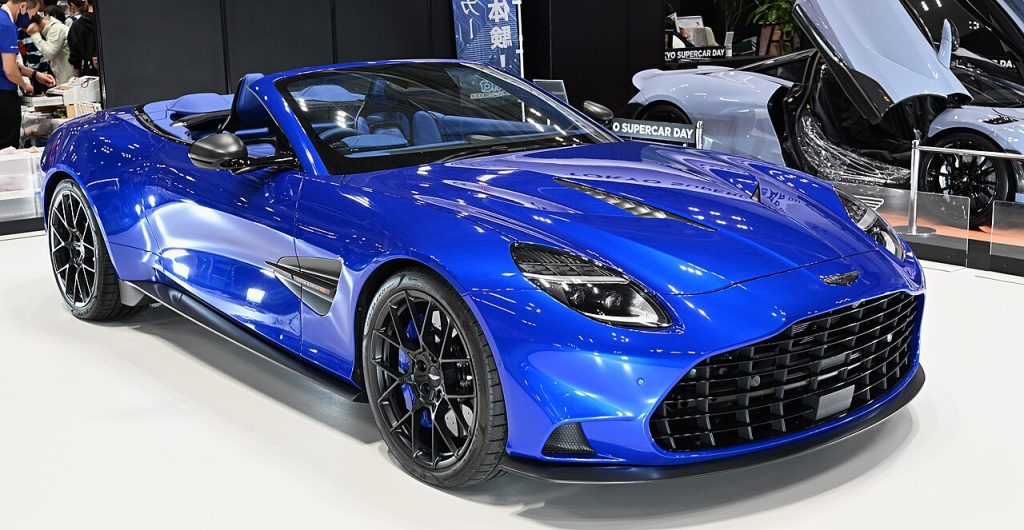
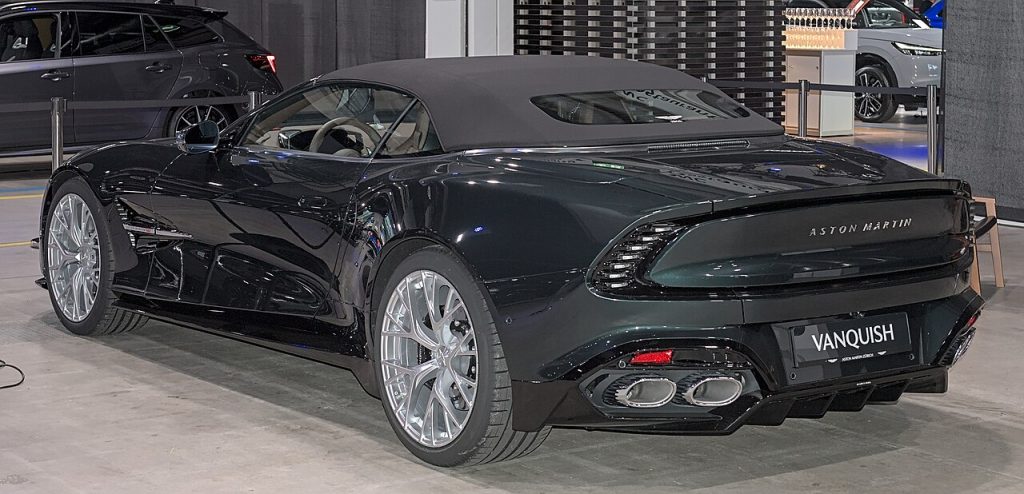
The bundled image is source-identified as a TAG Heuer Edition and carries a January 2019 capture date. It gives readers a real exterior reference with the photographer, source page and license linked visibly. It does not establish the watch supplied with the pictured car, its edition serial or its present condition. The photograph’s date is retained separately from the factory release. That separation makes the image useful without forcing it to support a more precise reveal chronology than the available records establish.
Frequently asked questions
How many DBS Superleggera TAG Heuer Editions were allocated?
The manufacturer announced a worldwide limit of 50 cars. This profile records the allocation ceiling; a reconciled completed chassis census has not been retrieved.
Was the TAG Heuer car a 2018 edition?
The partnership began in 2018, but the car-specific factory release is dated February 26, 2019. The edition reference year is corrected to 2019.
Which watch accompanied the car?
The factory named a dedicated DBS Edition Carrera Heuer 02. Evidence linking the actual watch and its paperwork to a particular vehicle belongs in that car’s collector file.
Does the watch alone authenticate a TAG Heuer Edition?
No. Establish the car through its original factory identity and order, then assess the accompanying watch, presentation items and present specification.
Explore related Aston Martin profiles
- Aston Martin DBS Superleggera Concorde Edition
- Aston Martin DBS Superleggera OHMSS Edition
- Aston Martin DBS GT Zagato
Sources
- Aston Martin: TAG Heuer Edition factory release, 26 February 2019, fixed specification and accompanying watch
- Aston Martin: official watch partnership announced 6 March 2018
- Aston Martin DBS Superleggera factory brochure, hosted by the Aston Martins archive: core mechanical architecture and Q services
Historical claims follow the linked manufacturer, archive, specialist and catalogue records, with disputed findings retained. Inspection and collecting guidance is editorial analysis. Catalogue condition and custody statements remain dated to their sources.
Photography and credit
Source-identified DBS Superleggera TAG Heuer Edition photographed in January 2019. The factory edition release is dated February 2019; the photo is not used to establish the first public reveal. Photo: Alexandre Prevot from Nancy, France / Wikimedia Commons · CC BY-SA 2.0. Wikimedia thumbnail resized from original; no cropping or colour changes.
Why this machine matters
The DBS Superleggera TAG Heuer Edition turns a watch partnership into a coordinated car-and-timepiece collection. Its appeal lies in a defined Monaco Black specification, red detailing and the accompanying DBS Edition Carrera. The factory release dates to February 2019, with a worldwide allocation of 50 cars.
Built in limited numbers
Aston Martin announced a global allocation of 50 cars. The number defines the edition ceiling used here, while a complete reconciled chassis census has not been retrieved. It should remain separate from the production of the wider DBS family and from other collaborations involving the watchmaker. A seller describing an example as one of fifty should be able to connect it to factory documentation. The limited allocation is meaningful without multiplying it by a watch count or assuming every surviving car retains its original accompanying timepiece.
Gallery
Specifications
Factory specifications may vary by model year, market and configuration.
Identity & production
- Official model
- Aston Martin DBS Superleggera TAG Heuer Edition
- Base model
- DBS
Powertrain & performance
- Engine
- 5.2-litre twin-turbo V12; DBS Superleggera foundation