Aston Martin Vanquish Zagato Shooting Brake
The Vanquish Zagato Shooting Brake extended the four-body Zagato family into an unusually sculptural two-seat grand tourer. Announced in 2017 with a 99-car limit, it combined a distinctive extended roof and tailgate with the Vanquish S mechanical foundation. Its design lineage and luggage-oriented rear space distinguish it from the coupe, Volante and roofless Speedster.
The Vanquish Zagato Shooting Brake extended the four-body Zagato family into an unusually sculptural two-seat grand tourer. Announced in 2017 with a 99-car limit, it combined a distinctive extended roof and tailgate with the Vanquish S mechanical foundation. Its design lineage and luggage-oriented rear space distinguish it from the coupe, Volante and roofless Speedster.
Aston Martin Vanquish Zagato Shooting Brake at a glance
| Manufacturer | Aston Martin |
|---|---|
| Model / family | Vanquish Zagato |
| Profile scope | Historic road-model archive |
| Historical reference year | 2017 |
| Inventory reference | AST-137 |
| Factory allocation limit | 99; completed census not independently certified |
| Combined parent allocation limit | 325; count scope discussed below |
| Historical engine reference | Naturally aspirated V12; Vanquish S / Zagato programme reference |
A different way to complete the Zagato family
The Shooting Brake is interesting because it changes the way the Vanquish Zagato form is read, rather than merely substituting one roof mechanism for another. Its extended roof draws the eye toward the rear, giving the family a distinct enclosed alternative to the coupe. That is editorial design interpretation, not a claim about measured aerodynamic benefit. The relationship with the other bodies helps explain why it exists: a shared collaboration could support several collecting priorities within the same programme. Each body should retain its own profile so its proportions, practical brief and production scope remain clear.
Rarity: 99 Shooting Brakes within the parent programme
Aston Martin announced a 99-car Shooting Brake run as part of the maximum 325-car four-body family. The Shooting Brake ceiling is not 325, and the parent number is not an additional population to add to its 99. The retrieved announcement and corporate record establish the bounded programme, while an independently certified completed Shooting Brake chassis census remains unresolved here. Keeping that distinction visible makes the rarity statement dependable. It also avoids presenting every proposed allocation as a finished delivery simply because the project was oversubscribed or because later images show completed customer cars.
The 2017 announcement and planned 2018 deliveries
The factory’s corporate chronology identifies an August 2017 launch and, as of the 2018 document, expected first deliveries in the fourth quarter of 2018. A schedule should remain described as a schedule unless later evidence confirms the actual event. The inventory’s 2017 reference therefore fits the announcement, while individual examples may carry later model-year or registration labels. A photograph source identifying a 2019 car does not establish the end of the entire build run. For a chassis-specific profile, preserve its own build and first delivery dates rather than borrowing them from the programme plan.
The earlier Virage project as design context
Zagato’s own account traces the Shooting Brake idea to the Virage one-off shown at Chantilly in 2014. That relationship explains a design direction within the collaboration, not a shared production series. The earlier one-off and later Vanquish programme are different subjects, with different identities and counts. A reader comparing them can look at how the long-roof idea develops without assuming that every feature or mechanical choice was transferred unchanged. The useful archive connection is the documented creative lineage. It lets the later model stand in a wider story while preserving the distinct brief of each project.
Double-bubble roof and glass inlays
The atelier describes a double-bubble roof with glass sections admitting light to the cabin. Those elements give the extended roof a visible connection with Zagato’s established design vocabulary. Their significance is not only the unusual outline, but how the enclosed body can be made to feel visually lighter. That interpretation should not be mistaken for a measurement of visibility or interior comfort. A collector assessing the actual car should document the roof, glazing, seals and any repairs individually. Close images and invoices make a stronger preservation record than an overall statement that the coachwork is original.
The powered tailgate and rear space
Zagato identifies a powered tailgate opening onto a finished rear area. The factory announcement describes the Shooting Brake as a two-seater, making its extended body a luggage-oriented interpretation rather than a claim of extra passenger accommodation. That is a useful distinction for someone comparing it with a conventional estate car. An owner should assess how the actual space, opening and retained trim suit their intended use. A long roof does not by itself establish a carrying capacity, and this profile leaves unsupported volume figures unset instead of treating an attractive shape as proof of a measured practical advantage.
The Vanquish S mechanical foundation
The manufacturer places the Zagato quartet on the Vanquish S foundation, with a naturally aspirated V12 and Touchtronic III. Shared architecture gives the bodies a technical connection, but should not turn every dimension, weight or performance figure into an interchangeable family specification. The Shooting Brake’s actual published market specification needs its own source when precise numbers are used. An individual car also needs its retained configuration and service evidence. Describing the foundation clearly is more helpful than filling a complete-looking table with figures copied from a coupe or inferred from the common engine layout.
A coupe comparison reveals the change in proportions
The Vanquish Zagato coupe provides the most direct enclosed-body comparison. Both belong to the same collaboration, but the roof and tail of the Shooting Brake create a different visual balance. An enthusiast drawn to the extended form may find that difference more important than a shared powertrain reference. Compare the rear opening, luggage needs, sightlines and actual specification as part of the decision. The point is not to assign universal superiority to either body. Separate profiles allow the reader to understand how the two designs answer related briefs without losing their individual production scope.
Speedster and Volante offer the open alternatives
The Speedster and Volante explain two other ways the family treats the cabin and upper body. A collector interested in the complete group can compare those approaches with the Shooting Brake’s enclosed roof and rear space. The comparison should preserve body-specific facts and avoid merging all four into one generic Zagato record. An open-car preference, an interest in the roofline or a desire to carry luggage may lead to different choices. Rarity numbers provide context, but the documented form and configuration of the actual car remain central to understanding why a particular body interests an owner.
Authenticating the original body programme
Begin with factory identity, chassis and original order records confirming the Shooting Brake body. Then reconcile the equipment, delivery date and early photographs with the current vehicle. A Zagato badge or a distinctive rear view can support visual recognition, but cannot replace the complete build record. Document any later paintwork, panel replacement or cabin changes as part of the history rather than hiding them behind the edition name. This is especially helpful for coachbuilt limited series, where a small population can tempt researchers to assume every advertisement has already resolved the provenance of the car it describes.
Inspection and preservation around the special body
Ask a suitable specialist to assess the roof glazing, tailgate operation, seals, trim, coachwork and evidence of repairs alongside the mechanical condition of the Vanquish S foundation. These are inspection priorities rather than claims of defects throughout the series. The body-specific parts deserve an organized photographic record and retained invoices for any work. Consider how the vehicle will be stored and transported, particularly where its distinctive surfaces or opening require care. A detailed preservation history can help the next custodian understand both the original design and changes made during actual ownership.
The supplied photograph and source-year label
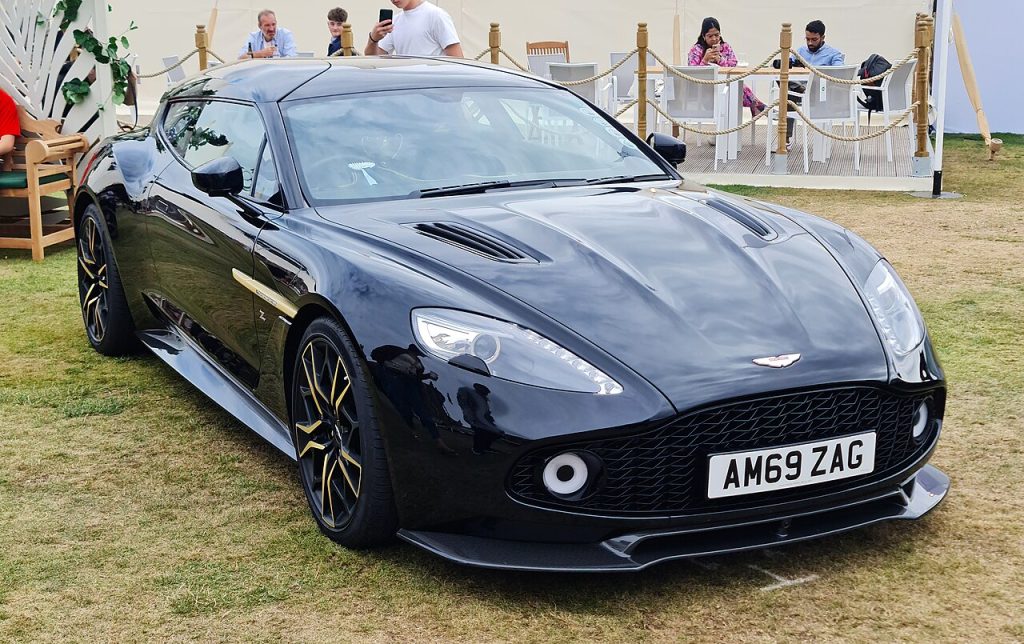
The bundled Commons photograph identifies a Vanquish Zagato Shooting Brake at Salon Privé in September 2022. The source uses a 2019 label for the pictured example, which is retained as source description rather than a verified completion year for the whole series. The image provides a real subject photograph with linked photographer, source and license. It does not assign a chassis serial or confirm present condition. Keeping that distinction visible lets the photograph illustrate the design while leaving exact build, equipment and custody questions where they belong: in documentary evidence specific to the vehicle.
Frequently asked questions
How many Shooting Brakes were announced?
The factory run was limited to 99, within the four-body family’s maximum 325-car programme. A completed worldwide chassis census is not certified here.
Is it a four-seat estate?
The factory announcement describes a two-seater. The extended rear is intended as a distinctive luggage-oriented space, not additional passenger seating.
When did deliveries begin?
The 2018 corporate document expected first deliveries in Q4 2018. This profile preserves that as the contemporary schedule rather than claiming a later confirmation.
Does the source’s 2019 image label date the whole series?
No. It labels the pictured example and does not independently establish a programme completion date.
Explore related Aston Martin profiles
- Aston Martin Vanquish Zagato Coupe
- Aston Martin Vanquish Zagato Speedster
- Aston Martin Vanquish Zagato Volante
Sources
- Aston Martin August 2017: Zagato four-body family, scoped limits and scheduled production/deliveries
- Zagato atelier: Vanquish Shooting Brake origins, glass roof inlays and powered tailgate
- Aston Martin Lagonda 2018 Registration Document, pp. 49–50: GT12/GT8 production periods and continuation/Zagato delivery chronology
Historical claims follow the linked manufacturer, archive, specialist and catalogue records, with disputed findings retained. Inspection and collecting guidance is editorial analysis. Catalogue condition and custody statements remain dated to their sources.
Photography and credit
Source-identified Vanquish Zagato Shooting Brake at Salon Privé in September 2022. Source label 2019 belongs to the pictured example, not a verified series completion date. Photo: MrWalkr / Wikimedia Commons · CC BY-SA 4.0. Wikimedia thumbnail resized from original; no cropping or colour changes.
Why this machine matters
The Vanquish Zagato Shooting Brake extended the four-body Zagato family into an unusually sculptural two-seat grand tourer. Announced in 2017 with a 99-car limit, it combined a distinctive extended roof and tailgate with the Vanquish S mechanical foundation. Its design lineage and luggage-oriented rear space distinguish it from the coupe, Volante and roofless Speedster.
Built in limited numbers
Aston Martin announced a 99-car Shooting Brake run as part of the maximum 325-car four-body family. The Shooting Brake ceiling is not 325, and the parent number is not an additional population to add to its 99. The retrieved announcement and corporate record establish the bounded programme, while an independently certified completed Shooting Brake chassis census remains unresolved here. Keeping that distinction visible makes the rarity statement dependable. It also avoids presenting every proposed allocation as a finished delivery simply because the project was oversubscribed or because later images show completed customer cars.
Gallery
Specifications
Factory specifications may vary by model year, market and configuration.
Identity & production
- Official model
- Aston Martin Vanquish Zagato Shooting Brake
- Base model
- Vanquish Zagato
Powertrain & performance
- Engine
- Naturally aspirated V12; Vanquish S / Zagato programme reference