Aston Martin Rapide S Centenary Edition
The Rapide S Centenary Edition brought Aston Martin’s 2013 anniversary treatment to its four-door grand tourer. A 100-car limit and a later specialist report of 49 completions describe different scopes. Its Shanghai presentation, market-specific colors and original six-speed specification give the edition a distinct story within the broader Centenary programme.
The Rapide S Centenary Edition brought Aston Martin’s 2013 anniversary treatment to its four-door grand tourer. A 100-car limit and a later specialist report of 49 completions describe different scopes. Its Shanghai presentation, market-specific colors and original six-speed specification give the edition a distinct story within the broader Centenary programme.
Aston Martin Rapide S Centenary Edition at a glance
| Manufacturer | Aston Martin |
|---|---|
| Model / family | Rapide S |
| Profile scope | Historic road-model archive |
| Historical reference year | 2013 |
| Inventory reference | AST-112 |
| Specialist-reported scoped count | 49; scope explained below, not factory certification |
| Factory allocation limit | 100; completed census not independently certified |
| Historical engine reference | 2013 Rapide S V12; period brochure 550 bhp and six-speed Touchtronic II |
| Displacement reference | 5935 cc; historical programme reference, not current installed measurement |
Why the correct name includes Rapide S
The inventory’s shorthand Rapide Centenary Edition needs the S designation in the public model name. Aston Martin introduced Rapide S in 2013, with a conspicuous full-face grille distinguishing it from the earlier Rapide. For this edition, that change matters because the anniversary story belongs to the updated car rather than simply to any four-door Aston Martin registered during the centenary year. A search for a standard Rapide can still help readers understand the lineage, but its specification should not be imported wholesale. Model identity, introduction year and an individual delivery date each answer a different question.
Rarity: the 100-car ceiling and reported 49 completions
The Centenary announcement allowed 100 examples for the Rapide model line. Cottingham subsequently reports 49 Rapide S Centenary cars built. The limit and the later completed count are both useful, provided they retain their attribution and meaning. This guide does not turn the specialist figure into a factory-certified total. It also avoids counting a standard Rapide S with a personal specification as part of the edition merely because it looks similar. The original order and edition records remain the starting point for a particular car, especially when photographs reveal only the exterior.
Shanghai in April 2013 and the market-specific presentation
The specialist account places the Rapide S Centenary unveiling at Shanghai in April 2013 and identifies the presentation car’s China-market white/silver finish with Chancellor Red leather. That chronology separates the edition’s public appearance from the earlier introduction of Rapide S itself. The colors also explain why a single publicity car cannot define every worldwide delivery. This is a useful lesson when comparing anniversary editions: a market launch may emphasize one configuration while the programme includes others. Retain the actual destination market in a vehicle record, rather than assuming every example followed the same regional presentation.
Color choices that need their original order context
Cottingham describes the familiar Skyfall Silver/Meteorite Silver treatment as well as China-market Dana Point White/Lightning Silver and single-tone choices. Graduated surfaces create a different impression on a long four-door body than on a short coupe, an editorial comparison readers can explore in properly identified photographs. A finish alone remains insufficient authentication. Repainting decisions should follow the particular order and repair history, not a generalized expectation that every Centenary car must have one shade combination. An unusual documented color deserves a clear explanation; it does not require an invented one-of-one rarity claim to be interesting.
The original 550 bhp and six-speed technical reference
Aston Martin’s April 2013 Rapide S brochure describes a 550 bhp V12, 620 Nm and six-speed Touchtronic II automatic transmission. The broader current heritage page lists a later eight-speed Touchtronic III specification. This profile uses the period document for the anniversary car and keeps that later evolution separate. The distinction is practical when a collector compares advertisements or orders specialist work: six-speed and eight-speed labels should refer to the actual configuration rather than the whole 2013–2018 family. Historical ratings explain the original programme; present engine output and transmission condition still require individual evidence.
A four-seat anniversary car with a grand-touring brief
The period brochure presents four individual seats, rear climate provision and a tailgate with folding rear seats. That gives the Rapide S a different use case from the two-door Centenary cars. For an owner, the useful comparison is whether passenger access, rear accommodation and luggage arrangements suit the planned journeys. Try those functions in the actual vehicle rather than judging them from the exterior’s coupe-like proportions. The anniversary details may establish collecting interest, but they do not make everyone’s requirements identical. A rare four-door can be understood both as a commemorative object and as a car intended to carry people.
A cabin assessment that looks beyond the driver’s seat
Inspect the rear compartment as carefully as the front: upholstery, controls, ventilation, seat operation and evidence of previous repairs all contribute to an individual condition assessment. These are editorial inspection priorities rather than claims of systematic model defects. Compare the retained materials with the delivery specification, particularly when the original regional treatment differs from the black interiors familiar in many anniversary photographs. Changes can be explained through dated invoices and earlier images. That approach helps a collector distinguish a supported factory choice, a documented refurbishment and a detail whose origin remains unresolved without reducing the whole edition to one cosmetic checklist.
Numbered details and accompanying presentation material
The manufacturer’s magazine describes numbered silver sill plaques and a presentation box for the Centenary programme. Those pieces add historical context when they can be tied to the same vehicle. They should not substitute for the chassis record or prove a completed population by themselves. Inventory the accompanying equipment and explain replacements separately, especially where a later sale includes loose commemorative items. A sound provenance discussion connects material with dates and identities instead of treating quantity as proof. That gives the next reader a clearer account of what belonged to the original delivery and what joined the car afterward.
Comparing the Rapide S with DB9 and Vanquish Centenary
The shared anniversary theme makes the DB9 and Vanquish useful companions to this profile, but their vehicle roles remain distinct. A reader choosing between them should compare passenger needs, body style and the specification period alongside rarity. The Rapide S is especially useful in a collection that wants to show the breadth of Aston Martin’s centenary rather than repeat one silhouette. Its specialist-reported count can inform that discussion, while the stronger purchase question concerns the documented identity and conservation of the actual example. A programme limit, current asking price and factory origin are different kinds of evidence.
The supplied Rapide S family reference photograph
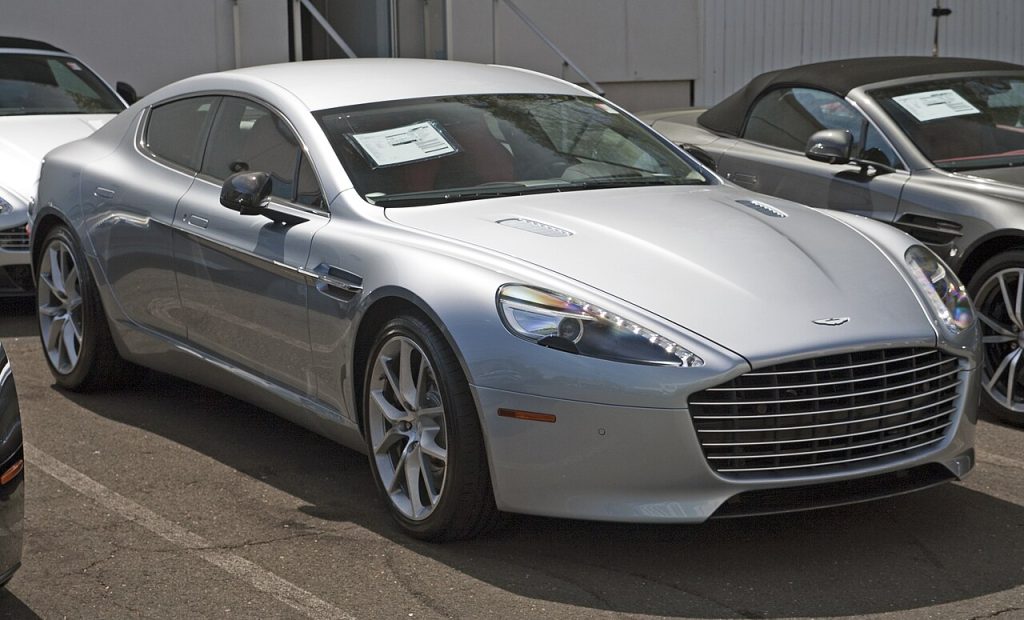
The licensed photograph shows an early Rapide S at a Greenwich, Connecticut dealership in May 2013. Its source labels the car with a 2014 model-year reference, which does not change the picture’s documented date. Centenary identity remains unverified, and the caption explicitly treats it as a family reference. Linked author, source, licence and resizing disclosure accompany the image. An authenticated licensed edition photograph remains a publication hold. Preserve that distinction when replacing or sharing the picture: a correct-generation model image is useful visual context, but its date and grille cannot independently establish commemorative-edition membership.
Frequently asked questions
Is this the original Rapide or Rapide S?
The Centenary model is Rapide S, introduced in 2013; the inventory shorthand is clarified.
Were 100 definitely completed?
100 was the limit. Cottingham reports 49 built, retained as a specialist finding.
Which gearbox reference fits the 2013 edition?
The April 2013 brochure specifies six-speed Touchtronic II; later eight-speed family specifications are kept separate.
Does the photograph prove Centenary identity?
No. It is a licensed early Rapide S family reference pending an authenticated edition image.
Explore related Aston Martin profiles
- Aston Martin DB9 Centenary Edition
- Aston Martin V8 Vantage Centenary Edition
- Aston Martin Vanquish Centenary Edition
Sources
- Aston Martin Magazine: the 2013 Centenary programme and 100-per-model-line limit
- Tim Cottingham: Rapide S Centenary, Shanghai reveal and 49 reported completions
- Aston Martin April 2013 Rapide S brochure: original six-speed technical specification
- Aston Martin: Rapide S history; later eight-speed specification kept distinct
Historical claims follow the linked manufacturer, archive, specialist and catalogue records, with disputed findings retained. Inspection and collecting guidance is editorial analysis. Catalogue condition and custody statements remain dated to their sources.
Photography and credit
Early Rapide S photographed in Greenwich, Connecticut, in May 2013. Family reference only; Centenary Edition identity is unverified. An authenticated licensed exact-edition photograph remains a publication hold. Photo: Mr.choppers / Wikimedia Commons · CC BY-SA 3.0. Wikimedia thumbnail resized from original; no cropping or colour changes.
Why this machine matters
The Rapide S Centenary Edition brought Aston Martin’s 2013 anniversary treatment to its four-door grand tourer. A 100-car limit and a later specialist report of 49 completions describe different scopes. Its Shanghai presentation, market-specific colors and original six-speed specification give the edition a distinct story within the broader Centenary programme.
Built in limited numbers
The Centenary announcement allowed 100 examples for the Rapide model line. Cottingham subsequently reports 49 Rapide S Centenary cars built. The limit and the later completed count are both useful, provided they retain their attribution and meaning. This guide does not turn the specialist figure into a factory-certified total. It also avoids counting a standard Rapide S with a personal specification as part of the edition merely because it looks similar. The original order and edition records remain the starting point for a particular car, especially when photographs reveal only the exterior.
Gallery
Specifications
Factory specifications may vary by model year, market and configuration.
Identity & production
- Official model
- Aston Martin Rapide S Centenary Edition
- Base model
- Rapide S
Powertrain & performance
- Engine
- 2013 Rapide S V12; period brochure 550 bhp and six-speed Touchtronic II