Aston Martin DB9 Centenary Edition
The DB9 Centenary Edition celebrated Aston Martin’s hundredth anniversary through rare finishes and numbered details applied to its established V12 grand tourer. The 2013 programme allowed up to 100 DB9s across coupe and Volante bodies. Specialist-reported completions are smaller, and the anniversary car remains distinct from the separately coachbuilt Zagato Centennial Spyder.
The DB9 Centenary Edition celebrated Aston Martin’s hundredth anniversary through rare finishes and numbered details applied to its established V12 grand tourer. The 2013 programme allowed up to 100 DB9s across coupe and Volante bodies. Specialist-reported completions are smaller, and the anniversary car remains distinct from the separately coachbuilt Zagato Centennial Spyder.
Aston Martin DB9 Centenary Edition at a glance
| Manufacturer | Aston Martin |
|---|---|
| Model / family | DB9 |
| Profile scope | Historic road-model archive |
| Historical reference year | 2013 |
| Inventory reference | AST-111 |
| Factory allocation limit | 100; completed census not independently certified |
| Specialist-reported completed coupes | 39; count scope discussed below |
| Specialist-reported completed Volantes | 10; count scope discussed below |
| Historical engine reference | 2013 DB9 AM11 naturally aspirated V12; period 510 bhp reference |
| Displacement reference | 5935 cc; historical programme reference, not current installed measurement |
The DB9’s place in Aston Martin’s centenary
The DB9 was an appropriate anniversary canvas because it represented the transition to Gaydon and VH architecture. Aston Martin’s history dates the original unveiling to Frankfurt in 2003, followed by the open Volante in 2004. The Centenary Edition arrived a decade later, carrying the same model name into a different stage of development. Its appeal comes from that relationship between familiar design and commemorative execution. An enthusiast comparing the two should distinguish the original launch car from the substantially revised 2013 specification, rather than assuming all DB9s share the same equipment simply because their silhouettes remain recognizable.
Rarity: 100 planned across two body styles
The manufacturer’s Centenary programme set a ceiling of 100 for each model line. For DB9, the specialist account identifies a mixed allocation of coupes and Volantes. It is therefore incorrect to assign 100 to each body or describe the announcement as a certified completed census. This distinction makes the rarity claim more useful: the edition is clearly bounded, while the number actually delivered needs a separate source. An individual sill plaque records that car’s place in the intended programme, but does not prove every available allocation was used. The profile retains the original limit with its scope attached.
Reported completions and the September 2013 reveal
Cottingham reports 39 Centenary coupes and ten Volantes, and places the coupe’s public unveiling at Frankfurt in September 2013. These body counts are specialist findings, not promoted here into a factory-certified worldwide total of 49. They explain why a plaque denominator and a later registry count can differ without implying that a car is counterfeit. Readers researching an individual example should retain the body, build date and delivery market together. A registration in the following calendar year would need its own explanation, rather than changing the anniversary programme’s historical reference year.
Graduated paint and alternative original finishes
The specialist specification describes Skyfall Silver shading into Meteorite Silver, alongside China-market white/silver and single-color alternatives. Graduated paint gives the body a different visual rhythm as light moves across it, so a flat photograph may understate its effect. That design reading is editorial interpretation, not a claim that one photographed finish has been physically authenticated. Nor should a genuine single-color order automatically be rejected because it lacks the familiar gradient. Before repainting, establish the actual original order and retained finish. Preserving the documented choice matters more than recreating the most recognizable publicity version.
A 510 bhp V12 grand tourer beneath the anniversary details
The period DB9 brochure specifies a 5,935 cc V12 rated at 510 bhp, rear-wheel drive and a rear-mounted six-speed Touchtronic II transmission. It also lists adaptive damping and carbon-ceramic brakes. These are original programme references, not measured results for the bundled photo. The Centenary treatment is principally an anniversary specification rather than evidence of a separately uprated engine. That makes it a useful comparison with the later DB9 GT Bond Edition, whose GT mechanical reference belongs to a different date. Keeping the chronology clear prevents a later headline output from migrating into a 2013 vehicle record.
Silver details and the cabin’s collecting significance
The DB9 specialist account lists silver badges and numbered sill details, Deep Soft Obsidian Black upholstery with silver stitching, embroidered headrests and a presentation box. Their significance is cumulative: an edition is more convincing when original records, retained trim and numbered material agree. A bright badge alone is much easier to misinterpret. When assessing a cabin, compare any retrimming with earlier images and the order specification, documenting repairs rather than treating all renewed material as either automatically desirable or automatically disqualifying. The aim is to understand what survived, what changed and how the finished car relates to its original anniversary identity.
Coupe and Volante offer different ownership priorities
This profile covers the DB9 Centenary programme rather than silently choosing one body. A buyer drawn to the coupe’s enclosed form should compare visibility, luggage needs and intended use with the actual car. A Volante assessment adds the roof mechanism, seals and evidence of water entry to that discussion. Those are inspection priorities, not reported faults affecting every example. The edition’s special finish and trim may reward careful preservation, but they cannot answer whether a particular car fits the owner’s plans. Rarity becomes more meaningful when the body style and practical requirements are considered together.
Authenticating a DB9 Centenary Edition
Begin with the chassis identity, original factory or dealer specification, early registration and delivery paperwork. Compare the recorded edition with sill numbering and retained details, then trace later paintwork or cabin changes. Presentation accessories should be listed separately with their supporting provenance; a loose gift box does not authenticate a different DB9. Ask a knowledgeable specialist to explain any inconsistency before it becomes a public claim. This approach is especially useful for anniversary editions whose most visible parts can be replaced. It also avoids assigning the whole standard DB9 population to a rarity profile intended for a bounded factory programme.
How it compares with the other Centenary cars
The Rapide S, V8 Vantage and Vanquish Centenary profiles let readers compare the same anniversary idea across different vehicle roles. The DB9 sits between those choices as a grand-touring reference rather than the programme’s universal mechanical template. The later Bond Edition offers a second useful comparison within the DB9 family, with a different purpose and date. Such connections explain why two silver cars can have different identities and collecting stories. They also make the distinction from the DB9 Zagato Centennial Spyder clear: anniversary language can connect projects without making their coachwork, counts or original briefs interchangeable.
The photograph and the exact-edition image still needed
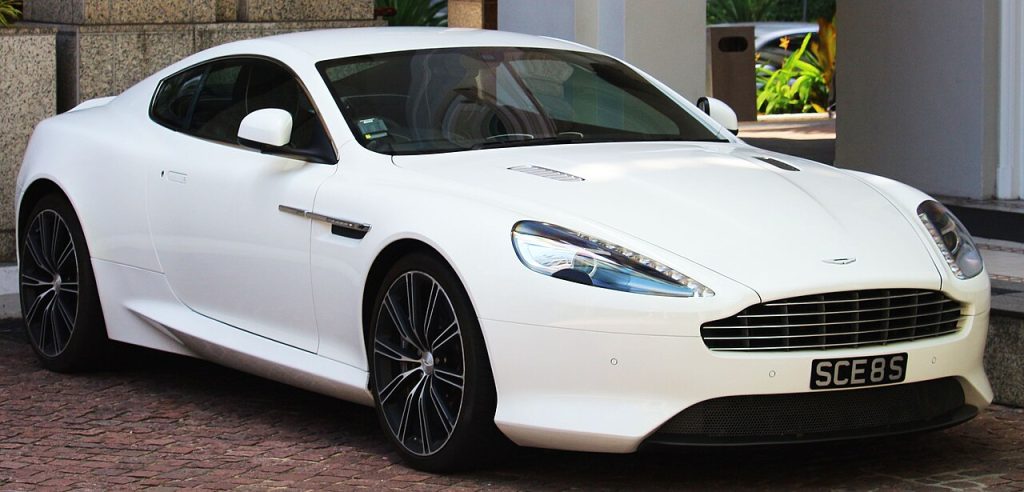
The bundled photograph shows a source-identified 2013-generation DB9 coupe in Singapore in January 2016. It illustrates the model family, but Centenary membership has not been authenticated. The caption states that limitation and includes linked photographer, Commons source, licence and resizing disclosure. An exact-edition licensed photograph remains a publication hold. A useful replacement should establish the edition through source documentation or sufficiently clear identifying evidence, while preserving its own credit requirements. The distinction lets readers use the draft as a historical reference without mistaking an attractive ordinary DB9 photograph for proof of an anniversary chassis.
Frequently asked questions
How many DB9 Centenary Editions were announced?
Up to 100 across coupe and Volante bodies; this is the programme limit, not a certified completed total.
What completed counts are reported?
Cottingham reports 39 coupes and ten Volantes. These remain attributed body findings.
Was its engine the later 540 bhp DB9 GT unit?
The 2013 DB9 brochure reference is 510 bhp; the later GT belongs to a different specification period.
Is the bundled image an authenticated Centenary car?
No. It is a clearly labelled DB9 family reference awaiting an exact-edition licensed image.
Explore related Aston Martin profiles
- Aston Martin Rapide S Centenary Edition
- Aston Martin Vanquish Centenary Edition
- Aston Martin DB9 GT Bond Edition
Sources
- Aston Martin Magazine: the 2013 Centenary programme and 100-per-model-line limit
- Tim Cottingham: DB9 Centenary specification, mixed-body limit and 39 reported coupes
- Tim Cottingham: DB9 Centenary Volante and ten reported open cars
- Aston Martin 2013 DB9 brochure: AM11 V12, Touchtronic II and chassis equipment
- Aston Martin: DB9 introduction and VH platform history
Historical claims follow the linked manufacturer, archive, specialist and catalogue records, with disputed findings retained. Inspection and collecting guidance is editorial analysis. Catalogue condition and custody statements remain dated to their sources.
Photography and credit
2013-generation DB9 coupe photographed in Singapore in January 2016. Family reference only; Centenary Edition identity is unverified. An authenticated licensed exact-edition photograph remains a publication hold. Photo: EurovisionNim / Wikimedia Commons · CC BY-SA 4.0. Wikimedia thumbnail resized from original; no cropping or colour changes.
Why this machine matters
The DB9 Centenary Edition celebrated Aston Martin’s hundredth anniversary through rare finishes and numbered details applied to its established V12 grand tourer. The 2013 programme allowed up to 100 DB9s across coupe and Volante bodies. Specialist-reported completions are smaller, and the anniversary car remains distinct from the separately coachbuilt Zagato Centennial Spyder.
Built in limited numbers
The manufacturer’s Centenary programme set a ceiling of 100 for each model line. For DB9, the specialist account identifies a mixed allocation of coupes and Volantes. It is therefore incorrect to assign 100 to each body or describe the announcement as a certified completed census. This distinction makes the rarity claim more useful: the edition is clearly bounded, while the number actually delivered needs a separate source. An individual sill plaque records that car’s place in the intended programme, but does not prove every available allocation was used. The profile retains the original limit with its scope attached.
Gallery
Specifications
Factory specifications may vary by model year, market and configuration.
Identity & production
- Official model
- Aston Martin DB9 Centenary Edition
- Base model
- DB9
Powertrain & performance
- Engine
- 2013 DB9 AM11 naturally aspirated V12; period 510 bhp reference
Sources and verification
- astonmartin.blob.core.windows.net
- astonmartins.com
- astonmartins.com
- astonmartins.com
- www.astonmartin.com