Aston Martin V12 Vanquish S Ultimate Edition
The first-generation Vanquish S Ultimate Edition marked the end of the Newport Pagnell production era in 2007. Evidence of fifty numbered cars follows an initial forty-car announcement, while another factory retrospective retains forty. The difference stays visible, along with the original trim package and the distinction from the much later Vanquish Ultimate.
The first-generation Vanquish S Ultimate Edition marked the end of the Newport Pagnell production era in 2007. Evidence of fifty numbered cars follows an initial forty-car announcement, while another factory retrospective retains forty. The difference stays visible, along with the original trim package and the distinction from the much later Vanquish Ultimate.
Aston Martin V12 Vanquish S Ultimate Edition at a glance
| Manufacturer | Aston Martin |
|---|---|
| Model / family | V12 Vanquish |
| Profile scope | Historic road-model archive |
| Historical reference year | 2007 |
| Inventory reference | AST-092 |
| Published count disagreement | 40 or 50; exact reconciled total unconfirmed |
| Specialist-reported scoped count | 50; scope explained below, not factory certification |
| Historical engine reference | Original-generation Vanquish S V12 programme; later Works conversions individually evidenced |
The Ultimate Edition belongs to 2007
The sources place the first-generation Ultimate announcement in February 2007. The inventory’s 2004 date belongs to the introduction of the underlying Vanquish S, not this final numbered edition. Preserve both milestones in the audit rather than silently converting the whole model family into a 2007 introduction. A particular car’s completion and registration require its own records. This is also a different programme from the later-generation Vanquish Ultimate. The public name must include enough context to distinguish them, so a photo search, parts enquiry or vehicle record does not accidentally merge two unrelated end-of-production editions.
Rarity: initial forty, documented fifty and retained factory wording
Aston Martin’s dedicated Vanquish S heritage page states that the last of fifty Ultimate Editions left the line in July 2007. RM documents car 37/50 and explains expansion from an initial forty. A 2021 factory retrospective nevertheless repeats forty-car wording. This guide preserves both factory references and the fifty-numbered evidence rather than claiming all wording is reconciled. The original inventory’s forty is not treated as a certified final census. Exact verified-production metadata remains unset pending definitive scope reconciliation, with forty/fifty references visible. Both reported populations remain comfortably within this archive’s rarity limit.
An end to an era rather than the end of all Works activity
The Ultimate celebrated the close of the original Newport Pagnell production chapter. Aston Martin’s retrospective also recognises later continuation work there, so the phrase last ever Aston Martin needs historical scope. It should not become a timeless claim that no subsequent vehicle was built at the site. For an individual car, establish its actual place in the completion sequence before assigning last-car status. Numbering alone is not necessarily a full chronology. The edition’s significance is clearer when the period production milestone remains precise and separate from the continuing history of the Works operation.
Ultimate Black and the cabin package
The factory retrospective describes Ultimate Black coachwork with semi-aniline leather, coarse stitching, leather headlining and black chrome cabin fittings. These coordinated materials define the edition’s presentation rather than a new universal engine upgrade. A dark exterior photograph cannot authenticate membership by itself. Compare the car with original order, build information and early images, then record repainting or retrimming separately. Conservation may replace worn material while preserving the original specification. The useful finding explains that sequence instead of treating a currently matching finish as proof that every visible component is factory-delivered material.
The underlying Vanquish S technical context
The manufacturer’s historical account identifies the underlying S with a 520 bhp V12 and revised dynamics. That is programme context, not a present measured result for an individual Ultimate. Original delivery, rebuilt installation and subsequent preparation should remain separate findings. A later Works manual conversion also belongs to a dated work history rather than an assumed original option on every car. A catalogued description using automatic can obscure the paddle-operated automated-manual architecture. Keep the terminology supported by actual records, explaining what the chassis received and what it carries now without transferring equipment from another Vanquish generation.
A numbered plaque needs supporting build evidence
RM’s 2021 catalogue supplies a concrete example: Ultimate 37/50, chassis SCFAC14397B502575. Those identifiers support that dated offering; they do not certify the photograph supplied here or another black Vanquish. Check an individual vehicle’s chassis, original order, factory build record and sill numbering together. A replaced plaque should have a documented reason and supporting earlier evidence where available. Maintain the chronology of registration and work without copying a catalogue’s custody language into a permanent present-tense claim. The most convincing edition history connects the number with the physical object rather than allowing the badge to carry the entire argument.
Examining structure and hand-finished panels
A collecting review should inspect the actual structure, body mounting, panel repairs, paintwork and cabin with a specialist familiar with the first-generation car. Restoration photographs should show what was retained or replaced beneath the finished presentation. Uncommon trim and external pieces deserve their own inventory. Record whether previous work altered specification or simply conserved worn material. A low recorded mileage cannot settle every aspect of structural or mechanical condition. The documentary history should explain important interventions so a future owner can understand the surviving object rather than rely on the limited-edition name as an implicit condition certificate.
Assessing the gearbox and intended use
Ask a specialist to review the fitted gearbox, control system and any conversion documentation together with the engine, cooling, lubrication, fuel equipment, brakes, steering and tyres. Define the intended use before deciding preparation needs. A show appearance is a dated observation rather than a current readiness assessment. If later work changes the driving controls or specification, preserve the invoices and the original-delivery information in the same file. This helps distinguish maintenance from modification. The car’s period significance can remain clear while its current operation reflects a supported sequence of subsequent repairs or Works preparation.
The One-77 and DBS Ultimate as comparisons
The One-77 represents a different halo programme, while the DBS Ultimate coupe provides another final-edition reference from the next generation of flagship cars. Compare platform, period and population scope before treating Ultimate as one continuous model. The Vanquish’s forty/fifty evidence also illustrates why numbered editions need more than a headline count. Collecting interest depends on an individual chassis’s supported identity, specification and conservation record. Related profiles can make those differences useful to readers without transferring another model’s engine, construction method or certainty about completed production into the first-generation Vanquish archive.
The family reference photograph and remaining hold
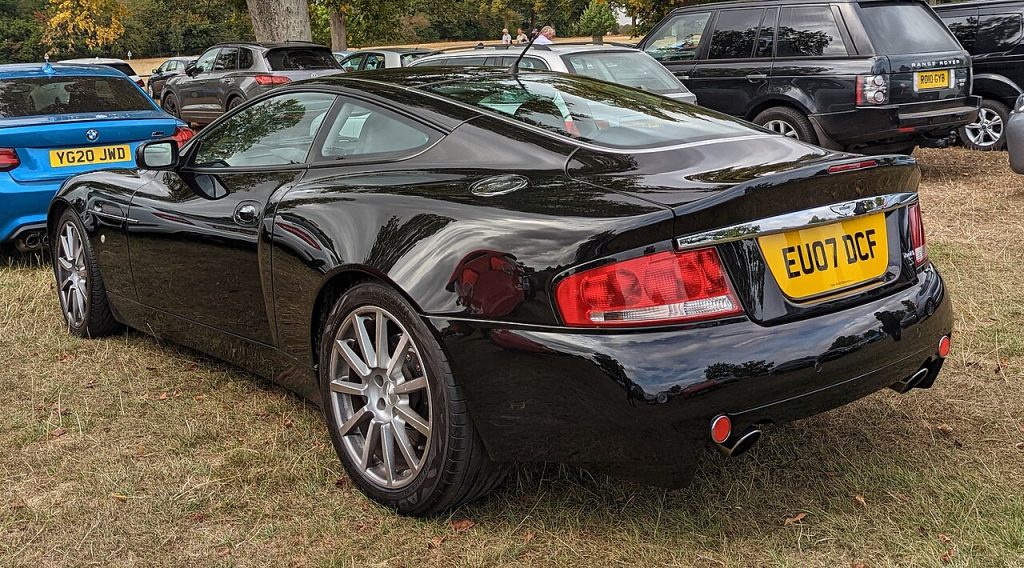
The supplied photograph shows a source-identified first-generation 2007 Vanquish S photographed in September 2022. It is a family reference; Ultimate Edition membership has not been authenticated. An exact-edition licensed photograph remains a publication hold. The image does not establish the final completed car or the RM 37/50 example. Visible credits link photographer, Commons source and licence, with resizing disclosed. Keep those limits attached when sharing it. An enduring vehicle file holds original build, numbered-edition evidence, later work and dated photographs together, allowing unresolved count wording to remain distinct from the physical car’s supported history.
Frequently asked questions
Which year belongs to this Ultimate Edition?
2007; the inventory’s 2004 relates to the underlying Vanquish S introduction.
Were forty or fifty made?
The initial announcement was forty and dedicated factory heritage says fifty; a 2021 retrospective repeats forty. Exact badge fields remain unset pending reconciliation.
Does it mean no cars were ever built at Newport Pagnell afterward?
No. The claim concerns the original production chapter; later continuation work has separate context.
Does the photo identify the final chassis?
No. It is a Vanquish S family reference with unverified Ultimate identity and no serial or completion-order finding.
Explore related Aston Martin profiles
Sources
- Aston Martin: Vanquish S heritage records last of 50 Ultimate Editions, July 2007
- Aston Martin 2021 retrospective: Vanquish engineering, Works conversions and retained 40-car wording
- RM Sotheby’s 2021: Ultimate Edition 37/50, planned 40 and expanded 50
- Tim Cottingham: first-generation Ultimate, trim and 2007 completion history
Historical claims follow the linked manufacturer, archive, specialist and catalogue records, with disputed findings retained. Inspection and collecting guidance is editorial analysis. Catalogue condition and custody statements remain dated to their sources.
Photography and credit
First-generation 2007 Vanquish S photographed in September 2022. Family reference only; Ultimate Edition identity is unverified. An authenticated licensed exact-edition photograph remains a publication hold. Photo: Calreyn88 / Wikimedia Commons · CC BY-SA 4.0. Wikimedia thumbnail resized from original; no cropping or colour changes.
Why this machine matters
The first-generation Vanquish S Ultimate Edition marked the end of the Newport Pagnell production era in 2007. Evidence of fifty numbered cars follows an initial forty-car announcement, while another factory retrospective retains forty. The difference stays visible, along with the original trim package and the distinction from the much later Vanquish Ultimate.
Built in limited numbers
Aston Martin’s dedicated Vanquish S heritage page states that the last of fifty Ultimate Editions left the line in July 2007. RM documents car 37/50 and explains expansion from an initial forty. A 2021 factory retrospective nevertheless repeats forty-car wording. This guide preserves both factory references and the fifty-numbered evidence rather than claiming all wording is reconciled. The original inventory’s forty is not treated as a certified final census. Exact verified-production metadata remains unset pending definitive scope reconciliation, with forty/fifty references visible. Both reported populations remain comfortably within this archive’s rarity limit.
Gallery
Specifications
Factory specifications may vary by model year, market and configuration.
Identity & production
- Official model
- Aston Martin V12 Vanquish S Ultimate Edition
- Base model
- V12 Vanquish
Powertrain & performance
- Engine
- Original-generation Vanquish S V12 programme; later Works conversions individually evidenced