Aston Martin DB5 Convertible Vantage
The factory-original Vantage Convertible combines the DB5’s open body with its optional higher-output engine specification. Published totals disagree: Aston Martin reports eight, while RM Sotheby’s records seven. Both place it within the 123 original convertibles. Build documentation is essential because later upgrades can resemble the original option.
The factory-original Vantage Convertible combines the DB5’s open body with its optional higher-output engine specification. Published totals disagree: Aston Martin reports eight, while RM Sotheby’s records seven. Both place it within the 123 original convertibles. Build documentation is essential because later upgrades can resemble the original option.
Aston Martin DB5 Convertible Vantage at a glance
| Manufacturer | Aston Martin |
|---|---|
| Model / family | DB5 |
| Profile scope | Historic road-model archive |
| Historical reference year | 1964 |
| Inventory reference | AST-047 |
| Published count disagreement | 7 or 8; exact reconciled total unconfirmed |
| Parent / broader count scope | 123; not additive to this profile |
| Historical engine reference | Historical DB5 Vantage four-litre six-cylinder option; current installation requires individual records |
A factory option within an open-body model
This guide concerns DB5 Convertibles originally supplied with Vantage specification. It is not a census of every open DB5 now fitted with similar induction or engine work. The inventory’s 1964 reference is retained as a derivative-era reference, not proof that every original Vantage Convertible was completed then. Establish the particular car’s build date and delivered equipment from its documents. Body type, original engine option and current installation need separate answers. That is especially important for a rare combination whose outward appearance can be closely copied by later changes to a standard car.
Rarity: the seven-versus-eight disagreement
Aston Martin’s 2020 history reports eight Vantage-engined cars within the 123 DB5 Convertibles. RM Sotheby’s 2023 catalogue reports seven originals. The inventory follows seven, but this guide preserves the disagreement and leaves the exact completed-production badge unset. Both published figures fall below the site’s rarity ceiling. Neither should be silently made definitive without a reconciled register. The broader convertible population is unchanged: these are included engine-option cars, not additional vehicles. A useful rarity note states the competing sources, the scope they describe and the specific evidence needed to settle the difference.
The Vantage engine reference
Aston Martin describes the optional Vantage engine with triple Weber carburettors and quoted output of 325 bhp. This is historical programme information, not a current dynamometer reading for an unidentified convertible. Establish the fitted engine, head, induction and ignition through a specialist inspection and dated invoices. Original option identity can survive changes in mechanical equipment, but those changes should be disclosed. Conversely, similar fitted hardware does not prove original Vantage delivery. This distinction gives the technical story a practical basis without presenting every modern Weber-equipped convertible as a member of the factory-original subset.
Build records are more useful than a badge
Correlate the factory build record, original engine references and delivery documentation with the actual car. A badge is an identification clue, not a complete authentication file. When records use shorthand or appear inconsistent, obtain a specialist interpretation and preserve the supporting correspondence. A collecting account should show which original-option claim is documented and which present details were physically inspected. This lets the record explain a genuine car whose equipment has changed, or a standard car later upgraded, without blending the two histories. The conclusion should remain tied to evidence rather than a familiar exterior appearance.
A catalogue example separates identity from installed material
RM’s 2023 listing of DB5C/1924/R discloses an original engine block accompanying the car and a replacement block installed and restamped to match. That is a specific catalogue example, not a claim about every Vantage Convertible. It illustrates why original engine identity, fitted block and accompanying material need separate descriptions. Ask for photographs and documentation of both retained and installed parts when reviewing a comparable case. A statement that the original engine accompanies a vehicle should not be rewritten as proof that the original block is currently running in it.
Changes in steering position and presentation
The same catalogue example records a conversion to left-hand drive. This provides a useful reason to distinguish original delivery layout from current driving position. A later conversion can be professionally executed and well documented without becoming factory-original left-hand-drive production. For the car under review, trace the actual steering, pedal and dashboard work rather than transferring another vehicle’s details. Colour and trim changes also deserve dates and supporting evidence. An accurate collecting description can explain these interventions and their purpose while preserving the original build identity and avoiding an invented new production subset.
Evaluating mechanical and open-body condition
Inspection should cover structure, body mounting, hood equipment, weather sealing, cooling, lubrication, brakes, steering and the fitted transmission. The Vantage label does not certify current health or readiness for touring. Discuss parts support and service history with a specialist familiar with the actual engine specification. A display restoration may require preparation before regular use. This is editorial assessment guidance, not a diagnosis of the catalogue car or the supplied photograph. The objective is a documented use plan that respects the car’s material history and states which replacements or upgrades are considered necessary.
Comparing a factory original with a later upgrade
Gooding’s 2022 catalogue for DB5C/1906/R describes a later Vantage-specification upgrade. Its invoice addendum dates the engine work to 2010, correcting the earlier catalogue chronology. That is a documented conversion example, not an additional factory-original option car. A standard Convertible converted to Vantage-style specification can offer a different collecting proposition from an original factory option car. Compare documentation, condition, quality of work and intended use before discussing rarity. A well-recorded upgrade should be described by its conversion date and fitted equipment, while an original’s claim should be supported by its build file. Current performance alone cannot resolve the distinction. Keeping both descriptions honest avoids using the unresolved seven-or-eight count as a sales label for an unverified car. The individual history remains more important than a badge or a generic power figure.
Related profiles explain the count relationship
The regular DB5 Convertible profile describes the parent 123-car open-body population. DB5 Vantage addresses the parallel saloon engine-option subset, while DB5 Saloon describes its separate body count. These are connected topics, not three independent totals to be added together. Compare body format, factory option and evidence scope before comparing scarcity. A particular car can belong to a parent body population and a smaller engine subset at the same time. The archive should make that hierarchy understandable without duplicating the physical car or inventing a new edition for every specification change.
A clearly labelled reference photograph
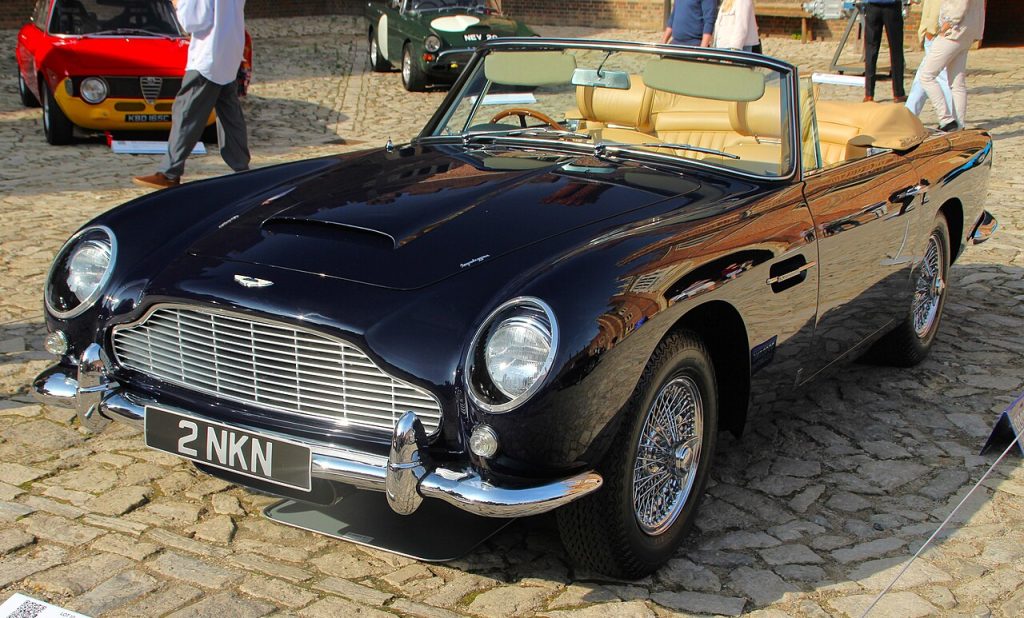
The bundled Hampton Court image shows a DB5 Convertible, but original factory Vantage specification has not been independently established. It is explicitly captioned as a family reference rather than an authenticated image of one of the original option cars. Photographer, source, licence and resizing disclosure are linked visibly. An exact-subset licensed photograph supported by chassis documentation remains a publication hold. Preserve that distinction when reviewing the draft. A source-identified body image is useful context, but its presence should not imply that the specific factory-option identity has been verified through appearance alone.
Frequently asked questions
How many original Vantage Convertibles are confirmed here?
No single reconciled total: Aston Martin says eight, RM Sotheby’s says seven.
Are they additional to 123 DB5 Convertibles?
No. They are included within that open-body population.
Do Weber carburettors prove factory-original Vantage identity?
No. Original option identity needs build documentation and the car’s history.
Is the bundled photo an authenticated original Vantage Convertible?
No. It is a labelled Convertible family reference pending an exact-subset licensed image.
Explore related Aston Martin profiles
Sources
- Aston Martin: 2020 Vantage history reports 68 DB5 saloons and eight convertibles
- RM Sotheby’s: DB5C/1924/R, reported seven original Vantage convertibles and replacement-block disclosure, Amelia Island 2023
- Gooding: DB5C/1906/R later Vantage-specification conversion and 2010 invoice addendum, London 2022
Historical claims follow the linked manufacturer, archive, specialist and catalogue records, with disputed findings retained. Inspection and collecting guidance is editorial analysis. Catalogue condition and custody statements remain dated to their sources.
Photography and credit
DB5 Convertible family reference at Hampton Court in 2022. Original factory Vantage specification is unverified; this is not an authenticated original Vantage Convertible image. An exact-subset licensed photograph remains a publication hold. Photo: MrWalkr / Wikimedia Commons · CC BY-SA 4.0. Wikimedia thumbnail resized from original; no cropping or colour changes.
Why this machine matters
The factory-original Vantage Convertible combines the DB5’s open body with its optional higher-output engine specification. Published totals disagree: Aston Martin reports eight, while RM Sotheby’s records seven. Both place it within the 123 original convertibles. Build documentation is essential because later upgrades can resemble the original option.
Built in limited numbers
Aston Martin’s 2020 history reports eight Vantage-engined cars within the 123 DB5 Convertibles. RM Sotheby’s 2023 catalogue reports seven originals. The inventory follows seven, but this guide preserves the disagreement and leaves the exact completed-production badge unset. Both published figures fall below the site’s rarity ceiling. Neither should be silently made definitive without a reconciled register. The broader convertible population is unchanged: these are included engine-option cars, not additional vehicles. A useful rarity note states the competing sources, the scope they describe and the specific evidence needed to settle the difference.
Gallery
Specifications
Factory specifications may vary by model year, market and configuration.
Identity & production
- Official model
- Aston Martin DB5 Convertible Vantage
- Base model
- DB5
Powertrain & performance
- Engine
- Historical DB5 Vantage four-litre six-cylinder option; current installation requires individual records