Aston Martin Atom
Atom is Aston Martin’s experimental saloon developed from 1939 and completed in 1940. It combines a rigid integral framework with a practical four-door body and a history of continuing technical development. The two Atom rows in the supplied inventory describe this same prototype and are consolidated into one profile with the date corrected.
Atom is Aston Martin’s experimental saloon developed from 1939 and completed in 1940. It combines a rigid integral framework with a practical four-door body and a history of continuing technical development. The two Atom rows in the supplied inventory describe this same prototype and are consolidated into one profile with the date corrected.
Aston Martin Atom at a glance
| Manufacturer | Aston Martin |
|---|---|
| Model / family | Atom |
| Profile scope | Historic prototype archive |
| Historical reference year | 1940 |
| Inventory reference | AST-014 |
| Object / count scope | One named saloon development prototype; two inventory rows consolidated |
| Consolidated inventory alias | AST-018; same physical subject |
| Historical engine reference | Initial 15/98 overhead-cam; later Claude Hill pushrod two-litre development engine |
One Atom, with a corrected chronology
The manufacturer places the patent milestone in March 1939 and completion early in 1940. This corrects the inventory’s 1935 date and keeps development distinct from completion. The separate 1939 Atom saloon row is an alias for the same subject, not a second car or an additional one-off. The public guide uses 1940 as the completed-prototype reference year. Preserve both original rows in the research file so the correction can be checked. A clean archive should not manufacture two separate vehicles because an inventory has described one development object under two headings.
An experimental saloon rather than a styling shell
Aston Martin’s account describes a four-door, four-seat car that journalists could drive. Atom therefore belongs to a running development history, with practical use as well as an ambitious engineering brief. It should not be catalogued simply as a show model or a normal production edition. The useful question is what the object demonstrated at each stage. A static later photograph can communicate its shape without establishing which mechanical systems were fitted at that moment. Keeping role and configuration separate helps readers understand why the prototype is significant without filling missing evidence from a modern concept-car stereotype.
An integral framework beneath the body
The manufacturer describes rectangular steel tubes forming the chassis and body framework, with lightly loaded alloy exterior panels attached. This explains the design’s structural approach without require a claim that it invented every form of space-frame construction. The interpretation concerns how the rigid framework and outer panels shared their roles. For a surviving object, a material survey should identify joints, repairs and retained fabric. A conservation account can then connect the technical idea to the structure that actually survives, rather than let a familiar engineering label answer all the questions about condition and originality.
Rarity: a single named development object
Atom is treated here as one identified prototype with a continuing development history. It is not a retail one-car edition and should not receive a production badge copied from both inventory rows. The object file needs its own identity, configuration and custody evidence. Its relationship to later road models belongs in linked context rather than a new manufacturing count. Consolidating the two rows prevents duplicate indexing and duplicate rarity claims. The profile remains useful because it explains the physical subject and its historical role while preserve the source chronology that made the inventory correction necessary.
A practical body within wartime constraints
The manufacturer notes a shorter prototype package than the intended production version would have used, with a longer wheelbase envisaged for greater rear space. That is a design proposal rather than a completed second vehicle. Keep the proposed and actual configurations distinct. A four-door experimental saloon can illuminate everyday engineering priorities as well as performance: access, accommodation and structural rigidity belong in the discussion. Do not apply dimensions from an unbuilt production plan to the surviving prototype. A technical table should describe the object or explicitly label the future proposal it is referencing.
The engine changed during development
The specialist history distinguishes an initial 15/98 overhead-cam engine from the later Claude Hill pushrod two-litre unit, introduced during the development programme from 1944. This is a vital scope distinction. A later engine reference should not appear as the original 1940 installation or a measurement of the current assembly without object-level records. Keep engine identity, installation date and any subsequent repair separate. The prototype’s significance includes experimentation, so a changing power unit can be part of the authentic history. The guide should explain the sequence rather than search for one timeless specification that erases development.
Independent suspension and the Cotal transmission
The specialist account describes independent front suspension and a Cotal electromagnetic transmission among Atom’s technical features. Those are dated programme statements. A current conservation or operating file should establish the actual systems, controls, condition and associated support. Avoid compare a historical selector directly with a modern automatic merely because both reduce conventional shifting work. The useful technical explanation concerns how the prototype combined its systems and what problem each addressed. For preservation, documentation and specialist familiarity matter as much as a concise specification label in an online profile.
Use, development and a postwar connection
The manufacturer records substantial wartime use, while the specialist history explains continued development and the car’s connection to David Brown’s interest in the company. Keep those source accounts dated and avoid turn reported mileage into a current odometer reading. A development car’s historical importance can come from the engineering experience it generated. The later DB1 heritage page explicitly links its construction approach to Atom. That relationship provides a clear route into the postwar story without claiming that the prototype and the production sports car were the same physical object or shared every component.
Preserving a layered prototype
An individual conservation file should describe each established configuration and the material that belongs to it. Period alterations may be as historically meaningful as first-build components. A restoration decision should therefore state its reference date and supporting evidence. Keep drawings, photographs, removed material and workshop findings where possible. This lets later custodians understand why the car appears in its present form. Atom’s importance is not served by erase its development layers behind a generic original claim; a documented sequence explains both the engineering experiment and the surviving object more accurately.
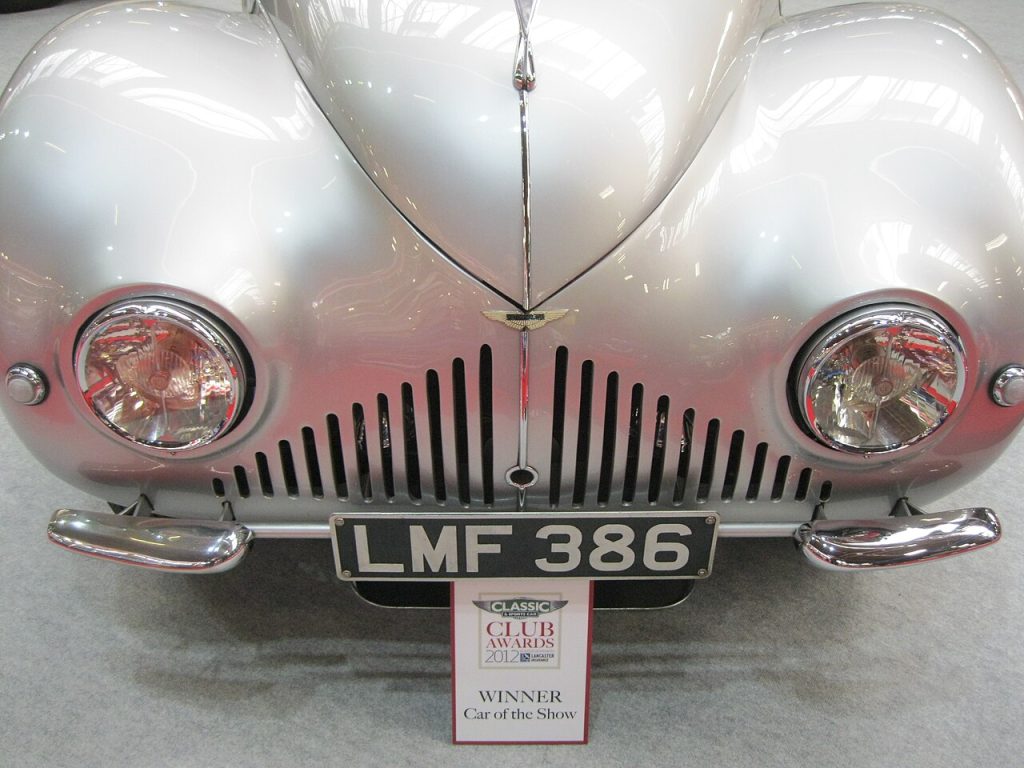
The licensed NEC photograph
The bundled image shows Atom at the Birmingham NEC in November 2012. It gives the profile a real subject photograph while retaining the later display date. Photographer Andrew Bone, the Commons source, CC BY 2.0 licence and resizing note are visibly linked. The photograph does not independently establish present custody or the age of every fitted assembly. Additional technical views would require their own evidence and rights records. The image is useful because it grounds the saloon’s appearance without pretending that a modern exhibition scene documents every stage of its original development.
Atom compared with DB1
Atom explores a practical enclosed development-car brief, while the Two Litre Sports became a postwar customer sports-car programme. Compare their roles and construction histories before comparing collecting availability or specification. The DB1 guide keeps its disputed production tally explicit; Atom’s guide consolidates one development identity. Related links allow readers to trace the engineering connection without confusing a prototype’s object count with a customer series total. Both subjects can be important to a collection for different reasons, and those reasons are clearest when the physical history and the numerical scope stay separate.
A prototype record that remains auditable
Store the corrected chronology, both inventory references, source links, dated configuration material and individual custody evidence in one file. Any new engine or ownership finding should update the relevant part of that file rather than creating another Atom profile. The archive can remain flexible without losing the object’s continuity. Readers should be able to distinguish a manufacturer statement, a specialist technical account and an editor’s interpretation. That makes the guide a durable starting point for further research, with the visible photograph and credits supported by the same careful attention to identity and date.
Frequently asked questions
Was Atom completed in 1935?
No. Aston Martin describes development from 1939 and completion early in 1940.
Do AST-014 and AST-018 describe different cars?
They are consolidated as two inventory descriptions of the same Atom prototype.
Was the later pushrod engine its original installation?
The specialist history distinguishes the initial overhead-cam engine from a later pushrod development stage.
Does the photograph establish current location?
No. It documents a November 2012 NEC appearance with its own credit and licence.
Explore related Aston Martin profiles
Sources
- Aston Martin: Atom chronology and integral construction
- Ecurie Bertelli: Atom development stages and technical history
- Aston Martin: Two Litre Sports launch and DB1 name
Historical claims follow the linked manufacturer, archive, specialist and catalogue records, with disputed findings retained. Inspection and collecting guidance is editorial analysis. Catalogue condition and custody statements remain dated to their sources.
Photography and credit
Atom at the Birmingham NEC in November 2012; later display photograph of the prototype, not a current custody or installed-system certificate. Photo: Andrew Bone from Weymouth, England / Wikimedia Commons · CC BY 2.0. Wikimedia thumbnail resized from original; no cropping or colour changes.
Why this machine matters
Atom is Aston Martin’s experimental saloon developed from 1939 and completed in 1940. It combines a rigid integral framework with a practical four-door body and a history of continuing technical development. The two Atom rows in the supplied inventory describe this same prototype and are consolidated into one profile with the date corrected.
Built in limited numbers
Atom is treated here as one identified prototype with a continuing development history. It is not a retail one-car edition and should not receive a production badge copied from both inventory rows. The object file needs its own identity, configuration and custody evidence. Its relationship to later road models belongs in linked context rather than a new manufacturing count. Consolidating the two rows prevents duplicate indexing and duplicate rarity claims. The profile remains useful because it explains the physical subject and its historical role while preserve the source chronology that made the inventory correction necessary.
Gallery
Specifications
Factory specifications may vary by model year, market and configuration.
Identity & production
- Official model
- Aston Martin Atom
- Base model
- Atom
Powertrain & performance
- Engine
- Initial 15/98 overhead-cam; later Claude Hill pushrod two-litre development engine