Aston Martin DB1 Two Litre Sports
The Two Litre Sports, retrospectively called DB1, was launched at the 1948 Motor Show under David Brown’s ownership. Its connection to Atom makes it a key postwar foundation model. Published counts disagree between 14 and 15, so this profile keeps exact production unconfirmed while preserving the clearly small scale of the programme.
The Two Litre Sports, retrospectively called DB1, was launched at the 1948 Motor Show under David Brown’s ownership. Its connection to Atom makes it a key postwar foundation model. Published counts disagree between 14 and 15, so this profile keeps exact production unconfirmed while preserving the clearly small scale of the programme.
Aston Martin DB1 Two Litre Sports at a glance
| Manufacturer | Aston Martin |
|---|---|
| Model / family | DB1 |
| Profile scope | Historic road-model archive |
| Historical reference year | 1948 |
| Inventory reference | AST-019 |
| Published count disagreement | 14 or 15; exact reconciled total unconfirmed |
| Historical engine reference | Claude Hill pushrod two-litre four-cylinder — historical programme reference |
Two Litre Sports first, DB1 later
Aston Martin’s heritage page identifies the 1948 Motor Show launch and the retrospective DB1 name. This gives the model a clear historical definition without implying that every original invoice used the later designation. Both names belong in the search and archive record. The supplied inventory’s 1949 label is retained as source data, while the public guide begins with the documented 1948 launch. A particular chassis can have its own build and delivery dates within the programme. Keeping the model launch separate from an individual car’s year prevents the profile from compressing the chronology into one misleading field.
The David Brown-era foundation
The manufacturer identifies this as the first model produced under David Brown’s ownership. Its importance is therefore attached to a transition in the company as well as a scarce surviving sports-car type. The guide does not assign every later DB achievement to DB1. Instead it explains why the first customer programme of the new period deserves its own history. A collecting file should still establish the individual vehicle’s identity and condition. A significant position in the marque’s chronology is context, not a replacement for the build records and material evidence of the car being assessed.
The construction link to Atom
The heritage account links the chassis construction to Atom, with Frank Feeley credited for the sports-car styling. This connects experimental engineering to a customer model without making the cars identical. Compare structure, body purpose and dated technical evidence when exploring that relationship. The prototype’s later alterations should not be copied into a DB1 specification simply because the programmes are linked. A useful guide explains the direction of the influence and the questions a surviving car presents. It lets readers understand the postwar development path while keeping the particular production sports car distinct from its experimental predecessor.
Rarity: the 14-versus-15 count remains open
The supplied inventory states fifteen. A Bonhams catalogue reports fifteen production models, while Tim Cottingham’s specialist account reports fourteen, including a chassis-only example. This guide preserves the disagreement and leaves the exact completed-production badge unset. Both accounts describe a very small programme below the collection’s 7,500-car ceiling. That clear eligibility does not resolve the counting method. A reconciled factory register would need to define prototypes, chassis-only delivery and completed cars consistently. Until then, an attributed range is more accurate than choose a preferred exact total and present it as unanimously verified.
A complete car and a chassis-only delivery
A small production census can change depending on whether it counts complete factory-bodied vehicles, bare chassis or related experimental objects. The specialist account’s chassis-only reference makes that distinction relevant here. Store the definition alongside any count rather than assuming every historical total uses the same population. An individual chassis file should establish its own original delivery condition and subsequent body history. This is useful both for rarity research and for conservation: a later body may be part of an authentic object history, but it should not silently become a factory-built configuration without evidence.
The two-litre four-cylinder context
The specialist account describes Claude Hill’s pushrod four-cylinder in the Two Litre Sports programme. This distinguishes the model from the later six-cylinder DB cars and from an altered individual example carrying replacement hardware. A mechanical assessment should identify the actual installed engine, transmission and associated systems. Do not infer current performance from a general model description or copy a later DB specification into missing fields. The technical guide can establish the original programme context while retaining object-level questions about matching identification, repair, replacement parts and the configuration that survives.
The open body and an individual coachwork file
Document the present body construction, mounting, weather equipment, trim and their relationship to factory photographs and delivery records. A model photograph establishes useful appearance but does not authenticate the body on another chassis. Keep repairs and replacements described in concrete terms. For a scarce early postwar type, the coachwork can be central to the object’s collecting story. A good file explains what was supplied, what changed and which evidence supports the current presentation, rather than let a familiar grille shape or a handsome restoration settle every question about originality.
Economic context without a modern value promise
The manufacturer’s heritage account describes a high original price and the purchase-tax burden surrounding the launch. That helps explain the programme’s historical commercial setting. It does not predict present value or future appreciation. A collecting comparison should instead assess identity, provenance, condition, completeness and support using current evidence for the particular car. Old list prices and later catalogue estimates need their own dates and scope if discussed. The historical context is most useful when it illuminates why the model occupied a challenging market position without turning a small production tally into a financial guarantee.
Authenticating an individual DB1
Correlate chassis identification, factory build information, original registration, delivery specification, ownership chronology and restoration records. If a seller uses the later DB1 name, establish that the object is the Two Litre Sports programme being described. Distinguish a later special or rebodied car from a factory-delivered complete vehicle. Engine and body claims should be supported separately. This gives a collecting file enough structure for another specialist to review it independently. It also avoids treat a rare model name as proof of every component’s age or as a substitute for evidence of the physical car’s continuity.
The licensed modern subject photograph
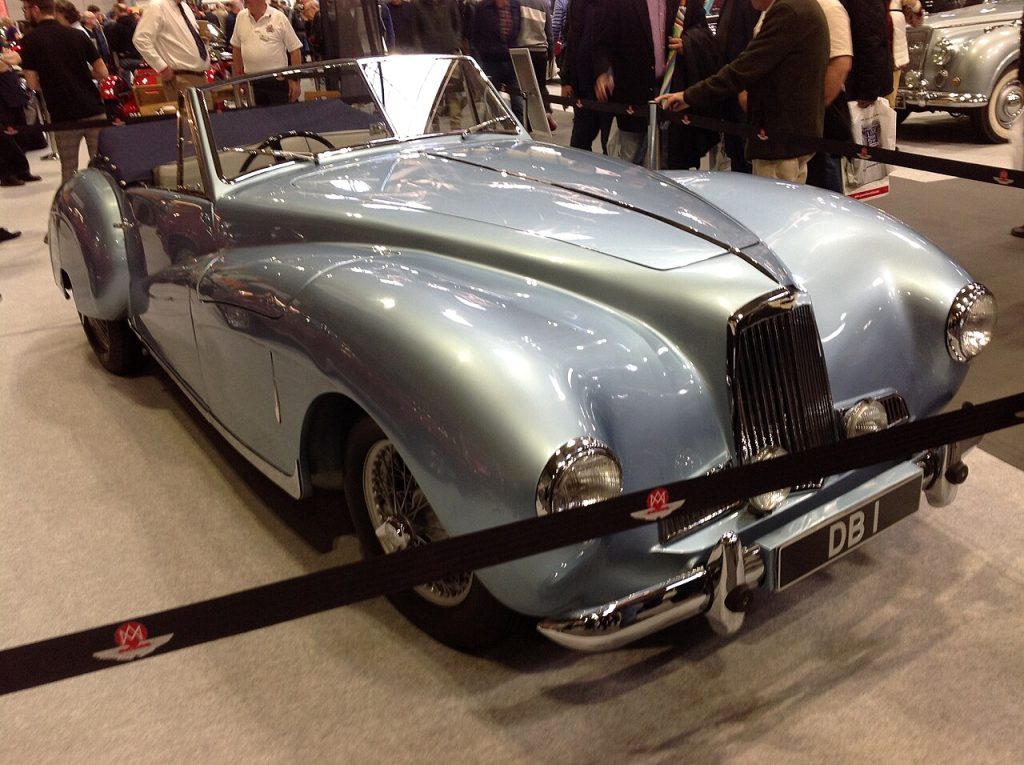
The bundled image shows a Two Litre Sports/DB1 at the NEC in 2019. It supplies real model imagery with photographer Andrew Bone, Commons source, CC BY 2.0 licence and resizing note linked visibly. The caption does not infer a chassis serial or imply the photographed car represents every delivery configuration. A particular-object feature would add authenticated identification and condition views under their own rights records. This keeps the model guide useful visually while preserve the difference between an accurate subject photograph and a complete material or provenance assessment of an individual vehicle.
Condition, preservation and support
Have a suitable specialist review structure, body attachments, cooling, lubrication, fuel system, transmission, brakes, steering, wheels, tyres and the service history. A low production figure does not indicate how a surviving car was stored or maintained. Define the intended role and establish access to relevant documentation and parts support. Static conservation and road use can justify different preparation decisions. Keep the assessment and any intervention with the chassis file. The practical ownership account should complement the historical significance, providing a clear description of the actual machine rather than assuming rarity guarantees completeness or readiness.
Connecting the first DB model to the wider archive
Atom supplies the engineering-development link, while DB3S introduces a different postwar competition purpose. Those guides let readers trace Aston Martin’s history without assigning a racing chassis count to a road-car series. For this model, preserve the original names, launch year and unresolved census definition. A later factory reconciliation could refine the number without alter the car’s basic identity. The durable profile gives readers a coherent foundation story, real licensed photography and a clear route to further sources, with the remaining count question stated plainly rather than hidden behind a polished rarity badge.
Frequently asked questions
When was Two Litre Sports launched?
Aston Martin identifies the 1948 Motor Show; the inventory’s 1949 label is retained as original source data.
Was DB1 the original name?
The manufacturer describes DB1 as a retrospective name for Two Litre Sports.
Were 14 or 15 built?
Reviewed accounts disagree. Exact production remains unconfirmed here, with both reported figures retained.
Does that count disagreement affect the 7,500 ceiling?
Both reported figures are below the ceiling, but neither is entered as a reconciled exact factory total.
Explore related Aston Martin profiles
Sources
- Aston Martin: Two Litre Sports launch and DB1 name
- Bonhams: 1950 Two-Litre Sports catalogue reports 15 production models
- Tim Cottingham: Two Litre Sports account reports 14 examples
- Ecurie Bertelli: Atom development stages and technical history
Historical claims follow the linked manufacturer, archive, specialist and catalogue records, with disputed findings retained. Inspection and collecting guidance is editorial analysis. Catalogue condition and custody statements remain dated to their sources.
Photography and credit
Two Litre Sports/DB1 at the NEC in November 2019; model image without an independently authenticated chassis serial. Photo: Andrew Bone / Wikimedia Commons · CC BY 2.0. Wikimedia thumbnail resized from original; no cropping or colour changes.
Why this machine matters
The Two Litre Sports, retrospectively called DB1, was launched at the 1948 Motor Show under David Brown’s ownership. Its connection to Atom makes it a key postwar foundation model. Published counts disagree between 14 and 15, so this profile keeps exact production unconfirmed while preserving the clearly small scale of the programme.
Built in limited numbers
The supplied inventory states fifteen. A Bonhams catalogue reports fifteen production models, while Tim Cottingham’s specialist account reports fourteen, including a chassis-only example. This guide preserves the disagreement and leaves the exact completed-production badge unset. Both accounts describe a very small programme below the collection’s 7,500-car ceiling. That clear eligibility does not resolve the counting method. A reconciled factory register would need to define prototypes, chassis-only delivery and completed cars consistently. Until then, an attributed range is more accurate than choose a preferred exact total and present it as unanimously verified.
Gallery
Specifications
Factory specifications may vary by model year, market and configuration.
Identity & production
- Official model
- Aston Martin DB1 Two Litre Sports
- Base model
- DB1
Powertrain & performance
- Engine
- Claude Hill pushrod two-litre four-cylinder — historical programme reference