Aston Martin LM5 works car
LM5 is an individual 1931 Aston Martin works team car based on the International programme. Its history includes competition and a documented later change to 2/4-seat coachwork. Collector research should keep those stages separate, using the chassis file rather than a generalized Le Mans-model description to establish identity.
LM5 is an individual 1931 Aston Martin works team car based on the International programme. Its history includes competition and a documented later change to 2/4-seat coachwork. Collector research should keep those stages separate, using the chassis file rather than a generalized Le Mans-model description to establish identity.
Aston Martin LM5 works car at a glance
| Manufacturer | Aston Martin |
|---|---|
| Model / family | Le Mans |
| Profile scope | Individual works-chassis archive |
| Historical reference year | 1931 |
| Inventory reference | AST-008 |
| Object / count scope | One named 1931 works competition chassis |
| Historical chassis identifier | LM5 |
| Historical engine reference | 1.5-litre overhead-cam four-cylinder dry-sump works reference |
The first of three 1931 team chassis
RM Sotheby’s identifies LM5 as the first of the 1931 works cars, alongside LM6 and LM7 in the new team. This is a specific chassis designation, not the total production of the later customer Le Mans model. The works prefix gave competition objects a different identity from ordinary production cars. Keep the programme relationship in the title and individual identification in the chassis field. This makes the guide useful to readers who know the Le Mans name but need to understand why a particular works machine requires its own history and documentary file.
Competition results with their own labels
The 2019 catalogue records participation at Brooklands and Le Mans, then a first-in-class finish at the 1931 Tourist Trophy with fourteenth overall. Class and overall positions describe different results and should appear together where cited. The guide does not convert a class victory into an outright win. Nor should a team result automatically become an LM5 result. Event records and chassis attribution need to travel together. A precise account makes the car’s achievements intelligible without exaggeration, and leaves room for a more detailed chronology supported by original entry, timing and workshop material.
The International engineering context
The catalogue describes a 1.5-litre overhead-cam four-cylinder with dry-sump lubrication in the works International context. A specialist inspection should establish the present installed specification and any replacement material. Programme descriptions are not a permanent condition report. Important details such as engine casing, timing gear and lubrication arrangements should be connected to dated evidence rather than inferred from a polished exterior. This permits a technical guide to explain what made the works preparation distinct while still ask the object-level questions necessary for authentication, maintenance and a meaningful comparison with a customer car.
Rarity: one LM chassis, not a one-car model range
The inventory’s one-car shorthand refers to LM5 as an individual object. It does not mean the International family or all works cars were produced in a total of one. Conventional edition-limit and completed-production fields remain unset for this chassis profile. Related models should carry their own scoped counts. This prevents a rare-car database from mixing an individual competition identity with a retail series number. The collecting interest comes from supported works provenance, historical development and surviving material, with the evidence explaining why this physical car deserves an independent record.
The later 2/4-seat body
The catalogue and specialist history describe LM5 receiving a 2/4-seat body after its works competition period. That change is part of the car’s history rather than a reason to imagine a second LM5. A photograph of the later form should not be used to reconstruct its exact earlier race appearance without supporting material. Keep period and later body records together. A catalogue can then explain which stage the present body represents. This is especially useful because a historically significant conversion may be central to the surviving car’s story even when it differs from the first works configuration.
Originality needs a defined reference period
A statement that a car is highly original can refer to its first build, its works retirement or a later configuration. Define the date and the material being discussed. The 2019 catalogue’s preservation claims are dated seller descriptions, not a current independent condition assessment. A specialist should correlate retained bodywork, structure and assemblies with photographs and records. Avoid treat patina as proof of every component’s age. The strongest conservation account explains continuity, repairs and replacement parts, making the chosen reference period understandable rather than using originality as a single all-purpose collecting adjective.
Custody and restoration should stay dated
The historical catalogue provides a provenance and restoration narrative for the car it offered in 2019. Preserve the chronology and seek underlying records for a current individual assessment. A later owner, location or condition should not be copied from that catalogue without fresh evidence. Sale history and present custody are separate questions. If workshop invoices describe replacement parts or conservation choices, keep them with the chassis file. This lets a future custodian understand how the object reached its present state while avoiding turning an old sale presentation into a continuing guarantee about completeness or ownership.
The race-car identification file
Correlate LM5 identification, registration history, factory build information, event documents and dated photographs. A race number changes with an event and cannot replace the chassis identity. The works preparation and later coachwork should be tied to this car’s own evidence. Where a source disagrees with another, retain the discrepancy and the documents behind it. A strong file lets someone unfamiliar with the current owner independently follow the history. That is more useful than a broad statement that the car is a Le Mans veteran when the actual question concerns a particular appearance or surviving assembly.
The reference photo and exact-image hold
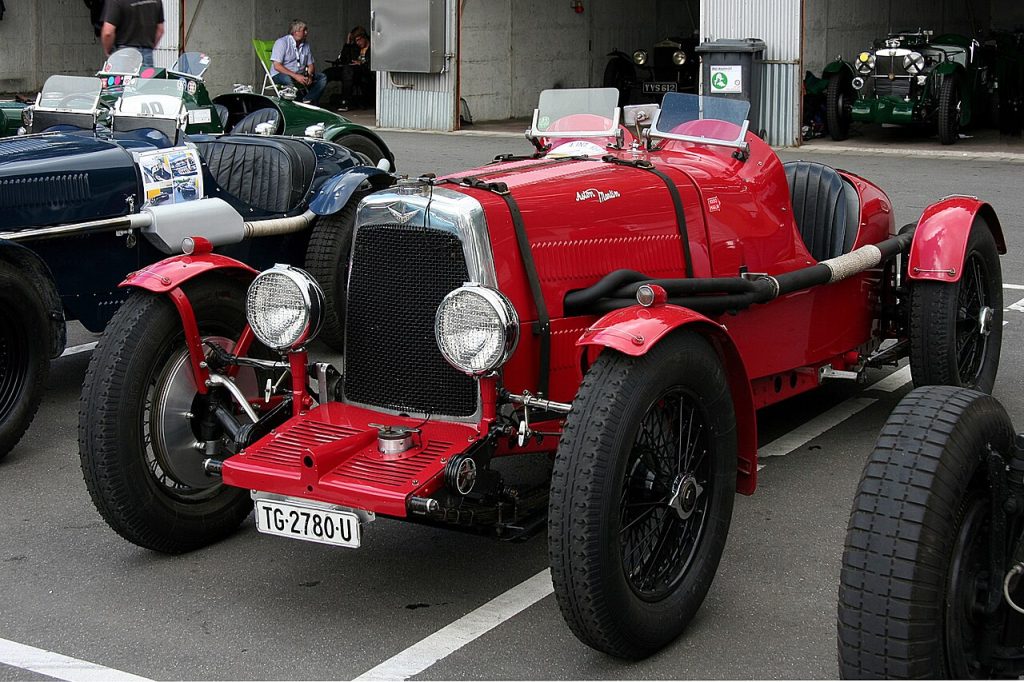
The supplied licensed photograph shows a 1930 International as family context, not the LM5 works chassis. It is deliberately captioned as a reference and remains held for an authenticated reusable LM5 image before publication. A historical LM5 image was located, but the reviewed rights metadata did not establish a sufficiently clear international reuse basis for this package. The reference’s photographer, source, licence and resizing note remain visible. It must not be relabelled as LM5 or edited to imitate its bodywork. Honest visual context is preferable to an unsupported object identification.
Preparing an early works car for use
A suitable specialist should assess the current lubrication system, drivetrain, brakes, steering, wheel assemblies, structure and body attachments. Competition history does not establish present readiness or eligibility for a specific modern event. Check the organizer’s requirements separately and document preparation in the vehicle file. Static preservation and active running may justify different decisions about replacement material. The practical collecting account should identify available support and the intended role. It then complements the historical significance instead of allowing a famous race association to answer every mechanical or operational question.
LM5 compared with LM6
The two chassis share a 1931 team context, but their body histories and race attributions are not identical. Compare individual documents and dated configurations rather than assuming the team’s common appearance proves the same subsequent life. LM6’s guide explicitly retains an unresolved Le Mans attribution issue. LM5’s later coachwork gives it another distinctive research question. Related links should help readers see those differences. A useful archive can connect the cars through a shared programme while still preserve separate object records, condition accounts and evidence for every important individual claim.
A record that survives a change of custodian
Keep original records, annotated research, restoration material and image rights evidence in a dated file. Describe gaps so a future researcher can distinguish an unresolved point from an established finding. For LM5, make the transition from works racer to later coachwork especially easy to follow. One chassis can carry several meaningful historical stages without become several separate vehicles. That principle gives the profile lasting collecting value: the archive follows the supported physical identity and its documented changes rather than selecting only the most glamorous moment and silently discard everything that followed.
Frequently asked questions
Is LM5 the total production of the Le Mans model?
No. It is an individual works chassis; the wider models have separate count scopes.
Was its Tourist Trophy success an overall victory?
The 2019 catalogue records first in class and fourteenth overall.
Did the body change?
The catalogue and specialist history describe a later 2/4-seat conversion.
Does the supplied image show LM5?
No. It is an explicitly labelled International-family reference; an authenticated reusable LM5 photo remains required.
Explore related Aston Martin profiles
Sources
- RM Sotheby’s: LM5 catalogue and historical image, Villa Erba 2019
- Ecurie Bertelli: first-series team cars and changing specifications
- Motor Sport: firsthand LM6/LM7 inspection and disputed race attribution, May 1980 archive
Historical claims follow the linked manufacturer, archive, specialist and catalogue records, with disputed findings retained. Inspection and collecting guidance is editorial analysis. Catalogue condition and custody statements remain dated to their sources.
Photography and credit
1930 International family reference at the Nürburgring in 2008, not the LM5 works chassis. An authenticated reusable LM5 photograph remains a publication hold. Photo: Lothar Spurzem / Wikimedia Commons · CC BY-SA 2.0 de. Wikimedia thumbnail resized from original; no cropping or colour changes.
Why this machine matters
LM5 is an individual 1931 Aston Martin works team car based on the International programme. Its history includes competition and a documented later change to 2/4-seat coachwork. Collector research should keep those stages separate, using the chassis file rather than a generalized Le Mans-model description to establish identity.
Built in limited numbers
The inventory’s one-car shorthand refers to LM5 as an individual object. It does not mean the International family or all works cars were produced in a total of one. Conventional edition-limit and completed-production fields remain unset for this chassis profile. Related models should carry their own scoped counts. This prevents a rare-car database from mixing an individual competition identity with a retail series number. The collecting interest comes from supported works provenance, historical development and surviving material, with the evidence explaining why this physical car deserves an independent record.
Gallery
Specifications
Factory specifications may vary by model year, market and configuration.
Identity & production
- Official model
- Aston Martin LM5 works car
- Base model
- Le Mans
Powertrain & performance
- Engine
- 1.5-litre overhead-cam four-cylinder dry-sump works reference