Bentley Continental SC
The Bentley Continental SC turns the sedanca-coupé idea into a late-1990s Continental: removable glass above the front seats and a glazed rear cabin that retains an enclosed passenger compartment. Specialist chassis research records 73 standard SCs for 1998–2000. The roof arrangement, defined production scope and unmistakable coupé body give this Continental a distinct place in Bentley’s coachbuilt tradition.
The Bentley Continental SC turns the sedanca-coupé idea into a late-1990s Continental: removable glass above the front seats and a glazed rear cabin that retains an enclosed passenger compartment. Specialist chassis research records 73 standard SCs for 1998–2000. The roof arrangement, defined production scope and unmistakable coupé body give this Continental a distinct place in Bentley’s coachbuilt tradition.
Bentley Continental SC at a glance
| Manufacturer | Bentley |
|---|---|
| Model / family | Continental T |
| Profile scope | Limited historical model |
| Historical reference year | 1998 |
| Inventory reference | BEN-075 |
| Engine reference | 6.75-litre turbocharged V8 |
| Documented production scope | 73 — Standard Continental SC, 1998–2000, per specialist chassis census |
What Continental SC means
SC stands for Sedanca Coupé, a body arrangement that allows the front compartment to open while retaining enclosure behind it. In the Continental SC, the idea is expressed through removable roof glass rather than a full folding convertible roof. That gives the car an identity visible from both outside and inside. An exterior view can show the roof openings, while an interior view explains how the glazing relates to the seating. The name should be attached to that physical arrangement and its documented model identity. It describes a particular Continental derivative, not a loose term for any coupé with a sunroof or a special interior.
The roof is the model’s defining feature
The specialist model record identifies detachable front glass panels and fixed glazing over the rear. This creates two different passenger environments within one body. The roof structure, removable pieces, seals and storage provisions deserve as much attention as the exterior finish. For a reader studying the car, a photograph taken with the panels removed is especially useful because it reveals the concept clearly. A closed-roof view can make the SC resemble a conventional Continental, so the caption and build identity remain important. The appeal comes from the specific solution to opening the cabin, rather than from a general association with convertible Bentleys.
A 73-car standard-model population
Marinus Rijkers’ chassis research lists 73 standard Continental SCs, including 48 left-hand-drive and 25 right-hand-drive cars. Its model-year tables cover 1998 through 2000 and distinguish the SC Mulliner record. This profile retains that standard-model scope. It does not merge every related designation into an unexplained larger figure. A small model population becomes more useful when the archive identifies what is being counted and why. The chassis list provides a basis for checking individual records, while the separate variant designation helps avoid giving one car two identities simply because it appears in overlapping number ranges.
Continental T foundations and a distinct body
The specialist history describes the SC as a Continental T-based model, with additional reinforcement related to the open-roof arrangement. That explains why its identity belongs beside other turbocharged Continental coupés while its body concept deserves separate treatment. Removing part of a roof changes more than the view of the sky; the structure has to support the cabin through a different load path. The engineering consequence is an important part of the sedanca story. Readers comparing an SC with a fixed-roof Continental should therefore look beyond trim and wheel design to the body’s construction and the way the roof is accommodated.
The turbocharged V8 character
The SC belongs to Bentley’s turbocharged 6.75-litre V8 Continental family. That connection makes it useful to compare engine-bay photographs, service records and period specifications with the corresponding coupé derivatives. The roof configuration is the immediate visual distinction, but a complete profile also gives the mechanical identity its place. For an individual car, original order information and retained service documentation explain the installed specification more reliably than a generic Continental badge. This is especially valuable when reading sales descriptions that combine family names and later trim labels. Treat the body identity and powertrain record as related evidence, rather than assuming one fully establishes the other.
Reading the photographed 1999 example
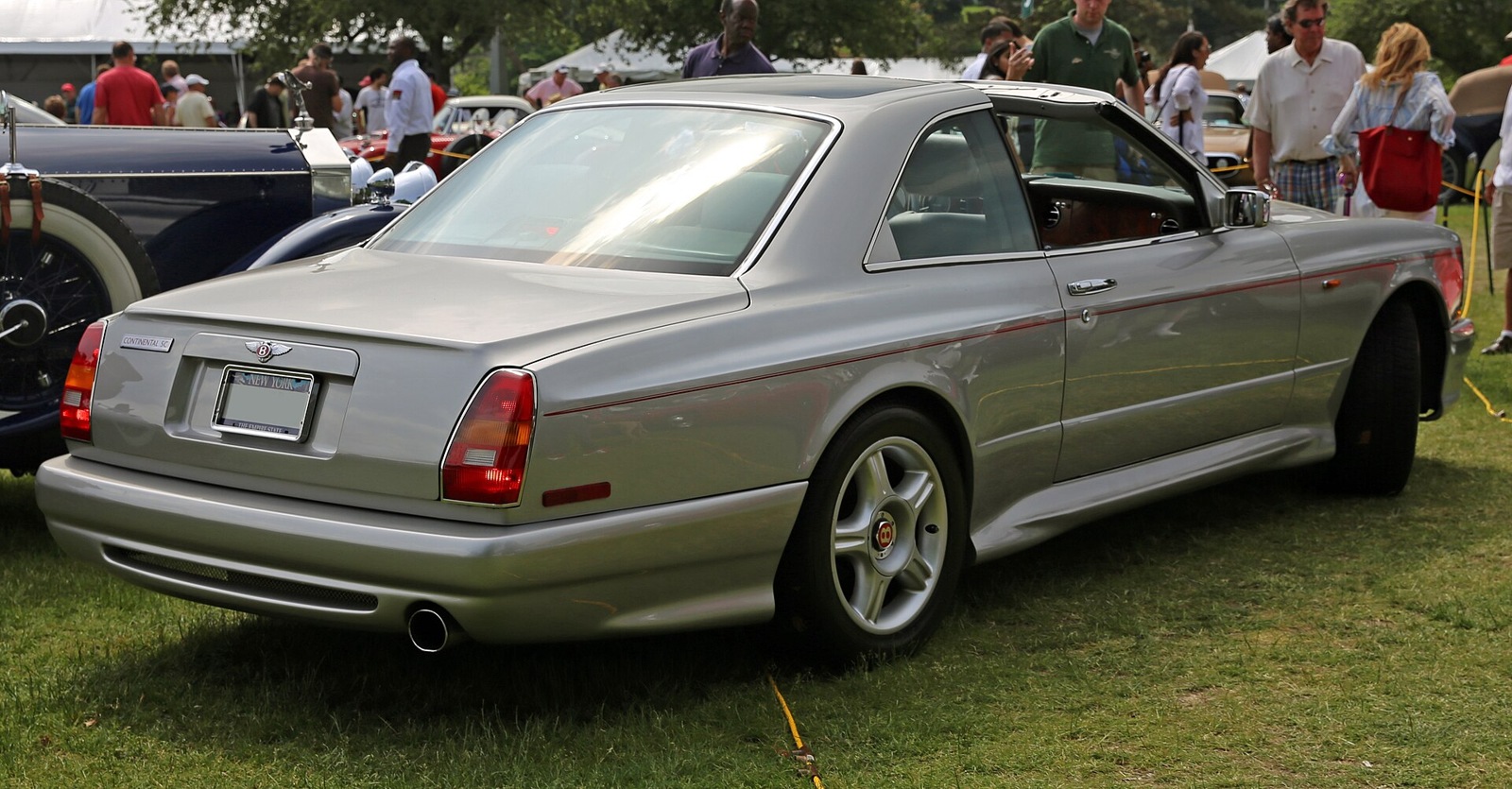
The credited photograph identifies a 1999 Continental SC at the Greenwich concours. It supplies a real model example with a known photographic source and stated reuse terms. Study how the glass roof area sits within the broad coupé body and how the rear cabin remains enclosed. Those details illustrate the sedanca arrangement more directly than a photograph of an ordinary Continental R. The example’s year also fits within the specialist model chronology. A useful archive caption keeps the photographed car and the overall model profile separate: the image illustrates the SC population without pretending to be a complete photographic census.
Documentation priorities for an SC
The roof panels deserve their own photographs and record, including the surrounding trim and attachment areas. Add images of the fixed rear glazing, interior headlining and any provision for carrying the removable sections. Alongside those views, retain the chassis identity and the original model designation. The specialist research notes mixed number sequences and unused numbers, so subtracting the first serial number from the last is not a reliable production calculation. A carefully organised file makes the model understandable to the next reader. It is particularly helpful when an SC is described together with Mulliner equipment or other Continental-family features.
Why the sedanca idea suits a rare-vehicle archive
The Continental SC broadens a Bentley collection by showing a different approach to an open cabin. Its interest does not depend on being the most powerful or the fastest member of the family. The design offers a particular balance between exposure and enclosure, with the front and rear compartments treated differently. Compare it with a full convertible to see how the roof concept changes the experience of the body. Compare it with a fixed-roof Continental to see which proportions were retained. Those relationships make the SC a useful connected profile, linking a small production group with a recognisable coachbuilding tradition.
Frequently asked questions
What does SC stand for?
Sedanca Coupé, referring to the removable roof area above the front compartment.
How many standard Continental SCs were built?
The specialist chassis record lists 73 for 1998–2000, separate from its SC Mulliner designation.
Does the whole roof fold away?
No. The front glass panels detach; the rear roof glazing remains fixed.
Can the chassis-number range establish production by subtraction?
No. The research identifies unused numbers and overlapping variant sequences. The published chassis list is the stronger reference.
Explore related vehicle profiles
- Bentley R-Type Continental — H.J. Mulliner Fastback
- Bentley Continental R Final Series
- Bentley Brooklands
Sources
- Marinus Rijkers — Continental SC production records and chassis list
- RM Sotheby’s — firsthand catalogue of a 1999 Continental SC
- Bentley Heritage Collection — final Continental R, C1 BML
Facts are sourced to the linked manufacturer, institutional and specialist records. Design comparisons and documentation suggestions are editorial analysis. Announced limits and completed production populations are labelled separately.
Photography and credit
1999 Bentley Continental SC sedanca (that's a T-top to us plebeians) at the 2013 Greenwich Concours d'Elegance. Photo: Mr.choppers / Wikimedia Commons · CC BY-SA 3.0. Resized and JPEG encoded without cropping or content changes. Retain author attribution, a link to the source and license, and the stated changes. Where ShareAlike applies, redistributed adaptations retain the same license.
Why this machine matters
The Bentley Continental SC turns the sedanca-coupé idea into a late-1990s Continental: removable glass above the front seats and a glazed rear cabin that retains an enclosed passenger compartment. Specialist chassis research records 73 standard SCs for 1998–2000. The roof arrangement, defined production scope and unmistakable coupé body give this Continental a distinct place in Bentley’s coachbuilt tradition.
Built in limited numbers
73 is the standard SC count in specialist chassis research, not a combined SC/Mulliner figure. Inventory 1998 retained as model introduction reference. Photograph depicts an actual 1999 SC.
Gallery
Specifications
Factory specifications may vary by model year, market and configuration.
Identity & production
- Official model
- Bentley Continental SC
- Base model
- Continental T
- Worldwide production
- 73
Powertrain & performance
- Engine
- 6.75-litre turbocharged V8